

`materials-science` Related Article Results
 Ha
HaHardness Tests
Hardness is defined as a material’s resistance to plastic deformation. This property is typically measured by the material’s response to a permanent shape change induced by a force applied to its surface. Although hardness does not fully reflect all mechanical properties of a material, it provides indirect information about important performance criteria such as wear resistance, durability, and surface quality. In materials science and engineering, the hardness value is one of the fundamental pa
EN
Sıla Başköylü

What is Materials Science and Nanotechnology Engineering?
🧪 What is Materials Science and Nanotechnology Engineering? 🔬 This branch of engineering studies and develops the materials that objects are made from. 🌟 Glass, metals, plastics and even extremely small (nanoscale) particles are the subject of this science. 🧠 Materials scientists design lighter stronger and more environmentally friendly materials. What is Materials and Nanotechnology Engineering? (Generated by artificial intelligence.) 🧲 What Do They Do? ⚙️ They develop very light but extre
EN
Veli Orhun Seyhan
HyHydrogel
Hydrogels are biomaterials that can be engineered to respond sensitively to multiple parameters such as temperature, pH, magnetic field, electricity field, and light like, and are frequently used for various purposes. They are applied to the body either invasively, by injection into tissues, or non-invasively, through external contact. Structure and Properties of Hydrogels Hydrogels are defined as three-dimensional hydrophilic networks. Their most fundamental characteristic is the ability to ret
EN
Fatma Beyza Şahin
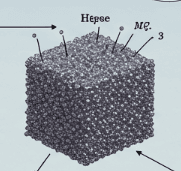
Smart Materials
Smart materials are a specially designed class of materials that can dynamically and reversibly alter one or more of their properties in response to changes in external environmental conditions or specific stimuli. Also known as sensitive materials, these substances are capable of controlled changes in their physical or chemical properties, shape, or behavior when exposed to specific triggers such as temperature, light, pressure, humidity, electric fields, or magnetic fields. These changes can o
ENElyesa Köseoğlu

Composite Materials
Composite materials are engineering materials formed by combining at least two different materials at the macroscopic level while preserving their physical and chemical properties. The primary purpose of this combination is to create a new material with superior characteristics by integrating properties that the individual components lack or possess only in limited form. In composite structures, the constituent materials do not dissolve into one another; if dissolution occurs, the structure is t
ENElyesa Köseoğlu
FeFermi Energy
Fermi energy is one of the fundamental concepts in solid-state physics, materials science, and quantum statistics, used to describe the energy distribution of electrons within a solid. In other words, Fermi energy is a key physical parameter that explains the microscopic energy distribution of solids, their carrier behavior, and quantum mechanical properties. The concept is named after one of the most important theoretical physicists of the 20th century, Enrico Fermi. It is particularly used to
EN
Muhammet Ali Demir

Materials Science
Materials science is an interdisciplinary field that studies the relationships between the internal structures, properties, processing methods, and performance of solid materials. At its core, it aims to identify the constituent materials that form a structure and understand their properties. This field not only seeks to better comprehend existing materials but also strives to design new materials through various processes for human use. At the heart of materials science lies the accurate establ
EN
Sümeyye Akkanat Terzioğlu

Applied Nanotechnology Topics
Nanotechnology, in its general definition, is the science and technology of controlling, understanding, and manipulating matter at the scale of 1 to 100 nanometers (one billionth of a meter). This discipline encompasses the study of materials at the atomic and molecular levels to discover unique physical, chemical, and biological properties not exhibited by their bulk counterparts, and to exploit these properties in developing new materials, devices, and systems with enhanced functionalities. Na
ENSümeyye Akkanat Terzioğlu

Bilge Yıldız
Professor Bilge Yıldız is a scientist serving as the Breene M. Kerr (1951) Professor in the Departments of Nuclear Science and Engineering and Materials Science and Engineering at the Massachusetts Institute of Technology (MIT). Her research focuses on developing next-generation electrochemical devices for energy conversion and information processing. Education and Career Bilge Yıldız, born in the Söke district of İzmir to two mathematics teachers, first encountered science through experiments a
EN
Nursena Şahin

Schottky Defect
Schottky defect is a type of point defect observed in ionic crystals. This defect arises when a cation and an anion (that is, two oppositely charged ions) are missing from their respective lattice sites. It is named after the German physicist Walter H. Schottky, who described this phenomenon in 1935. In a Schottky defect, the missing ions always occur as a cation-anion pair to maintain electrical neutrality, ensuring that the overall charge of the crystal remains neutral. Formation and Propertie
EN
Sude Altınçekiç