

`linked-list` Related Article Results
Linked List Data Structure
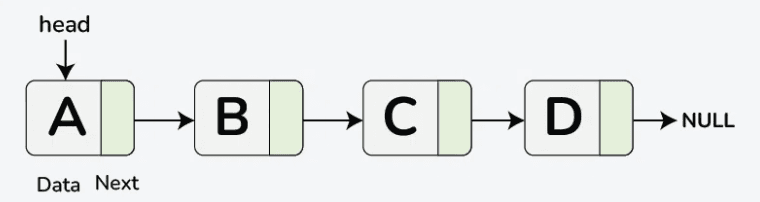
A linked list is a fundamental data structure in computer science. It primarily enables efficient addition and deletion operations compared to arrays. Arrays are also used to implement other data structures such as like, stack, queue, and deque. Data Structure: Non-contiguous Memory Allocation: Typically allocated individually for each element Insertion/Deletion: Efficient Access: Sequential Singly Linked List A singly linked list is a basic data structure composed of nodes, each containing a da
EN
Beyza Nur Türkü
Linked List Data Structure
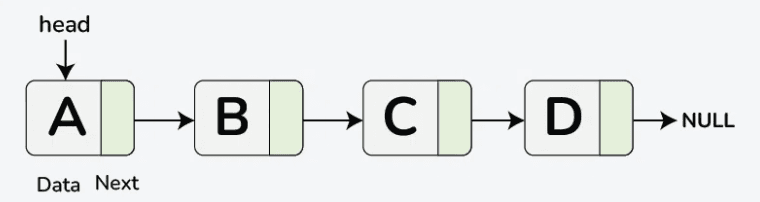
A linked list is a fundamental data structure in computer science. It primarily enables efficient insertion and deletion operations compared to arrays. Like arrays, linked lists are also used to implement other data structures such as stacks, queues, and deques. Data Structure: Non-contiguous Memory Allocation: Typically allocated individually for each element Insertion/Deletion: Efficient Access: Sequential Singly Linked List A singly linked list is a basic data structure consisting of nodes, e
ENBeyza Nur Türkü
Heap Data Structure
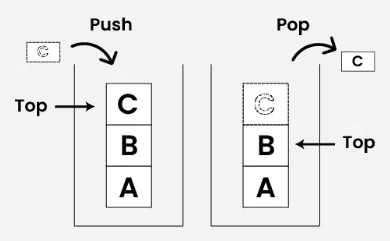
A stack is a linear data structure that follows the LIFO (Last In, First Out) principle, where the last element added is the first one removed. This means that both insertion and deletion operations occur at only one end. LIFO (Last In, First Out) Principle Some practical real world examples of LIFO: When adding a plate to a stack of plates, it is placed on top. When removing a plate, it is taken from the top. In a box where balls are stacked on top of each other, a ball is added or removed from
ENBeyza Nur Türkü
Heap Data Structure
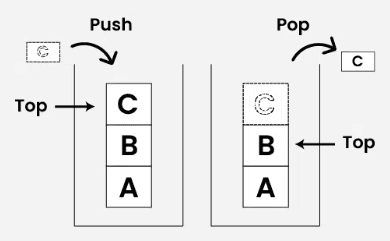
A stack is a linear data structure that follows the LIFO (Last In First Out) principle, where the last element added is the first one removed. This means that both insertion and deletion operations occur at only one end. LIFO (Last In First Out) Principle Some real-world examples of LIFO: When adding a plate to a stack of plates, it is placed on top. When removing a plate, it is taken from the top. In a box where balls are stacked on top of each other, a ball is added or removed from the top. Ty
ENBeyza Nur Türkü