
`lean-production` Related Article Results

Heijunka (Production Leveling)
Heijunka is a production leveling approach and one of the foundational pillars of the lean manufacturing system. This term, of Japanese origin, refers to the balanced execution of production in terms of time, product type, and quantity. It is applied to eliminate fluctuations in the production process, enhance resource utilization, and provide more consistent responses to customer demand. Heijunka holds a significant place within the Toyota Production System and is one of the practical applicati
EN
Erdem Ergün
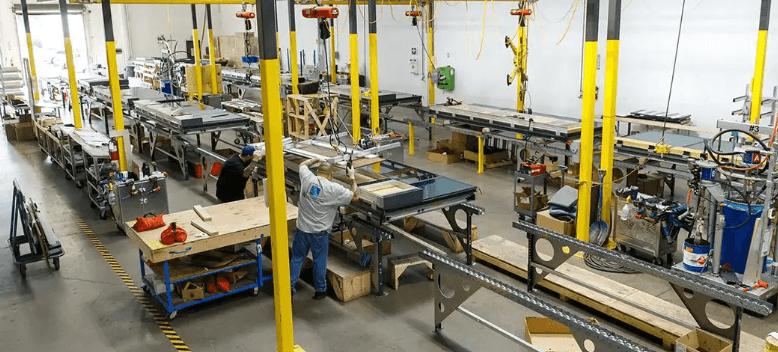
Assembly Line
Assembly line (Assembly Line) is a production system in which the components of a product are assembled in a specific sequence, and workers or machines perform designated tasks at each step of the production process. Typically, raw materials or semi-finished goods are introduced at the beginning of the line, and the final product is completed as it progresses to the end of the line. Assembly lines increase production speed and efficiency while reducing labor costs. Assembly lines maintain a cent
ENBeyza Nur Türkü

5 Whys Analysis
Five Whys Analysis is one of the most fundamental and effective problem-solving tools developed within the framework of lean production philosophy. Despite its simple structure, when applied correctly, it enables deep learning and sustainable improvement in organizational processes. Recognized as one of the foundational pillars of the Toyota Production System, this method is not merely a technical analytical tool but also a process of observing on the shop floor, engaging teams, and reaching roo
ENEmre Özen
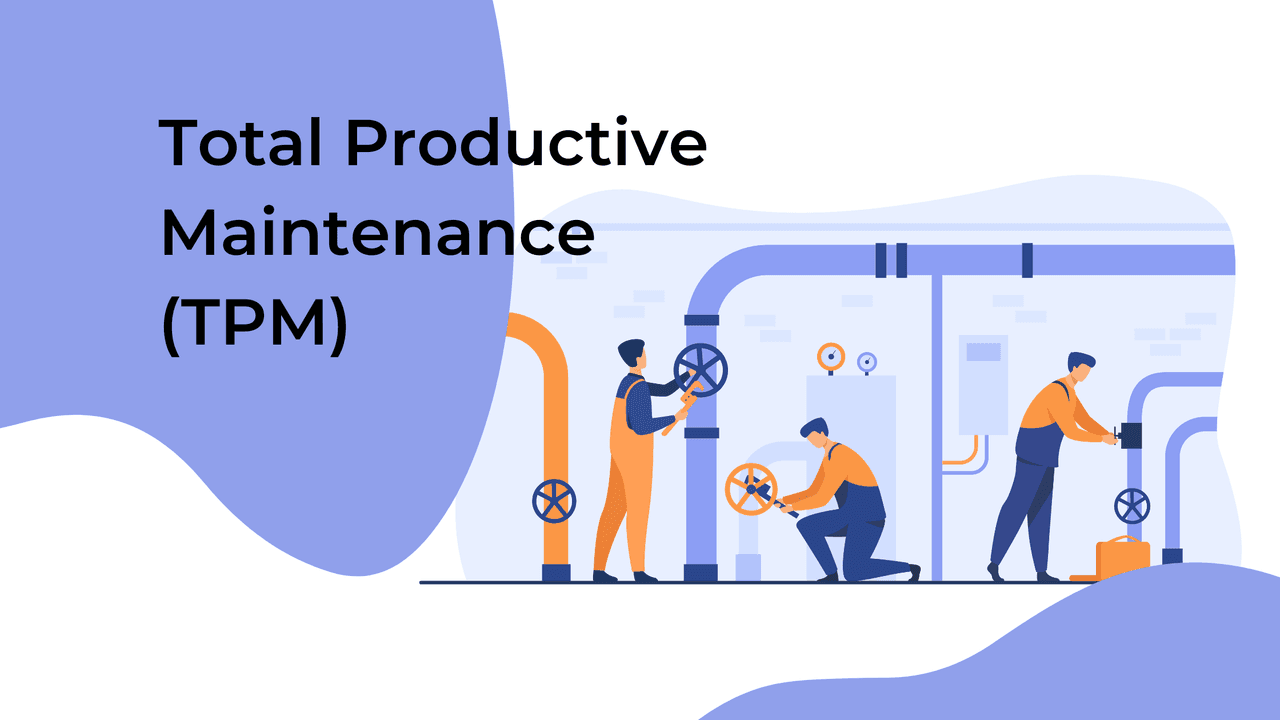
Total Productive Maintenance (TPM)
TPM (Total Productive Maintenance) is a maintenance management system developed to ensure the efficient operation of machinery in production systems. It was developed and rapidly adopted in Japan during the 1970s by major companies such as Nippondenso and Toyota. TPM aims to achieve continuous machine operation without breakdowns by systematically planning maintenance activities. The core philosophy of this approach is to assign responsibility for maintenance not solely to the maintenance depart
ENSaid Bahadır Demircan
 An
AnAndon
Andon is a visual management and early warning system rooted in lean manufacturing and the Toyota Production System (TPS). As part of the jidoka principle, Andon makes problems on the production line immediately visible, enabling rapid intervention. The word “Andon” means “light” or “lamp” in Japanese and serves as a communication tool in modern production environments, equipped with colored signal lights and audible alarms. Technical Operation and Components: Andon systems typically consist of
ENSaid Bahadır Demircan
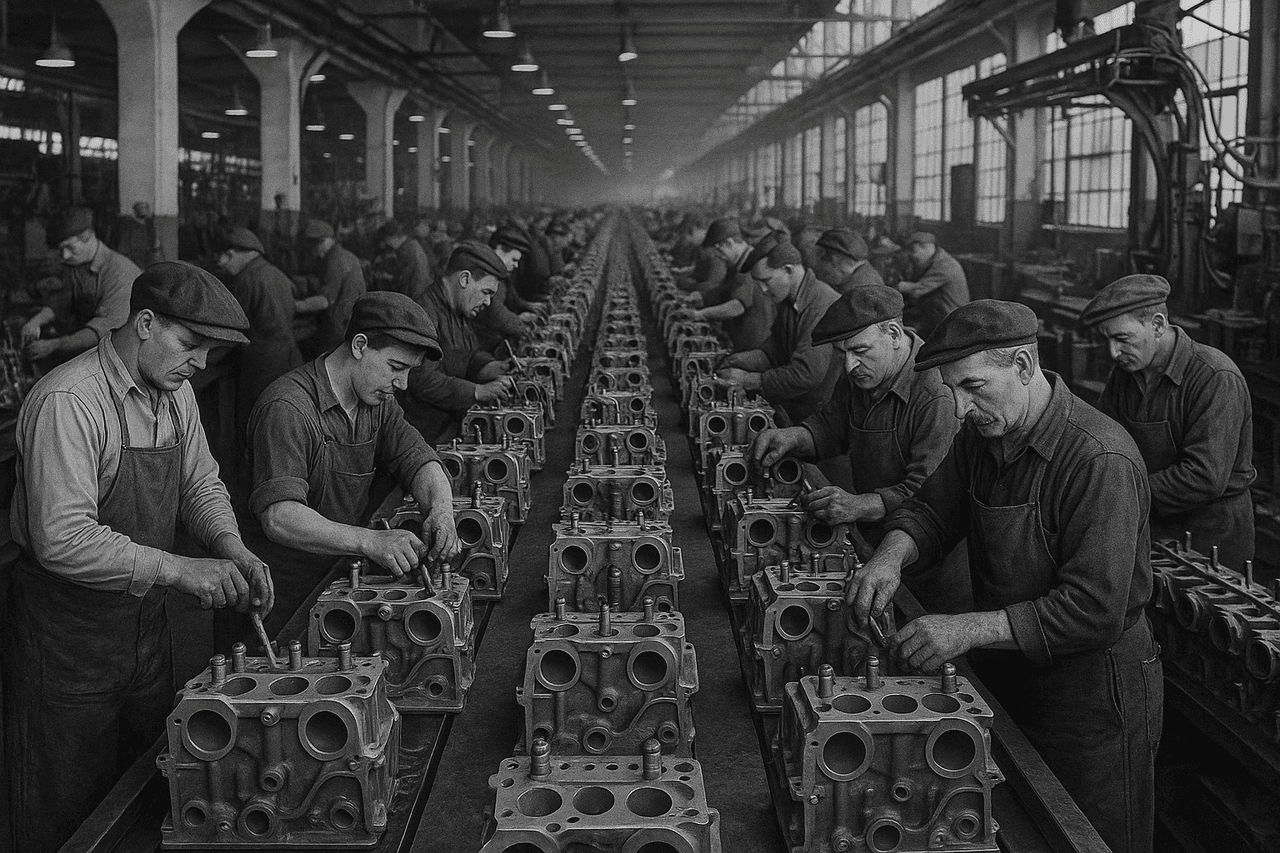
Mass Production
Mass production refers to the manufacture of large quantities of standardized products through standardized processes and repetitive work steps. This form of production enables the high-volume output of similar goods at low unit costs. The machinery, labor, and material flow used in the process are systematically coordinated within predefined arrangements. Product homogeneity and continuous production are among the defining characteristics of mass production. The distinguishing feature of this s
EN
Sıla Başköylü
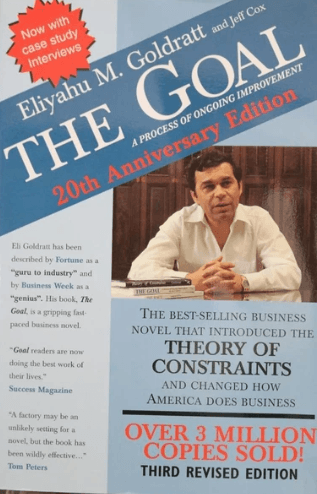
The Goal: A Process of Ongoing Improvement (Book)
First published in 1984, The Goal is a business management novel written by Eliyahu M. Goldratt and Jeff Cox. The book was translated into Turkish by Ayşe Bilge Dicleli and published in Türkiye by Optimist Kitap. Through a fictional narrative, the book aims to convey the "Theory of Constraints" developed for managing and improving production processes. It is widely used as course material in business schools and by professionals in management education. Subject The Goal centers around Alex Rogo,
ENElyesa Köseoğlu
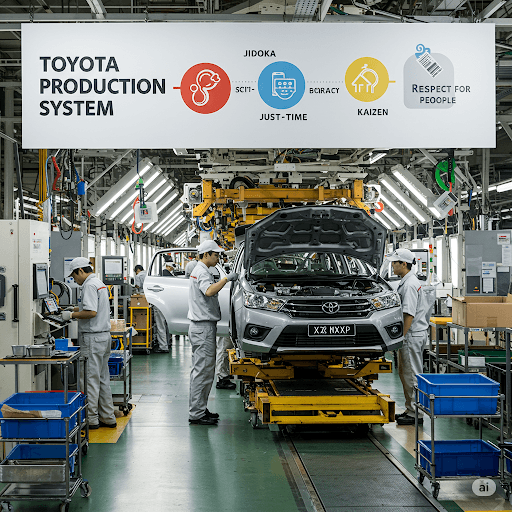
Toyota Production System
The Toyota Production System (TPS) is a production management system developed by Toyota Motor Corporation in Japan during the second half of the 20th century. Shaped in response to Japan’s economic conditions following World War II, this system was structured with the goals of eliminating waste, simplifying processes, and increasing productivity—differentiating it from Western mass production systems. TPS was shaped through the contributions of Taiichi Ohno and Shigeo Shingo, and over time, it
ENEmre Özen
Değer Akışı Haritalama (Value Stream Mapping)
Üretim süreçlerini ve değer yaratma faaliyetlerini analiz etmek, optimize etmek ve geliştirmek amacıyla kullanılan güçlü bir araçtır. Genellikle Yalın üretim ve Yalın yönetim prensipleriyle ilişkilendirilir, ancak yalnızca üretimle sınırlı değildir; hizmet sektöründe de kullanılabilir. VSM, iş süreçlerinde değer yaratmayan faaliyetlerin belirlenmesine, israfların (waste) ortadan kaldırılmasına ve süreçlerin daha verimli hale getirilmesine yardımcı olur. Değer Akışı Haritalama Nedir? Değer Akışı
TRSaid Bahadır Demircan
Value Stream Mapping
Value Stream Mapping is a powerful tool used to analyze, optimize, and improve production processes and value-creating activities. It is commonly associated with Lean Manufacturing and Lean Management principles but is not limited to production alone; it can also be applied in the service sector. VSM helps identify non-value-adding activities, eliminate waste, and enhance process efficiency. What Is Value Stream Mapping? Value Stream Mapping is a method that visually maps all processes involved
ENSaid Bahadır Demircan