

`kyrgyz` Related Article Results
 Kö
KöKökbörü Game
Kökbörü is a popular sport, especially among the Kyrgyz Turks, with deep common roots in national culture. It is played not only in Kyrgyzstan but also across many different regions including Kazakhstan and Afghanistan like. In Türkiye today, this traditional game practice continues in the village of Ulupamir. In Central Asia, it is known by various names such as “Gökböri,” “Kökpari,” “Capricorn/Ulak,” in Afghanistan as “Oğlak, Buz-Kaşi,” and in Kazakhstan as “Kökpar.” However, it is most common
EN
Zeynep Ahmetbeyoğlu
Eleçek
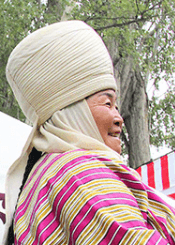
Eleçek is a traditional female headpiece worn by married women in Kyrgyz culture, consisting of a white fabric wrapped high and elaborately around the head. It serves as a cultural marker that visibly communicates a woman’s civil status (marriage), age, social standing, and her family’s socioeconomic position. Its shape, number of layers, wrapping style, height, and degree of ornamentation function as a social signifier conveying information about the wearer’s identity. Cultural Significance Wit
EN
Duygu Şahinler

National Anthem of Kyrgyzstan
National Anthem of Kyrgyzstan (Кыргыз Республикасынын Мамлекеттик Гимни) is the national anthem, adopted on 18 December 1992, with lyrics attributed to Jelil Sadikov and Shabdanuly Kuluyev. National Anthem of Kyrgyzstan (Nur Cholpon) " youtube-video-element-format="right" youtube-video-id="S5e0BhhBwOQ"> Lyrics The Kyrgyz lyrics of the anthem are as follows: Ak möngülüü aska zoolor, talaalar, Elibizdin canı menen barabar. Sansız kılım Ala-Toosun mekendep, Saktap keldi bizdin ata-babalar. Algal
ENDuygu Şahinler
AlAlbasti
The belief in Albastı (Al basması) has persisted across a wide region of Turkish cultural geography and in many other cultures, centering on the postpartum period and newborns, and involving faith in a malevolent and supernatural entity and the afflictions it causes. This belief is more than just a folk tale; it is the product of thousands of years of mythological and cultural accumulation. This condition, commonly known as “Albasması” in folk tradition, has often been perceived as a mysterious
EN
Yahya B. Keskin