

`isotopes` Related Article Results

Hassium (Hs)
Hassium is a synthetic and highly radioactive element located at the 108th position in the periodic table. It was discovered in 1984 at the GSI Helmholtz Centre for Heavy Ion Research in Germany and derives its name from the German state of Hesse where the research center is located. To date, only a few atoms of this element have been produced, and its properties are largely based on theoretical calculations. Classification and Fundamental Properties Hassium (Hs) is a transition metal in the 7th
EN
Caner Sefa Koçyiğit
Seaborgium (Sg)
Sg, the 106th element in the periodic table, is a synthetic and highly radioactive element. It was discovered in 1974 at the Lawrence Berkeley National Laboratory in the United States and is named after American chemist Glenn T. Seaborg (1912–1999), recognized for his pioneering work in nuclear chemistry and his role in the discovery of numerous transuranium elements. Classification and Basic Properties Seaborgium (Sg) is a transition metal located in period 7 and group 6 of the periodic table.
ENCaner Sefa Koçyiğit
Dubnium (Db)
Dubnium is a synthetic and highly radioactive element located at position 105 in the periodic table. Its discovery sparked a competition between research groups in Russia and the United States during the late 1960s and early 1970s. It derives its name from the research center in Dubna, Russia, which played a key role in its discovery. To date, only a few atoms of this element have been produced, and its properties are largely based on theoretical calculations. Classification and Fundamental Prop
ENCaner Sefa Koçyiğit
Livermorium (Lv)
Livermorium is a synthetic and highly radioactive element located at position 116 in the periodic table. It was first discovered in 2000 and named after the Lawrence Livermore National Laboratory in the United States. Most of its properties are based on observations of the extremely small number of atoms produced to date and theoretical calculations. Classification and Fundamental Properties Livermorium (Lv) is an element in period 7 and group 16 (the chalcogen group) of the periodic table. Its
ENCaner Sefa Koçyiğit

Radon (Rn)
Radon is a colorless, odorless, and radioactive noble gas located in group 18 of the periodic table with an atomic number of 86. It was discovered in 1900 by Friedrich Ernst Dorn as a decay product of radium. Named after its association with radium, radon is the heaviest naturally occurring gas and is particularly known for its health effects. Classification and Basic Properties Radon (Rn) is a noble gas situated in period 6 and group 18 of the periodic table. Its electron configuration is [Xe]
ENCaner Sefa Koçyiğit

Polonium (Po)
Polonium is a highly radioactive metalloid element located at position 84 in the periodic table. It was discovered in 1898 by Marie and Pierre Curie and named after Marie Curie’s homeland Poland. Polonium is known as an intense alpha particle source and is both rare and extremely hazardous to handle. Classification and Basic Properties Polonium (Po) is located in the 6th period and group 16 (chalcogen group) of the periodic table. Its electron configuration is [Xe] 4f¹⁴5d¹⁰6s²6p⁴. Chemically it
ENCaner Sefa Koçyiğit
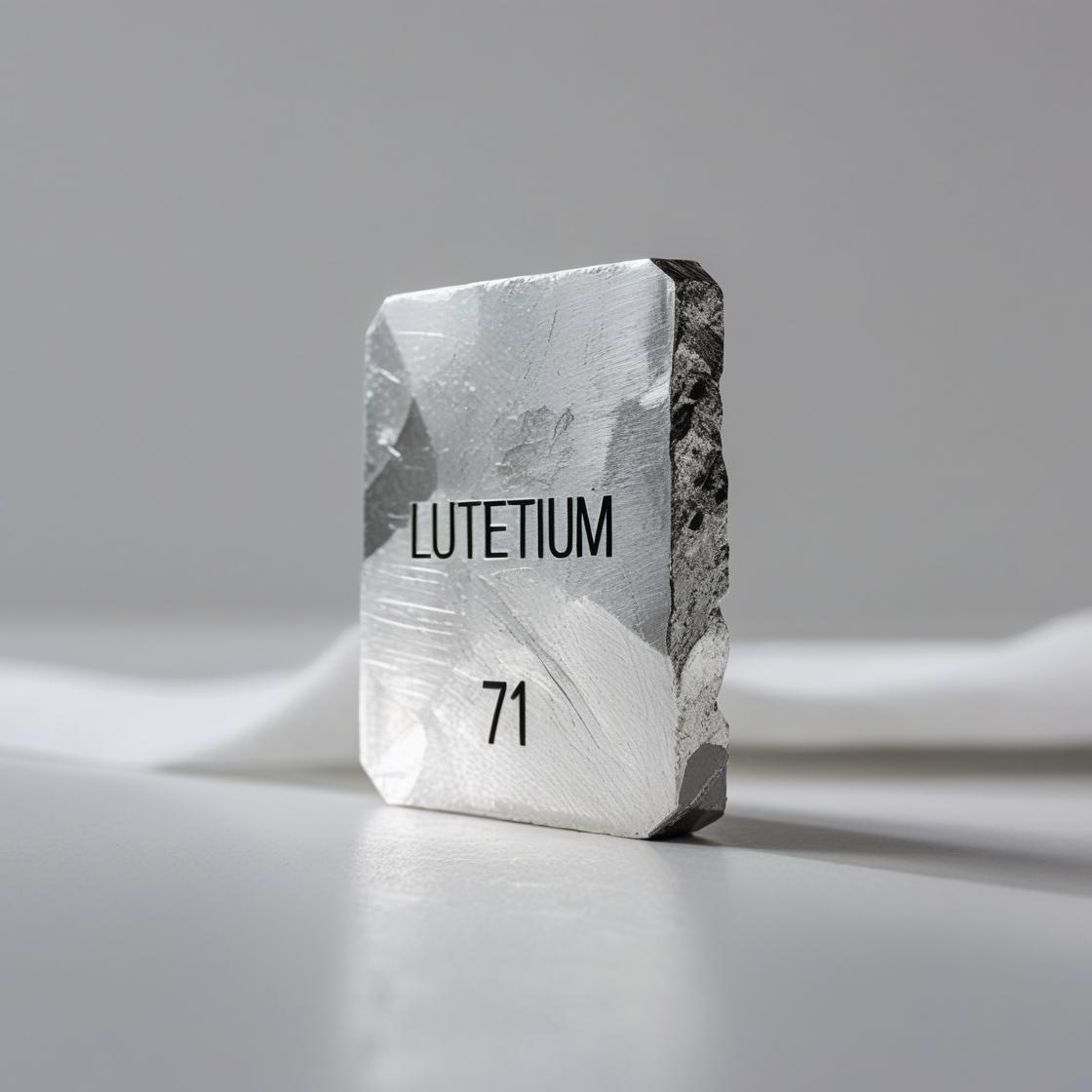
Lutetium (Lu)
Lutetium is a hard, dense, silvery-white metal with atomic number 71 and is the final member of the lanthanide series. It was discovered in 1907 by Georges Urbain through the separation of ytterbium and named after Lutetia, the ancient name of Paris. Classification and Fundamental Properties Lutetium (Lu) is an element located in the sixth period of the periodic table, at the end of the lanthanide series and sometimes classified as a member of the d-block transition metals. Its electron configur
ENCaner Sefa Koçyiğit

Promethium (Pm)
Promethium is a radioactive metal with atomic number 61, belonging to the lanthanide series. This element does not occur naturally or is found only in trace amounts; it was definitively identified and synthesized artificially in 1945 by Jacob A. Marinsky, Lawrence E. Glendenin, and Charles D. Coryell. Its name is derived from Prometheus of Greek mythology, and it is primarily used in nuclear batteries and luminescent paints. Classification and Basic Properties Promethium (Pm) is an element locat
ENCaner Sefa Koçyiğit
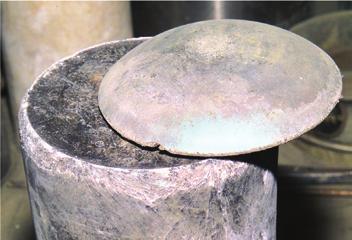
Plutonium and Plutonium-238
Plutonium is known as the second transuranic element in the actinide series. It was discovered in 1940 by Glenn T. Seaborg, Joseph W. Kennedy, Edward M. McMillan, and Arthur C. Wohl at the University of California, Berkeley. This discovery resulted from the bombardment of uranium-238 isotope with deuterium bombardment. This process produced neptunium-238 and two free neutron; neptunium-238 then underwent beta decay to become plutonium-238. The discovery of plutonium was part of the effort to dev
EN
Beyza Aslı Çetin
Nihonium (Nh)
Nihonium is a synthetic and highly radioactive element located at position 113 in the periodic table. It was first synthesized in 2004 by scientists at the RIKEN research center in Japan and derives its name from Japan. It is the first and only element discovered in Asia. Classification and Basic Properties Nihonium (Nh) is an element in period 7 and group 13 (boron group) of the periodic table. Its expected electron configuration is [Rn] 5f¹⁴6d¹⁰7s²7p¹. It is considered a heavier homologue of t
ENCaner Sefa Koçyiğit