

`information-security` Related Article Results
 Va
VaVan Eck Phreaking
Van Eck Phreaking (Van Eck Radiation) is an eavesdropping technique that enables the remote reconstruction of displayed information by capturing and processing unintentional electromagnetic waves emitted by electronic devices, particularly computer monitors. The term is named after Wim van Eck, who in 1985 brought this security vulnerability to public attention by demonstrating that the content of cathode ray tube (CRT) displays could be remotely observed using a modified standard television rec
EN
Selahattin Köseoğlu
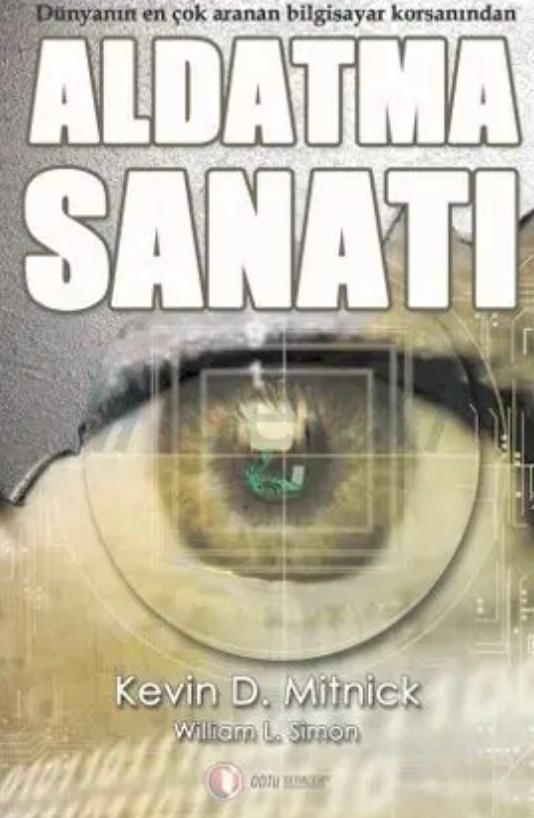
The Art of Deception (Book)
This fictional/technical book, authored by renowned computer hacker and security expert Kevin D. Mitnick and writer William L. Simon, was first published in 2002 and is regarded as one of the foundational texts in information security literature. Rather than treating information security as purely a technological issue, the book focuses on the "human factor," identified as the weakest link in the security chain. It examines social engineering attacks that target human psychology and behavioral p
EN
Kübra ARITI ŞİĞVA

Digital Forensics
Digital forensics is an interdisciplinary field that enables the use of data stored in digital environments as evidence in legal proceedings. The term “digital forensics,” used as the English equivalent of “computer forensics,” aims to conduct the collection, preservation, analysis, and presentation of digital data in accordance with technical and legal principles. The primary objective in this process is to obtain digital traces without altering them and to ensure their admissibility in judicia
EN
Neriman Çalışkan
InInformation Security
Information security is a systematic combination of management practices and technological measures aimed at protecting information from threats such as unauthorized access, modification, disclosure, corruption, and destruction. This concept encompasses measures designed to ensure that only authorized users can access information, that the accuracy of information is maintained, and that information remains accessible whenever needed. Core Principles Information security is structured around thre
EN
Ahmet Burak Taner

Siber Defense
Cyber Defense is, in its broadest definition, the protection of data and information stored in computers, servers, and other electronic systems within cyberspace against all forms of threats and attacks. This concept encompasses a wide spectrum ranging from individual user protection to national security strategies and adopts a holistic approach. The foundation of cyber defense lies in safeguarding the three core properties of information: confidentiality, integrity, and availability. Confidenti
EN
Yunus Emre Yüce