

`human-capital` Related Article Results
The Connection Between Economics of Education and Standard of Living
Human As a source of capital, educational institutions serve as a key driver of economic development by providing a skilled workforce. At the same time, by contributing to human development, social well-being, and quality of life, education positively influences social development. Economics of Education The economics of education is an interdisciplinary field that applies the theories and findings of economics to education, conducting comparative analyses of educational demand, financing, and v
EN
Fatıma Kurşun
 Fu
FuFunctions of Education
Education is a multidimensional social institution that occupies a dual position as both a goal and a means in the development of individuals and societies. The functions of education are generally examined under two main categories: manifest and latent functions. Manifest functions refer to the intended outcomes directly pursued through education, whereas latent functions denote the unplanned but consequential effects that emerge in the course of the educational process. Social Functions Educat
ENKevser Çınar
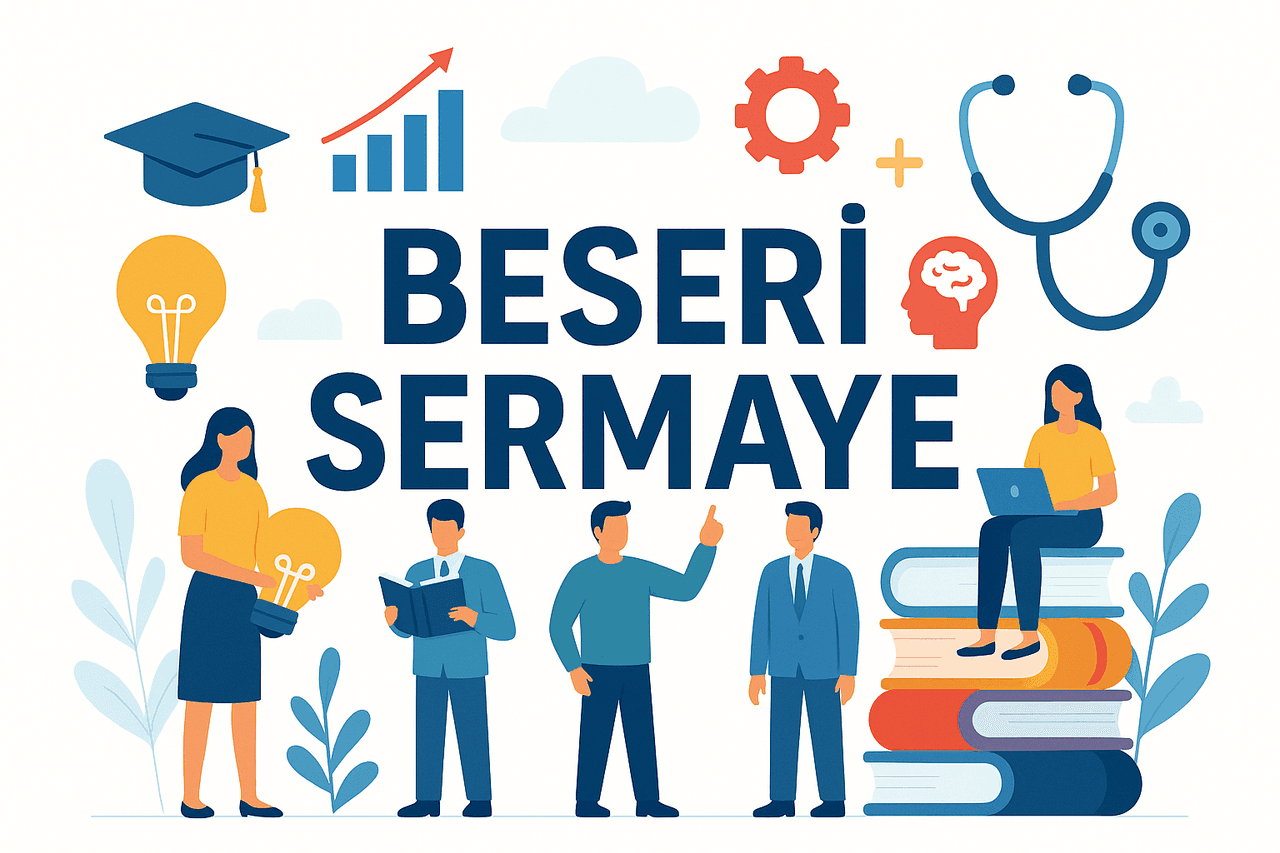
Human Capital
Human capital is the concept that denotes the value individuals contribute to the economic production process through qualities such as knowledge, skills, education, health, and experience. These attributes determine not only an individual’s productivity but also the overall level of societal welfare and the potential for economic growth. The concept emerged as a response to classical economic approaches that neglected the qualitative dimension of labor, arguing that the stock of knowledge and a
EN
Melike Erol
InIntellectual Capital
Intellectual capital refers to the totality of knowledge, experience, organizational technology, customer relationships, and professional skills that provide a competitive advantage to a business. In other words, it encompasses the intangible assets and resources possessed by an organization. In this context, intellectual capital includes knowledge accumulation, competencies, experience, innovation capacity, and external relationships. It plays a critical role in achieving sustainable growth and
ENGökçe Sürücü