

`historiography` Related Article Results

Oral History
Oral history is a method and discipline that plays a central role in interpreting history by capturing individuals’ personal experiences and memories through first-hand accounts. It goes beyond the limitations of written sources by focusing on social memory, individual narratives, and the stories of groups previously overlooked. This approach enriches historical writing by enabling historians to understand the past not only through documents but also through the emotional and social contexts of
EN
Mehmet Salih Çoban
Historical Pessimism
Historical pessimism expresses a perspective on the general course of history and human history as a whole. This viewpoint opposes the idea that history progresses toward a better future and argues that history has a chaotic, cyclical, or meaningless structure. Wars, social inequalities, and environmental destruction like tragic serve as key elements supporting this perspective. Historical pessimism has been used particularly as a critique of the progressive historical understanding associated w
ENMehmet Salih Çoban
 Hi
HiHistoriography
History is a discipline that establishes its reality through the identification of events within the boundaries of time and the ground defined by experiment. In the science of history, history and historiography are distinct. History emerges only after being filtered through the historian’s perspective. Although historians pursue truth in their work, they can never ascertain an absolute truth concrete. In historical methodology, there are narrative, individualistic, explanatory, and interpretive
EN
Mustafa Cem İnci

Postmodern History
Postmodern history is an approach that argues the past cannot be treated as a fixed and objective reality; rather, historical writing is a process constructed through language, discourse, power relations, and the historian’s subjective interpretation. This approach approaches grand narratives (meta-narratives) with skepticism and asserts that history is merely a reinterpretation produced within specific contexts and always open to revision. Postmodern history emphasizes that truth may have multi
EN
Mehmet Salih Çoban
Constructing a World History Narrative in the Abbasid Period
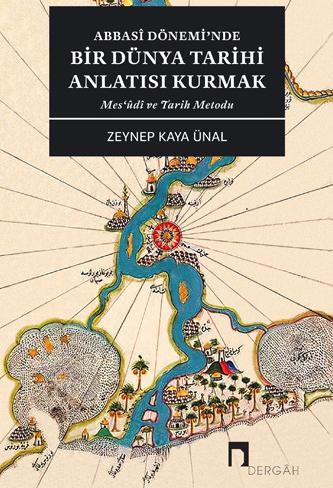
Constructing a World History Narrative in the Abbasid Period (Abbasî Dönemi'nde Bir Dünya Tarihi Anlatısı Kurmak), authored by Zeynep Kaya Ünal, is a scholarly work published by Dergâh Publications in March 2024. This work provides an in-depth examination of the evolution of historiography during the Abbasid period, with a particular focus on the methodology of the historian al-Mas'udi. Ünal analyzes al-Mas'udi's works, Muruj al-dhahab and at-Tanbih, to reveal his understanding of history and hi
EN
Muhammed Samed Acar
An Attempt at a Postmodern Approach to the Migrations After the 93 War
Is it possible to reach absolute truth? the discipline of history is one of the most fundamental questions. This epistemological discussion within the discipline of history has occupied the minds of historians who have reflected on historical writing and philosophy. Particularly in the second half of the twentieth century, postmodern ideas that emerged and influenced historiography frequently addressed this question. According to John Tosh, historical information is not fixed or an objective tru
ENMehmet Salih Çoban
Historical Pessimism
Historical pessimism expresses a pessimistic view of the general course of history and human history. This perspective opposes the idea that history progresses toward a better future and argues that history has a chaotic, cyclical, or meaningless structure. Wars, social inequalities, and environmental destruction like tragic elements form the foundational pillars of this view. Historical pessimism has been used particularly as a critical tool against the progressive historical understanding of m
ENMehmet Salih Çoban
HiHistoriography
History is a branch of science that establishes reality through the identification of events without experimentation, within the boundaries of time and context. In the science of history, history and the past are distinct. History emerges only after being filtered through the historian’s perspective. Although historians pursue truth in their work, they can never establish a concrete truth. In historical methodology, there are narrative, individualistic, explanatory, and interpretive approaches.
EN
Mustafa Cem İnci
SeSecondary Sources in Historiography
Secondary sources are academic works produced to interpret, analyze, and contextualize information derived from primary sources. These sources aim not only to chronologically sequence historical events but also to elucidate the underlying dynamics, social structures, and historical processes. The discipline of history relies on various types of sources to construct meaning from the past, shaping the methodologies employed by historians. Historical writing is not merely about recording the past;
ENMehmet Salih Çoban

To Be the Poet of a Story
Is it possible to be a the story's poet? Historiography is often presented as a regular response to the question “what happened?” Documents are found, events are ordered, people and dates are placed in their proper context. This framework is not entirely wrong; but it is incomplete. Because historical text is not merely a conduit for information. We cannot access the past directly; the past reaches us mostly through texts, records, labels, and other media. Therefore, just as much as the “event,”
ENMehmet Salih Çoban