

`hierarchy-of-needs` Related Article Results
 Hu
HuHumanistic Approach
The humanistic approach is a school of psychology that emerged in the mid-20th century as a reaction against psychoanalysis and behaviorism, placing the individual at its center. This approach focuses on the individual’s innate potential, free will, creativity, and pursuit of self-actualization. Its fundamental aim is to understand human experience, the search for meaning, and the unique development of the individual through a holistic perspective. Humanistic psychology asserts that individuals
EN
Muhammed Samed Acar
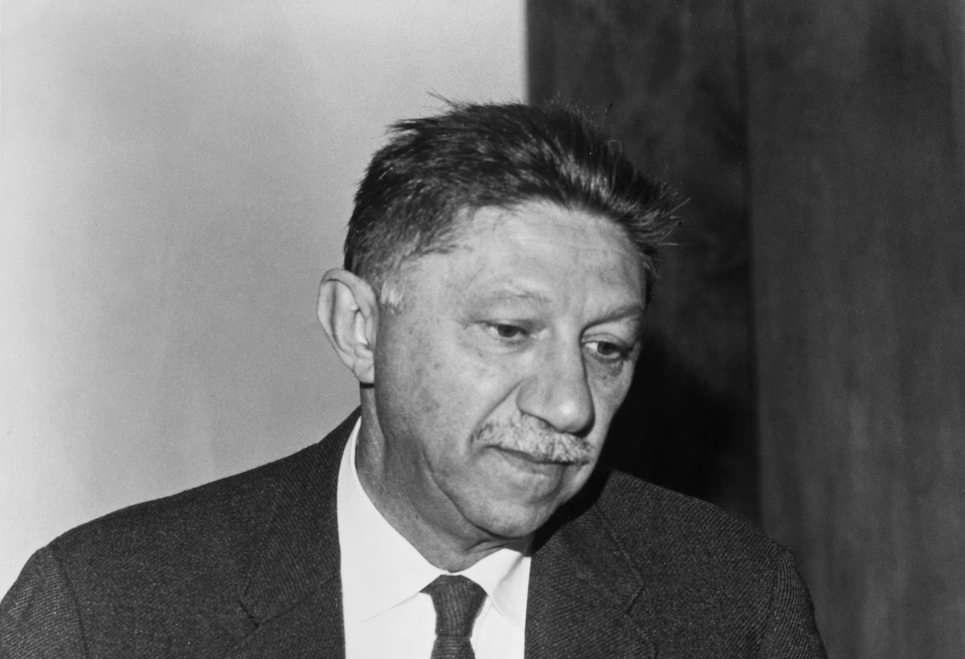
Abraham Harold Maslow
Abraham Harold Maslow (1908–1970) was born on April 1, 1908, in the Brooklyn neighborhood of New York City. His family was of Jewish descent and had migrated from Russia; Maslow was the eldest of seven children. His childhood was shaped by economic hardship and social pressures, which contributed to the early development of personal solitude and introspective ability. Maslow’s intellectual curiosity manifested in childhood through books and libraries, laying the foundation for his later theoreti
EN
Ömer Faruk Tuğla
MaMaslow's Hierarchy of Needs
Maslow’s Hierarchy of Needs is a psychological theory that explains the sources of human motivation. It was introduced in 1943 by American psychologist Abraham Maslow in his article titled “A Theory of Human Motivation.” The theory is based on Maslow’s observations of individuals with good psychological health. The theory posits that human behavior is directly or indirectly linked to needs and that these needs are organized in a specific hierarchy. According to its fundamental assumption, human
EN
Yunus Emre Yüce
MaMaslow's Concept of Self-Actualization
Maslow’s concept of self-actualization refers to a state in which an individual fully realizes their potential, achieving the highest level of personal fulfillment and growth. This concept constitutes the top tier of the hierarchy presented in Abraham Maslow’s 1943 article “A Theory of Human Motivation” hierarchy of needs. Self-actualization reflects the effort of an individual to go beyond mere survival and to fully utilize their abilities, values, and intrinsic motivations. According to Maslow
EN
Meryem Beyza Utkulu
ThThe Jonah Complex
The Jonah Complex, a concept introduced by American psychologist Abraham Maslow, refers to individuals' fear of their own potential and their avoidance of the responsibilities that come with great success. Maslow defines the Jonah Complex as the fear of one’s own greatness and uses the term to explain the psychological resistance people experience when striving to become the best version of themselves. Origin and Conceptual Framework Maslow discusses the Jonah Complex in relation to his theory o
ENMeryem Beyza Utkulu