

`helplessness` Related Article Results
 Mi
MiMill (Book)
Değirmen is a 1935 publication by Sabahattin Ali, one of the prominent names in Turkish literature. Comprising 16 short stories written between 1927 and 1934, work is a significant work that reflects Sabahattin Ali’s narrative skill and literary style. The title story, Değirmen, focuses on a Romani youth’s experience, while the other tales explore individual and social themes. Subject of the Book The book consists of stories that examine the lives and inner worlds of diverse characters. In the s
EN
Beyza Nur Türkü

Grave of Fireflies (Animation)
Grave of the Fireflies (Original title: Hotaru no Haka) is an animated drama film released in Japan in 1988. Directed by Isao Takahata, the film is based on a semi-autobiographical novella of the same name by Akiyuki Nosaka. Produced jointly by Studio Ghibli and Shinchosha, it stands as one of the most prominent Japanese animated films dealing with war themes. The film presents a tragic and realistic narrative that illustrates the devastating impact of war on civilians, particularly children. Pl
EN
Hayrunnisa İnanç
CaCart (Book)
Sabahattin Ali’s 1936 work titled "Kağnı" is one of the landmark books of Turkish literature. Written with a social realist perspective, this work consists of a series of stories that expose the injustices, economic hardships, and social pressures faced by the Anatolia villager. In this work, Sabahattin Ali portrays the drama of the poor with a simple style and powerful narrative. Subject of the Book The book includes various stories centered on social inequality and the helplessness of the indi
ENBeyza Nur Türkü
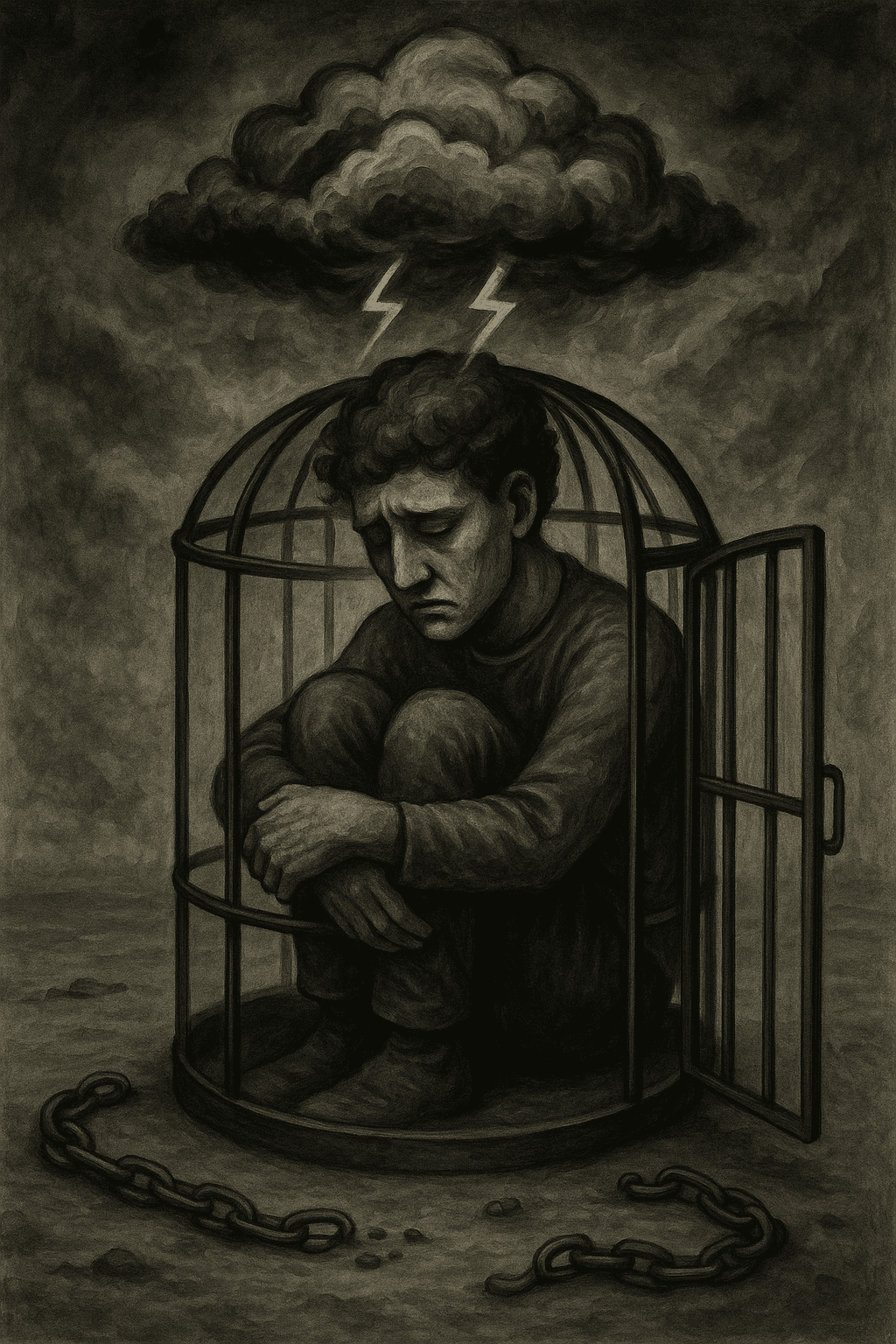
Learned Helplessness
Learned helplessness is the generalized expectation that an individual develops as a result of repeated negative experiences, believing that their efforts have no effect on outcomes. This expectation leads to multifaceted consequences such as passivity, loss of motivation, and emotional distress. First identified in experiments conducted by Martin Seligman and Steven Maier in 1967, this phenomenon is now recognized as a significant explanatory theory in the development of psychological disorders
ENNisanur Demirel

To bang one's head against stone after stone
To Bump One’s Head from Stone to Stone The expression "to bump one’s head from stone to stone" means to exert great effort toward achieving something but still failing to succeed. We use this phrase when, no matter how hard one tries, things do not go as planned. ❓ Where Does It Come From? The origin of this idiom lies in expressing a sense of helplessness. When a person faces a major problem and cannot find a solution, they may feel utterly at a loss. This feeling of helplessness is metaphorica
EN
Nida Üstün

The snake coils around the person who falls into the sea
Proverbs are short, wise sayings passed down from the experiences of earlier generations. "Who falls into the sea clings to a snake" is one such proverb. But why would a person ever want to cling to a real snake? Of course, the snake in this saying is not a literal snake! This proverb is a metaphor that illustrates how people, when feeling helpless, may resort to doing things they would normally never consider in order to solve their problems. Let us explore the depth of this intriguing saying t
EN
Şehrinaz İrem Canbaba