

`habit` Related Article Results
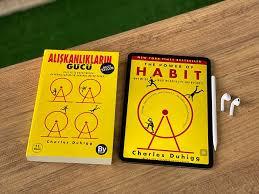
The Power of Habits
The Power of Habit, written by American journalist and Pulitzer Prize winner author Charles Duhigg, was first published in 2012 and within short achieved widespread international readership. Work examines automated patterns linked to human behavior through scientific data, offering a conceptual frame for understanding habit-based actions by individuals organizations and societies. Translated into Turkish as Alışkanlıkların Gücü, it has been published by multiple publishing houses. The book empha
EN
İrem Nur Yeşilyurt Kolağası

The Blind Man Who Lay Down Rises Up Strange
Our elders say that if you get too close to a person or an environment, you will be influenced by them. The proverb “He who sleeps with the blind wakes up blind” illustrates exactly this situation. A person’s behaviors, habits, and thoughts can spread to those around them, much like a common cold. Where Does It Come From? The origin of this proverb lies in ancient beliefs about eye diseases. In the past, people believed that illnesses could be transmitted from one person to another. It was thoug
EN
Nida Üstün
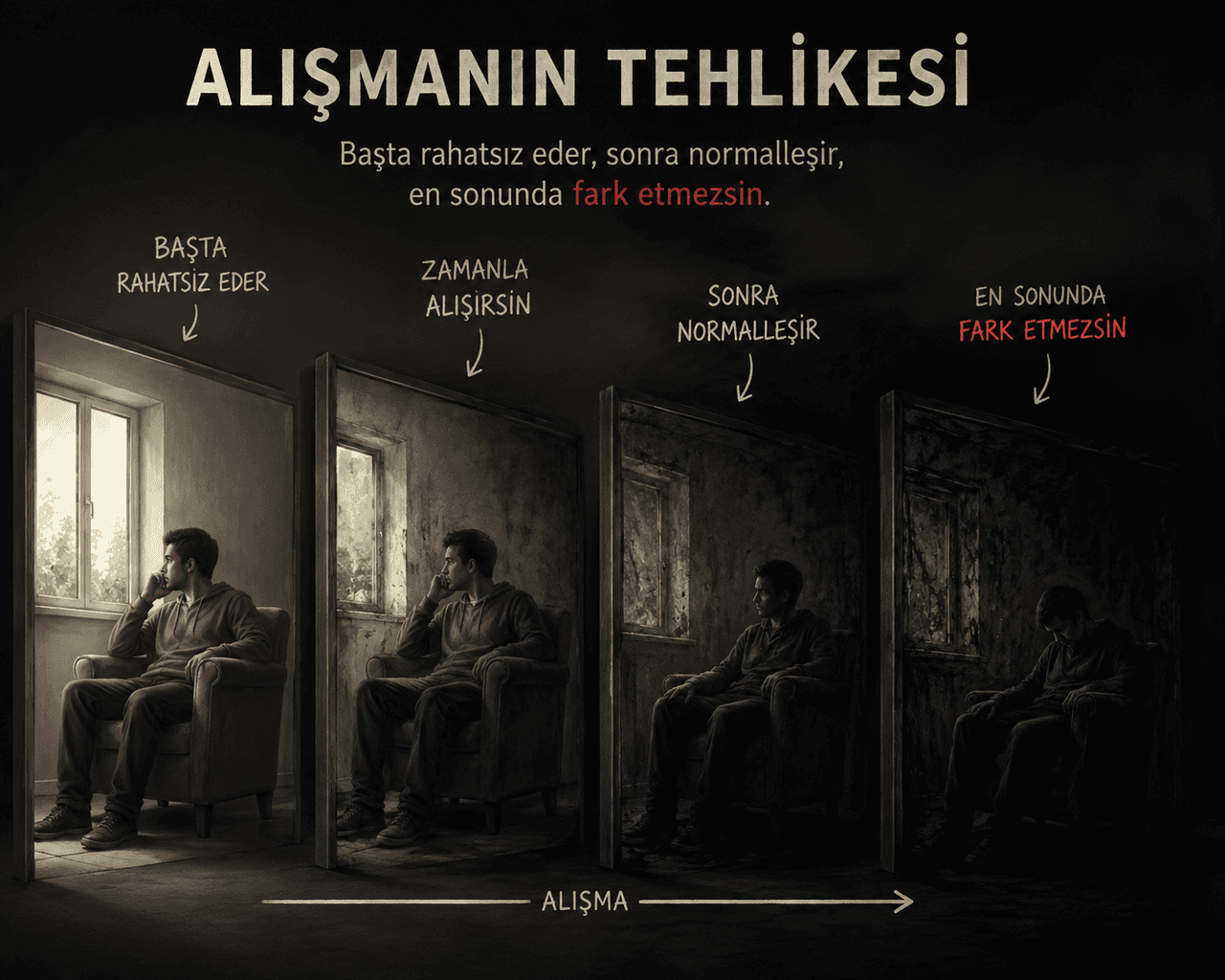
The Danger of Habit
If you live in a house long enough, you begin to stop hearing the sound of the wall clock. In the first days, you notice its ticking at night; it stands out in the silence, echoing from the corners of the room. Then days pass. The same sound continues at the same rhythm, but your mind erases it. The clock has not stopped. You have simply stopped listening. Perhaps many things in human life are the same. They do not disappear. They do not diminish. Sometimes they even remain exactly where they we
EN
Ebrar Sıla Peri

When eyes do not meet, the heart yields.
This saying expresses how the longing we feel for someone or something we cannot see gradually diminishes over time. Sometimes, a friend we love moves to another city. At first, we miss them deeply, but over time we grow accustomed to their absence. This is what is meant by “when the eyes do not see, the heart grows tolerant.” Where Does It Come From? The exact origin of this saying is unknown, but people have held this idea since ancient times. Individuals noticed that when separated from loved
ENNida Üstün
Reflections on Habits
Washing our faces every morning, fastening our seatbelts when getting into a car… These are fundamental habits we perform daily without much thought, yet they serve as protective routines that keep our daily tasks running smoothly. They are simple because when we repeat them, we do not engage in serious reflection. If we did, human societies would constantly be planning and replanning every single step. On the other side of the coin, however, these habits offer us speed and convenience. The rout
EN
Eyüp Uygun
 Th
ThThe Power of Small Habits to Change Life
When we think of changing our lives, we often imagine major decisions: a fresh start, profound changes, radical steps. Yet real transformation rarely begins with such noise. Instead, it seeps into our lives almost imperceptibly through small habits. Repeated actions that seem insignificant in daily life accumulate over time and produce unexpectedly powerful results. Reading a few pages of a book each day, waking up a little earlier in the morning, or taking a short walk during the day may not ap
ENEbrar Sıla Peri