

`god` Related Article Results
 De
DeDescartes' Theory of Ideas
Seventeenth-century thought was a period marked by profound transformations in the fields of epistemology and ontology. One of the central figures in these transformations was René Descartes. As one of the founding figures of modern philosophy, Descartes developed a systematic approach to understanding how knowledge can be attained and how the foundations of reality can be questioned. His philosophy centers on the pursuit of certain knowledge through methodological doubt, in which the concept of
EN
Aslı Öncan
DeDescartes' Ontological Argument
Descartes’ ontological argument is a rationalist approach that seeks to prove the existence of God solely through thought, without recourse to experience. This argument plays not only a theological but also an epistemological and metaphysical role within Descartes’ philosophical system. As part of his effort to establish certainty in knowledge, the ontological argument attempts to ground the existence of God as a necessary and self-evident reality. Presented in detail in the fifth meditation of
ENAslı Öncan
YaYazılıkaya Open-Air Temple
The Yazılıkaya Open-Air Sanctuary is located approximately two kilometers northeast of Hattusa, the capital of the Hittite Empire (modern Boğazkale), nestled among natural rock formations. This open-air sanctuary, built atop natural cliffs, was a significant sacred space used by the Hittites for religious ceremonies. The structure consists of two main sections, Rooms A and B, and reveals three distinct construction phases. Yazılıkaya Open-Air Sanctuary (Türkiye Culture Portal) " image-element-fo
EN
Melike Saraç
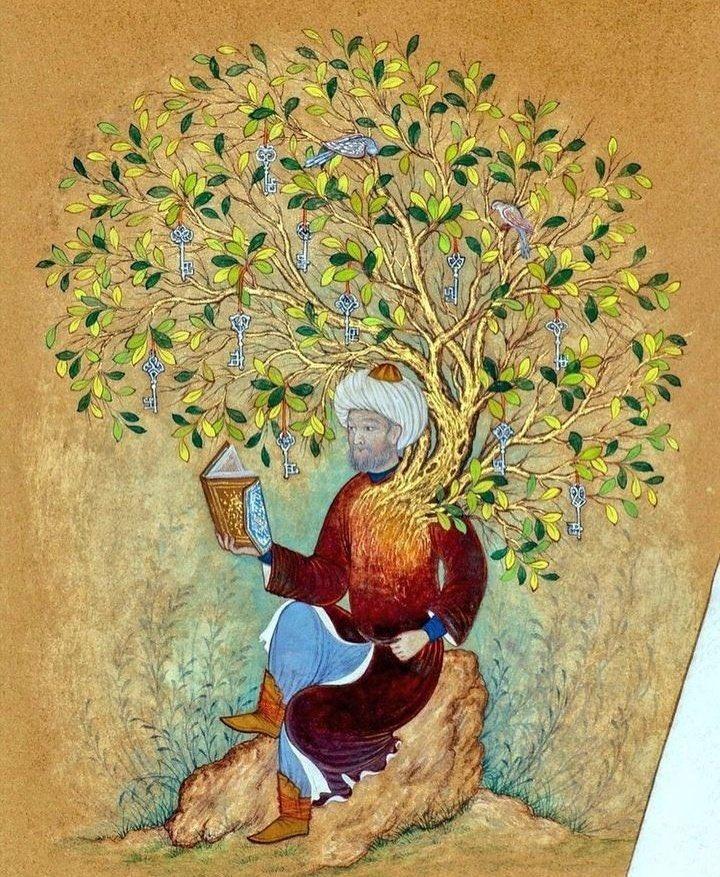
Anthropomorphic as Human and Theomorphic as God
At the core of the triple conception emerging in the concept of the individual lies the idea of a source upon which both the individual and external objects depend. Therefore, let us first examine the notion of “source.” What Is a Source? In Turkish, “kaynak” means the point of origin, beginning, or cause of something—like the spring from which a river emerges. As long as it remains connected to its source, the existence of that thing cannot be extinguished. Thus, “source” is not merely a static
EN
Lale Alp