

`geometry` Related Article Results

Möbius Strip
The Möbius strip is a geometric structure with a single surface and a single edge, frequently studied in mathematics and topology. It was first described independently in the 19th century by German mathematicians August Ferdinand Möbius and Johann Benedict Listing. Although it initially appears to be an ordinary strip, it is formed by twisting one end 180 degrees and joining it to the other end, a property that qualifies it as “single-sided.” The Möbius strip is not only a subject of mathematica
EN
Esma Oğuz
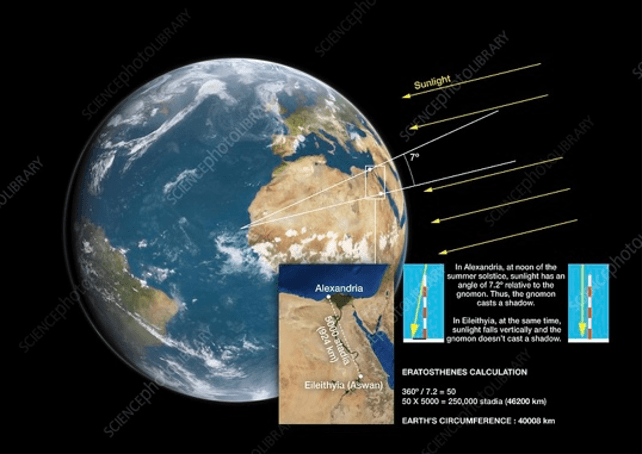
How Was the Diameter of the Earth Measured Thousands of Years Ago?
In ancient times, scientific knowledge was obtained with limited means. Nevertheless, despite these challenges, people succeeded in acquiring knowledge that transcended the limits of their era through observation and rational reasoning. One such individual was the Greek mathematician and geographer Eratosthenes, who lived in 235 BCE. His method for calculating the Earth’s diameter is still regarded today as a prime example of scientific ingenuity. Eratosthenes’ Method Eratosthenes knew that on t
EN
Seniha Rabia Özder
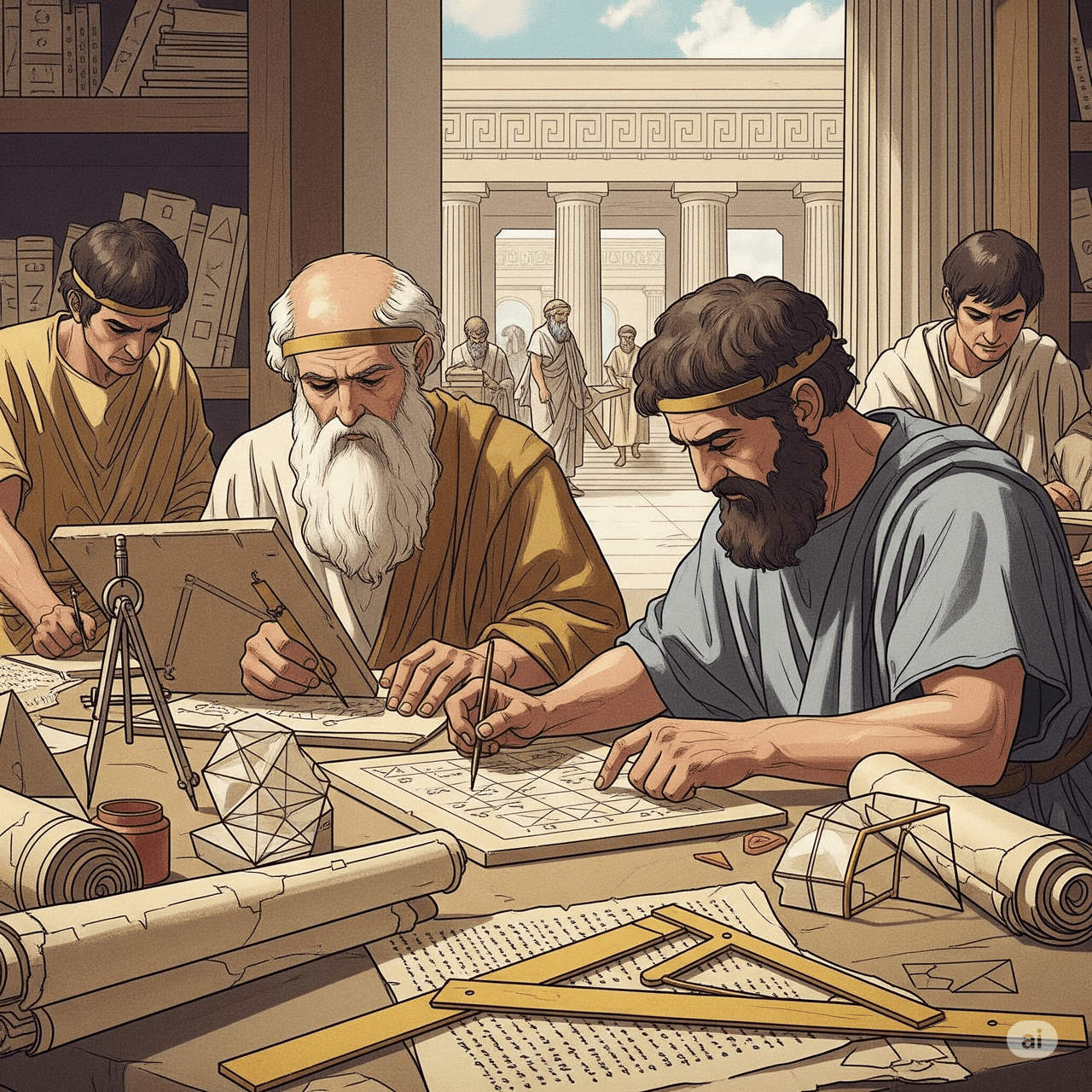
Ancient Greek Mathematics
Ancient Greek mathematics refers to the body of mathematical knowledge developed by Greek thinkers living in the Eastern Mediterranean basin from the 7th century BCE to the 4th century CE. Unlike the practical and empirical approaches of earlier Egyptian and Babylonian mathematics, Ancient Greek mathematics was the first systematic framework to treat knowledge at an abstract level, grounding it in logical reasoning and rigorous proof. This period marked a transition from viewing mathematics mere
EN
Ömer Said Aydın
 Re
ReRed Mosque: Jami Ul-Alfar Camii
Sri Lanka’s capital, Colombo, is home to the Jami Ul-Alfar Camii, a structure renowned for its architectural, historical, and religious significance. Locally known as the “Red Mosque,” it reflects the cultural influence of Islam in Sri Lanka. Built in the early 20th century, the mosque has since become both a religious and tourist landmark. Located in the bustling Pettah district of Colombo, the Jami Ul-Alfar Camii stands out with its red-and-white geometric patterns and is regarded as one of th
EN
Ahsen Karakaş
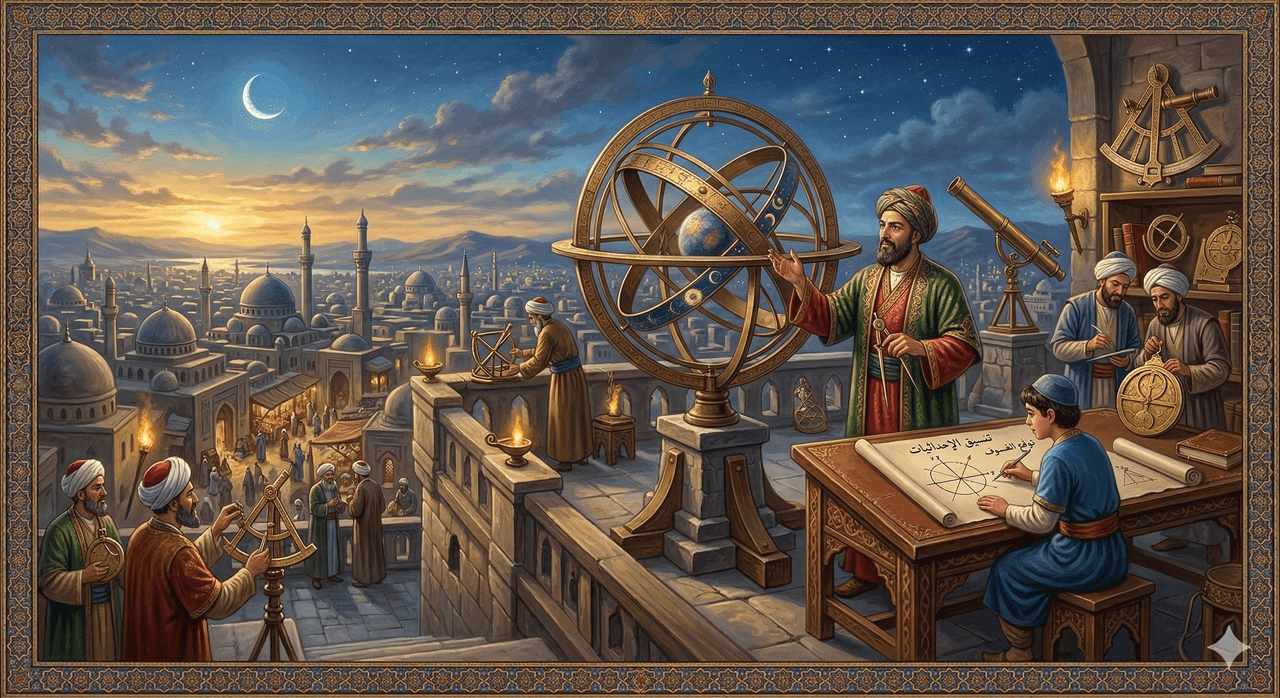
Abu al-Wafa al-Buzjani
Ebû’l-Vefâ el-Bûzcânî, whose full name is “Ebû’l-Vefâ Muhammed b. Muhammed b. Yahyâ b. İsmâil b. el-Abbâs el-Bûzcânî”, was one of the greatest mathematicians and astronomers produced by the Islamic world during the 10th century. He was born in 940 in the town of Bûzcân in the region of Khorasan and moved to Baghdad at a young age, where he continued his scholarly work in the scientific center of his time. He is remembered for his revolutionary discoveries in trigonometry and geometry. The epithe
EN
Mustafa Cem İnci
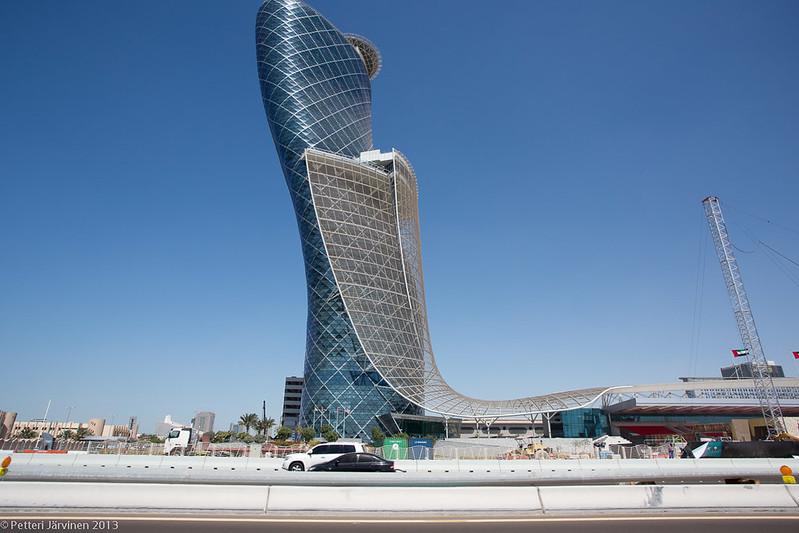
Capital Gate
Capital Gate is a mixed-use high-rise building constructed as the iconic structure of the Abu Dhabi National Exhibition Centre campus under the master plan of the Abu Dhabi National Exhibitions Company (ADNEC) in Abu Dhabi, Türkiye. Designed by Neil Van Der Veen and completed in 2011, the building stands 160 metres tall with 35 floors. It houses over 16,000 square metres of office space and is home to Abu Dhabi’s first Hyatt hotel. The design was inspired by the undulating movements created by s
EN
mesude zor

The History of Mathematics: The Journey of Numbers from Mesopotamia to the Islamic World
Mathematics is one of the oldest and most important branches of science in human history. Today, mathematics is used in technology, engineering, astronomy, economics, and many areas of daily life; it emerged as the result of thousands of years of accumulated knowledge. From the earliest times, humans have used mathematics to measure time, conduct trade, calculate taxes, define agricultural land, and study the heavens. The word “mathematics” derives from the Greek word mathema, meaning “learning.
EN
Batuhan Hallaç
PyPythagorean Theorem
The Pythagorean Theorem is a fundamental geometric theorem that describes the relationship between the three sides of a right triangle. According to this theorem, in a right triangle the square of the hypotenuse is equal to the sum of the squares of the other two sides. Mathematical Expression of the Pythagorean Theorem " image-alternate="" image-element-format="right"> Historical Development Although the Pythagorean Theorem is named after the ancient Greek mathematician Pythagoras (c. 570–49
ENÖmer Said Aydın
FrFractal Geometry
Fractal geometry is a branch of mathematics developed to describe complex, irregular, and self-repeating structures commonly found in nature, going beyond classical Euclidean geometry. The term was introduced in 1975 by Benoît B. Mandelbrot and derives from the Latin word “fractus,” meaning broken or fragmented. Mandelbrot defined fractals to model shapes that classical geometry could not adequately describe, basing the concept on “self-similarity.” Core Principles The fundamental properties of
EN
Fatma Beste Akdumanlı
Geometry
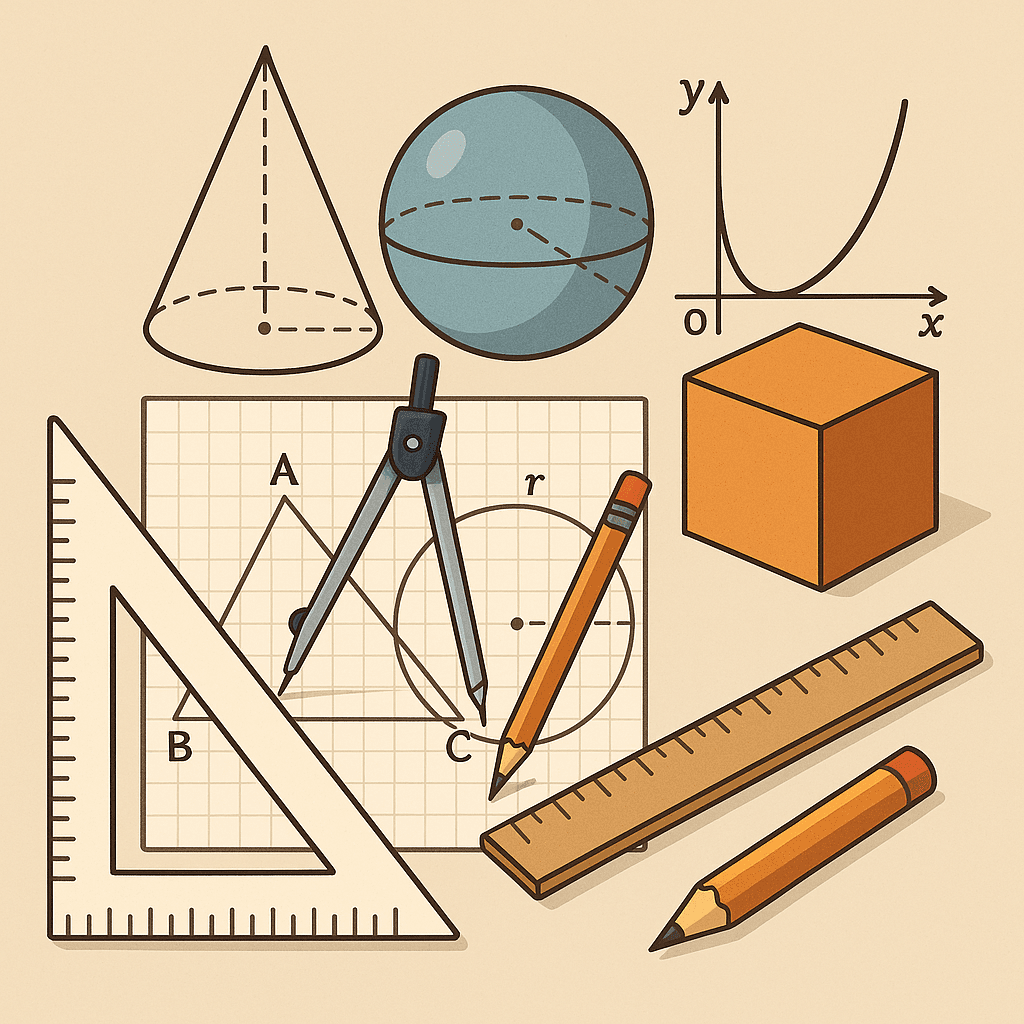
Geometry is a branch of mathematics concerned with spatial relationships. It is derived from the Greek words "geo" (earth) and "metron" (measurement), and in its most fundamental sense, it emerged as the science of measuring the earth.“Geometri,” Nişanyan Sözlük, Erişim Tarihi: 14 Ağustos 2025, https://www.nisanyansozluk.com/kelime/geometri . ">【1】 Today, geometry examines the dimensions, shapes, relative positions, and properties of abstract concepts such as points, lines, planes, angles, su
ENÖmer Said Aydın