

`fuel-cell` Related Article Results
 Fu
FuFuel Cell Electric Vehicles
Fuel cell electric vehicles (FCEVs) are a type of electric vehicle that generates its electricity using hydrogen as fuel. Unlike conventional internal combustion engine vehicles and battery electric vehicles (BEVs), they operate on a different principle. Instead of being charged from an external source, these vehicles produce electricity by combining compressed hydrogen stored in onboard tanks with oxygen from the atmosphere. Since the only byproduct of this process is water vapor, hydrogen fuel
EN
Sümeyye Akkanat Terzioğlu
FuFuel Cell
Fuel cells, unlike traditional energy production methods, generate energy directly through chemical reactions. In conventional energy production, fossil fuels are typically burned to produce heat, which is then used to drive mechanical generators that produce electricity. However, in fuel cells, fuel and air combine through an electrochemical reaction, producing electricity alongside heat. This approach eliminates harmful emissions and improves energy production efficiency. The use of fuel cells
EN
Ömer Said Aydın
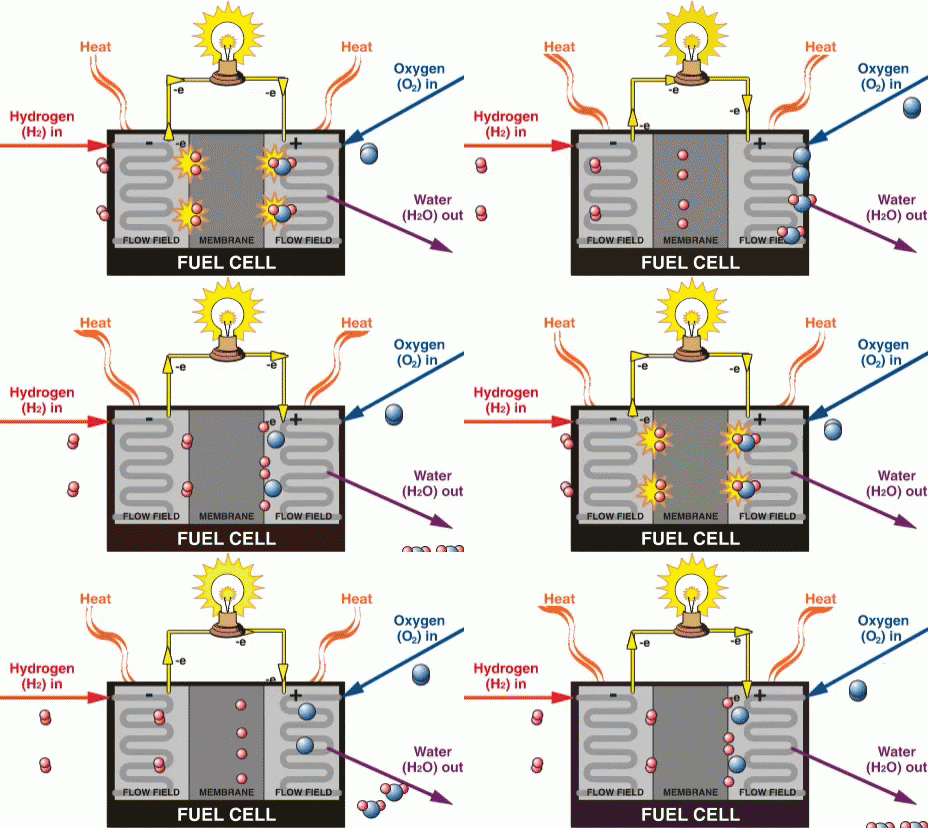
Fuel Cell
Fuel cells directly generate energy through an electrochemical process, unlike conventional energy generation methods. In traditional energy production, fuels are typically burned to produce heat, which is then converted into electricity by driving mechanical generators. However, in fuel cells, fuel and air combine through an electrochemical reaction, producing electricity and heat without combustion. This approach eliminates harmful environmental emissions and increases energy production effici
ENÖmer Said Aydın
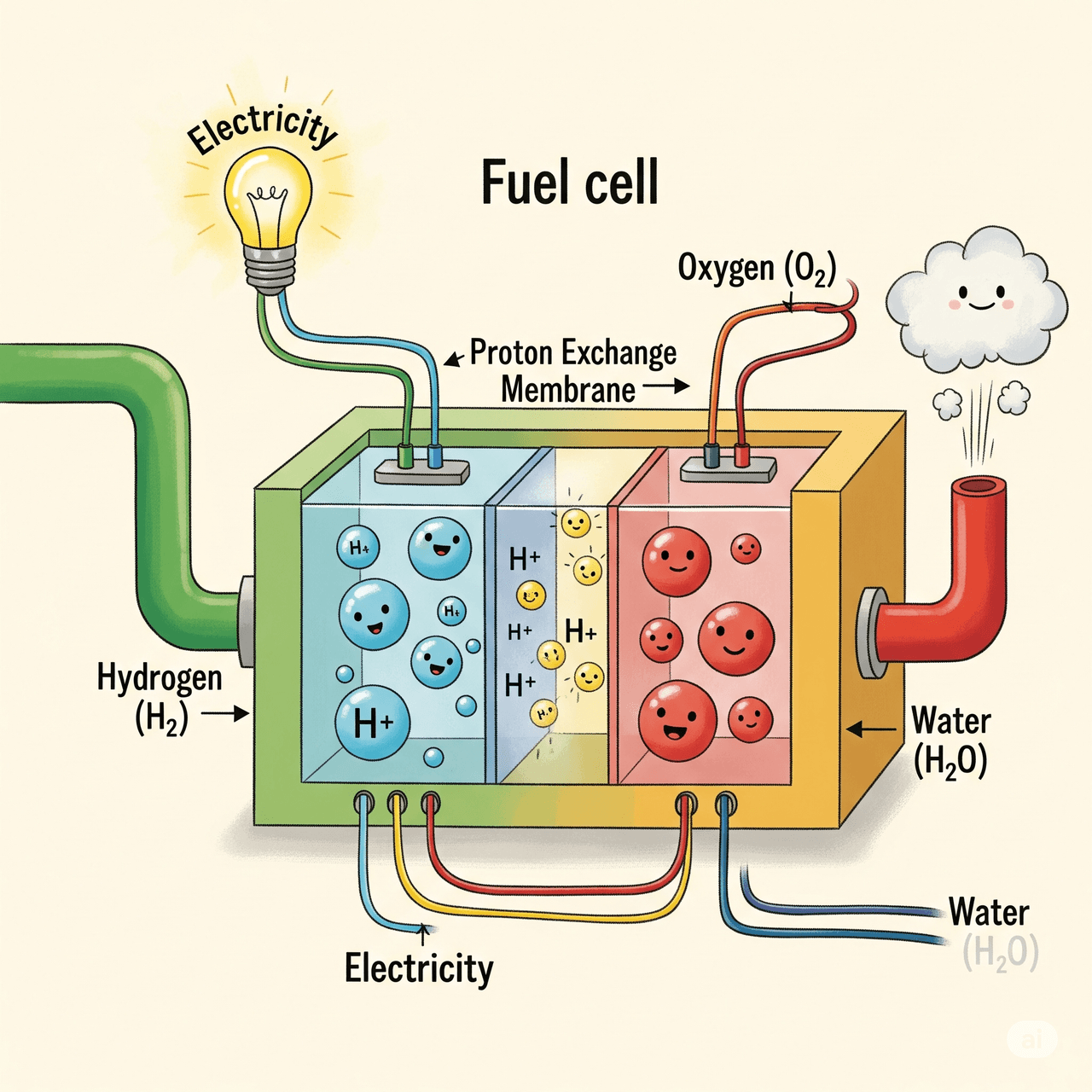
What Is a Fuel Cell?
A fuel cell is a specialized energy source that generates electricity, water, and heat using hydrogen gas. This system produces energy through chemical reactions rather than by directly burning the fuel. As such, it operates both cleanly and quietly. Fuel cells generate electricity like batteries but can operate for longer durations. They use only hydrogen and oxygen to produce electricity, making them harmless to the environment. They produce no waste other than water vapor and are environmenta
EN
İbrahim Filiz