

`fluid-mechanics` Related Article Results
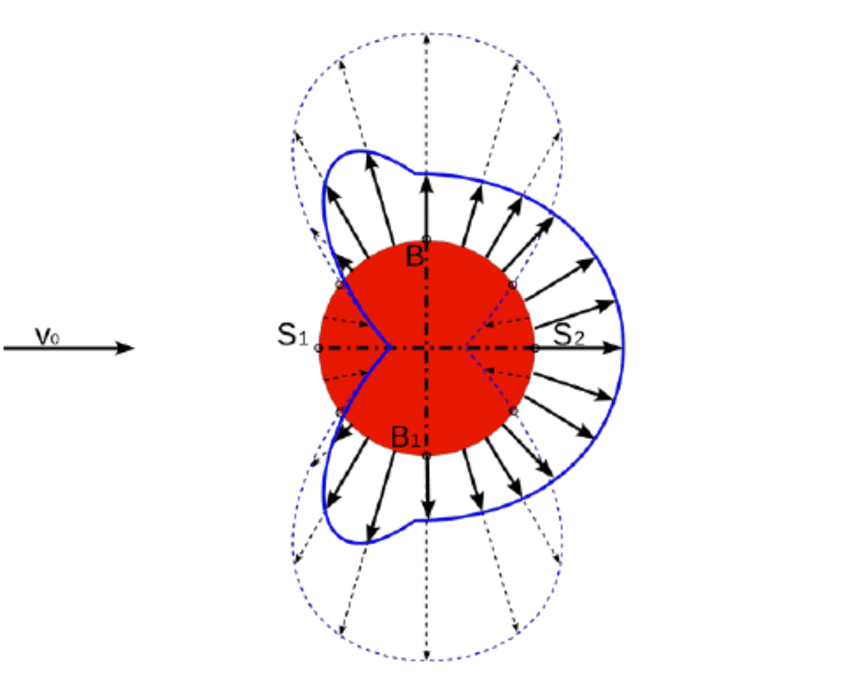
d'Alembert's Paradox
Fluid mechanics is a fundamental branch of physics that studies the behavior of moving fluids (liquids and gases) and the forces exerted on solid bodies interacting with these fluids. One of the most famous and historically significant problems in this field is d’Alembert’s Paradox, formulated in the 18th century by the French mathematician and physicist Jean le Rond d’Alembert. This paradox highlights a clear contradiction between a theoretical prediction of fluid mechanics and our everyday obs
EN
Hamit Buğra Bayram

Cavitation
Cavitation is a phenomenon that arises due to pressure fluctuations in liquid fluid systems and leads to serious problems in engineering applications. This phenomenon, particularly observed in hydraulic pumps, turbines, and propeller systems in the maritime industry, results in critical consequences such as material erosion, energy loss, and reduced system efficiency. The fundamental mechanism of cavitation lies in the local pressure of the liquid dropping below its vapor pressure, causing insta
ENAbdulkadir Bulut

Bernoulli Equation
The Bernoulli equation is a fundamental principle in fluid mechanics and aerodynamics, holding immense significance for understanding fluid dynamics and its applications in engineering. This equation not only explains various fluid behaviors in the physical world but also forms the basis for a wide range of engineering solutions spanning from aviation and automotive to water and energy production. The Bernoulli equation provides a theoretical framework for these fields by examining the relations
ENMevlüt Acar

Multiphase Flows
Multiphase flow is a type of flow in which two or more physical phases (gas, liquid, solid) coexist and move in dynamic interaction with each other. In such flows, the phases are distinctly separated above the molecular level, with boundaries between them observable at the macroscopic scale. Multiphase flows are prevalent in both natural processes and engineering applications and require specialized methods of investigation, analysis, and modeling due to their complex nature. Definition and Scop
ENOktay Dizi

Cavitation
Cavitation is a phenomenon that arises due to pressure fluctuations in liquid fluid systems and leads to serious problems in engineering applications road. This phenomenon, particularly observed in hydraulic pumps turbines and propeller systems in the maritime industry, results in critical outcomes such as material erosion energy loss and system reduced efficiency such as. The fundamental mechanism of cavitation involves the local pressure of the liquid dropping below its vapor pressure causing
ENAbdulkadir Bulut
 Co
CoCouette Flow
Couette flow is defined as a simple shear flow occurring between two parallel plates, where one plate moves relative to the other. In this flow, the velocity field is steady, fully developed, and unidirectional. In fluid mechanics, it serves as a fundamental model for examining the effects of variables such as viscosity, compressibility, and velocity. The magnitude of the velocity varies linearly with the spatial component perpendicular to the flow direction. Basic Principle and Flow Models In C
EN
Esra Emir

Bernoulli Equation
Bernoulli's equation is a fundamental principle in fluid mechanics and aerodynamics, of paramount importance for understanding fluid dynamics and applying them in engineering contexts. This equation not only explains various fluid behaviors in the physical world but also forms the basis for a wide range of engineering solutions spanning aviation, automotive design, water engineering, and energy production. By examining the relationship between fluid velocity, pressure, and energy, Bernoulli's eq
ENMevlüt Acar