

`epistemology` Related Article Results
 Ph
PhPhilosophy of Dance
Philosophy of dance is a field that examines fundamental philosophical questions such as the ontology, aesthetics, epistemology, and ethical dimensions of dance. This discipline addresses questions like what dance is, how it can be considered an art form, what meanings it carries, and how it produces knowledge and expression through bodily movement. It also analyzes the relationship between dance and society, culture, identity, and politics from a philosophical perspective. In this way, the phil
EN
Aslı Öncan
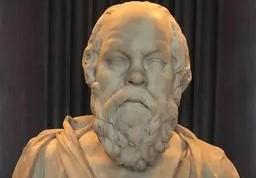
Socrates
Socrates is regarded as one of the foundational figures of ancient Greek philosophy. Living in Athens during the 5th century BCE, he deepened philosophical thought through inquiry and critical dialogue. His teachings and methods have reached us through his students Plato and Xenophon. Life Socrates’ exact birth year is unknown, but he is believed to have been born around 470 BCE in the Alopeke district of Athens. His father, Sophroniscus, was a stonemason, and his mother, Phaenarete, was a midwi
EN
Birgül Kayık
ThThought Experiments
A thought experiment is a method of inquiry conducted through mental imagery, without direct physical or empirical application. This method aims to analyze situations that are impractical to implement, ethically constrained, or theoretically complex. In thought experiments, hypothetical scenarios constructed under specific assumptions are mentally evaluated to test relevant concepts or principles or to achieve conceptual clarity. Thought experiments have a deep historical tradition in both scien
ENAslı Öncan
MeMethodical Doubt
Methodical doubt (Lat. dubitatio methodica) is a method of systematically questioning and temporarily rejecting all thoughts to establish knowledge on a solid foundation. This approach holds a central place, particularly in the philosophy of René Descartes, the founder of Cartesian philosophy. Methodical doubt is based on the premise that the validity of all knowledge must be tested, and only that which is certain and indubitable should be accepted as fundamental knowledge. Philosophical Backgro
EN
Sümeyye Akkanat Terzioğlu

Descartes’ s Unshakable World Built on Doubt: "Discourse on Method"
Seventeenth-century Europe is regarded as one of the turning points in the history of thought. The authority-based understanding of knowledge that had dominated the Middle Ages began to give way to an emphasis on the individual’s reason and capacity for questioning. Experience, reason, and individual thought now became central to philosophy. The upheavals introduced by Galileo and Kepler in the understanding of nature did not remain confined to the scientific realm; they also determined the dire
ENYaren Erva Keskin

Brain in a Vat (Thought Experiment)
The brain-in-a-vat is a philosophical thought experiment used in the fields of philosophical skepticism, philosophy of mind, and epistemology. According to this scenario, a human brain is kept biologically alive inside a vat filled with a life-sustaining fluid and is connected to an advanced computer that transmits artificial sensory data directly to its nerve endings. The brain believes that its experiences originate from the external world, whereas everything it perceives is in fact a simulati
EN
Esra Can
PhPhilosophy of Dance
The philosophy of dance is a field that examines fundamental philosophical questions regarding dance’s ontology, aesthetics, epistemology, and ethical dimensions. This discipline addresses questions such as what dance is, how it can be considered an art form, what meanings it carries, and how it generates knowledge and expression through bodily movement. It also analyzes, from a philosophical perspective, dance’s relationship with society, culture, identity, and politics. Thus, the philosophy of
ENAslı Öncan

What Is Sociology? (Book)
What Is Sociology? is a collection of four essays by Marcel Mauss. The work serves as a source that examines the epistemological foundations of sociology during its early institutionalization. This Turkish edition, published by Dergâh Yayınları in September 2022 as part of their Sociology series, is translated by Murat Devres and spans 182 pages. Content and Thematic Approach The four essays in the book are structured around themes such as defining the object of sociology, establishing relations
EN
Muhammed Samed Acar
DeDescartes' Ontological Argument
Descartes’ ontological argument is a rationalist approach that seeks to prove the existence of God solely through thought, without recourse to experience. This argument plays not only a theological but also an epistemological and metaphysical role within Descartes’ philosophical system. As part of his effort to establish certainty in knowledge, the ontological argument attempts to ground the existence of God as a necessary and self-evident reality. Presented in detail in the fifth meditation of
ENAslı Öncan
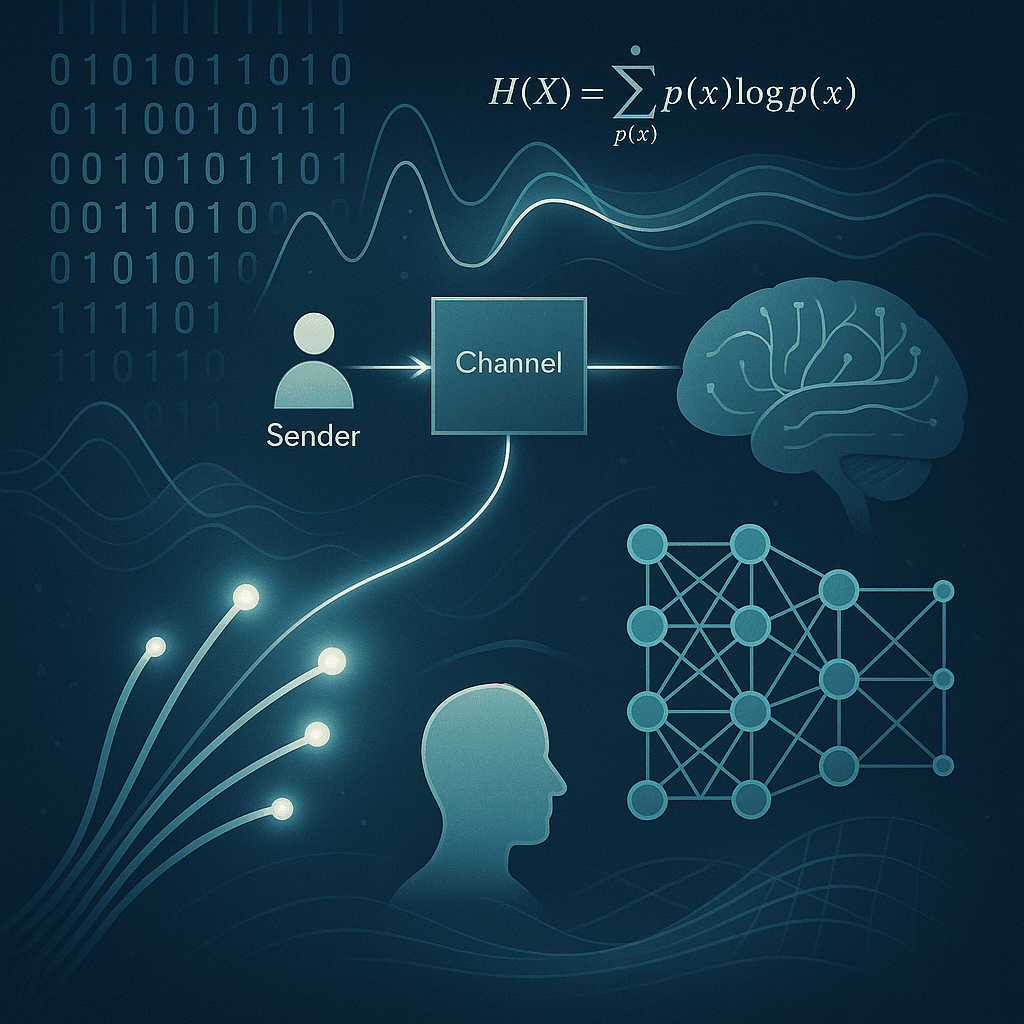
Theory of Information
Information theory, in its most general definition, is an interdisciplinary field that studies the nature, origin, limits, modes of transmission, and management processes of information. This field develops theoretical frameworks aimed at explaining the transmission and processing of any message that reduces uncertainty. Information is not merely a phenomenon confined to individual perception and thought; it is also evaluated as a multidimensional concept that functions within social, economic,
EN
Ömer Said Aydın