

`elongation` Related Article Results
Elasticity (Young's) Modulus
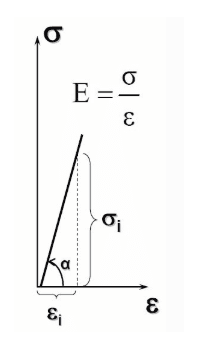
Discovery The concept of the modulus of elasticity was first introduced by Thomas Young in 1807. Definition Also referred to in some sources as Young's modulus, the modulus of elasticity (E) is a value that represents a material's resistance to deformation under load. This value (E) serves as a measure of how stiff or flexible a material is. A higher value indicates that the material will deform less compared to one with a lower value. Determination and Base Unit This value is calculated from th
EN
Elyesa Köseoğlu
Ductile Material
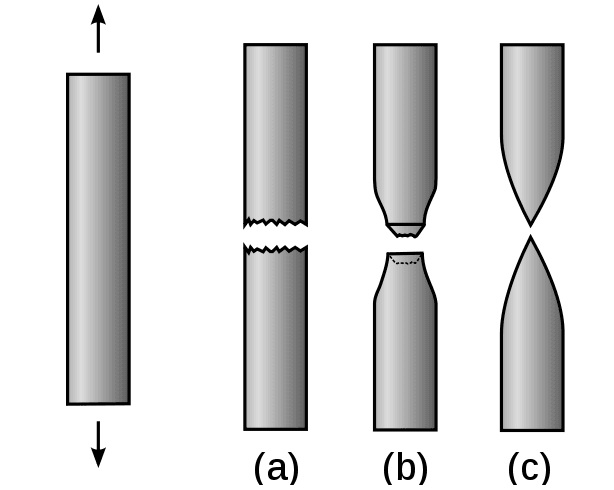
Ductility is a mechanical property that indicates a material's ability to undergo significant plastic deformation before plastic deformation to. Ductile materials experience damage after noticeable elongation or shape change rather than sudden fracture when subjected to high stresses. This behavior enables a more controlled load capacity by preventing sudden structural collapse during fault conditions, thereby enhancing safe usage. 【1】 Intracrystalline Mobility Ductile metals subjected to high s
ENElyesa Köseoğlu

Tensile Test
Tensile test is one of the fundamental and most widely used experimental methods for quantitatively determining the mechanical behavior of engineering materials. This test involves subjecting a specimen to uniaxial tensile force, allowing detailed information to be obtained about the material’s elastic and plastic deformation limits, ductility, fracture behavior, and strength. This information is critical in numerous engineering applications including material selection, product design, quality
ENMuzaffer Yalçın