

`electron` Related Article Results
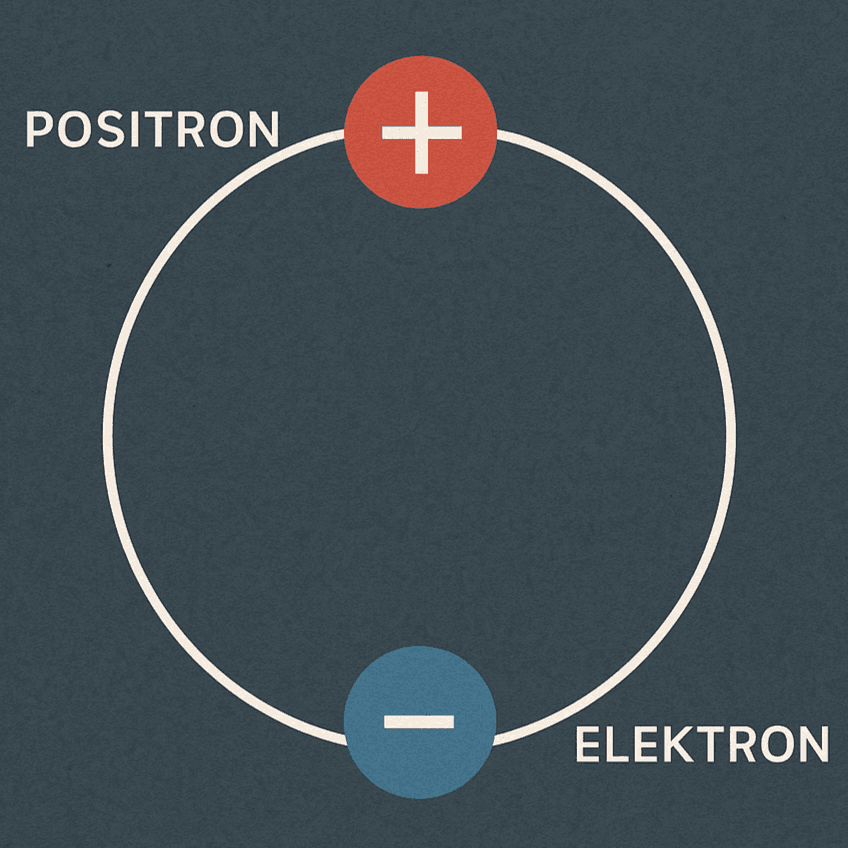
Positronium
Positronium (Ps) is an exotic atom consisting of an electron (e⁻) bound to its antiparticle, the the positron's (e⁺), by the Coulomb force. It has a structure similar to the hydrogen atom but contains a positron instead of a proton. This composition makes Ps a unique model for studying particle-antiparticle systems. The existence of positronium was first predicted theoretically by Mohorovičić in 1934. Its spectroscopic structure was calculated by Ruark in 1945, and its binding energy and lifetim
EN
Muhammed Mehdi İleri
 Po
PoPositron (Antielectron)
Positron is a fundamental particle and the antiparticle of the electron. It has the same mass as the electron but carries a positive electric charge. Because of this property it is also called a "positive electron". The existence of the positron marked a pivotal moment in our understanding of the building blocks of matter and the fundamental symmetries of the universe. The positron was first discovered in 1932 by American physicist Carl David Anderson during experiments with cosmic rays. Anderso
EN
Muhammed Mehdi İleri
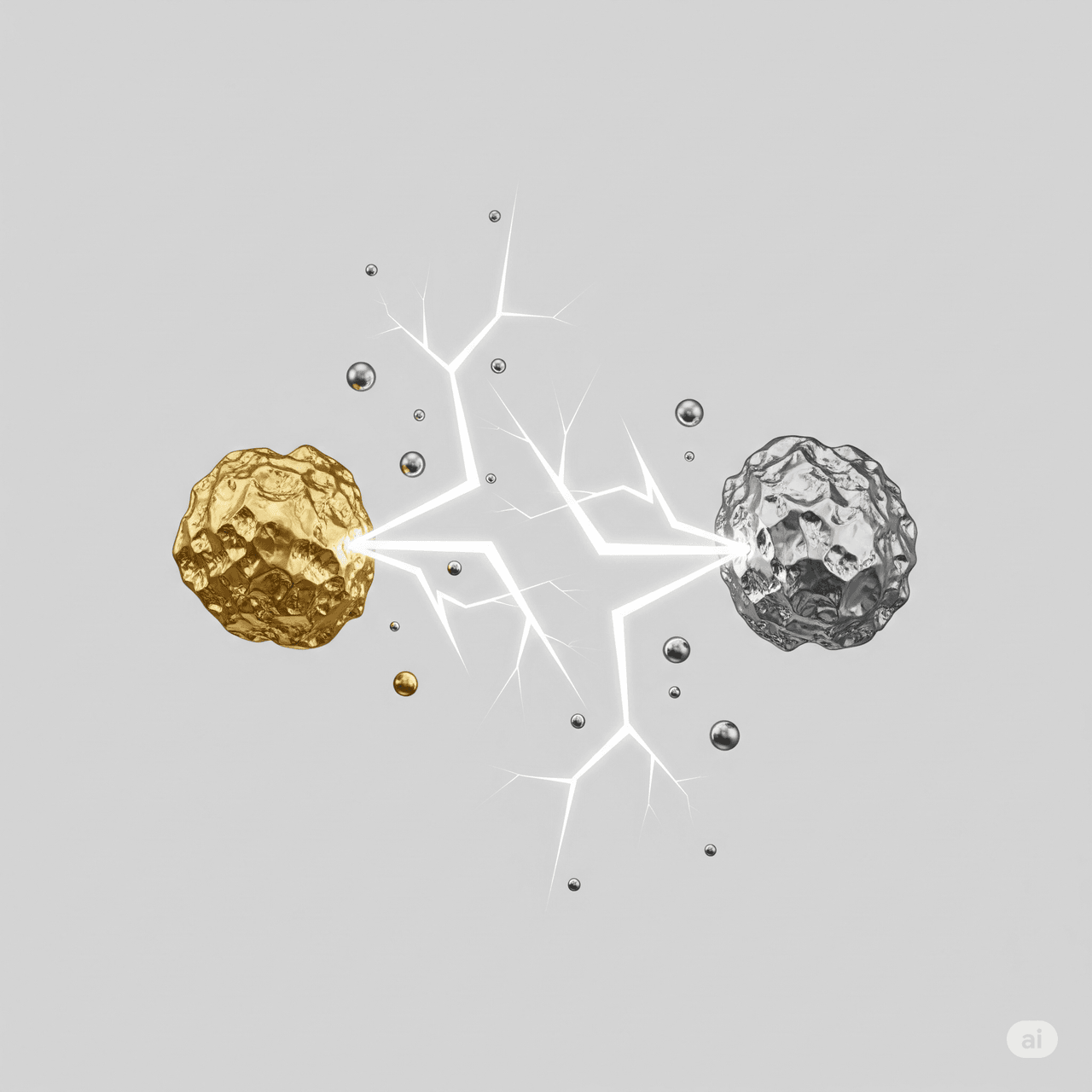
Materials That Conduct Electricity: Metals
Why Do Metals Conduct Electricity Well? Have you ever wondered how the lamp in your room turns on when you press the light switch? Behind this process are very small but crucial particles: electrons! And the excellent carriers that transport them: metals! Many everyday objects we use — such as phone charging cables, wires inside electrical outlets, or electric stoves — are coated with or contain metal materials. This is because metals conduct electricity very well. But why exactly? (Generated by
EN
Hikmet Can Urhan
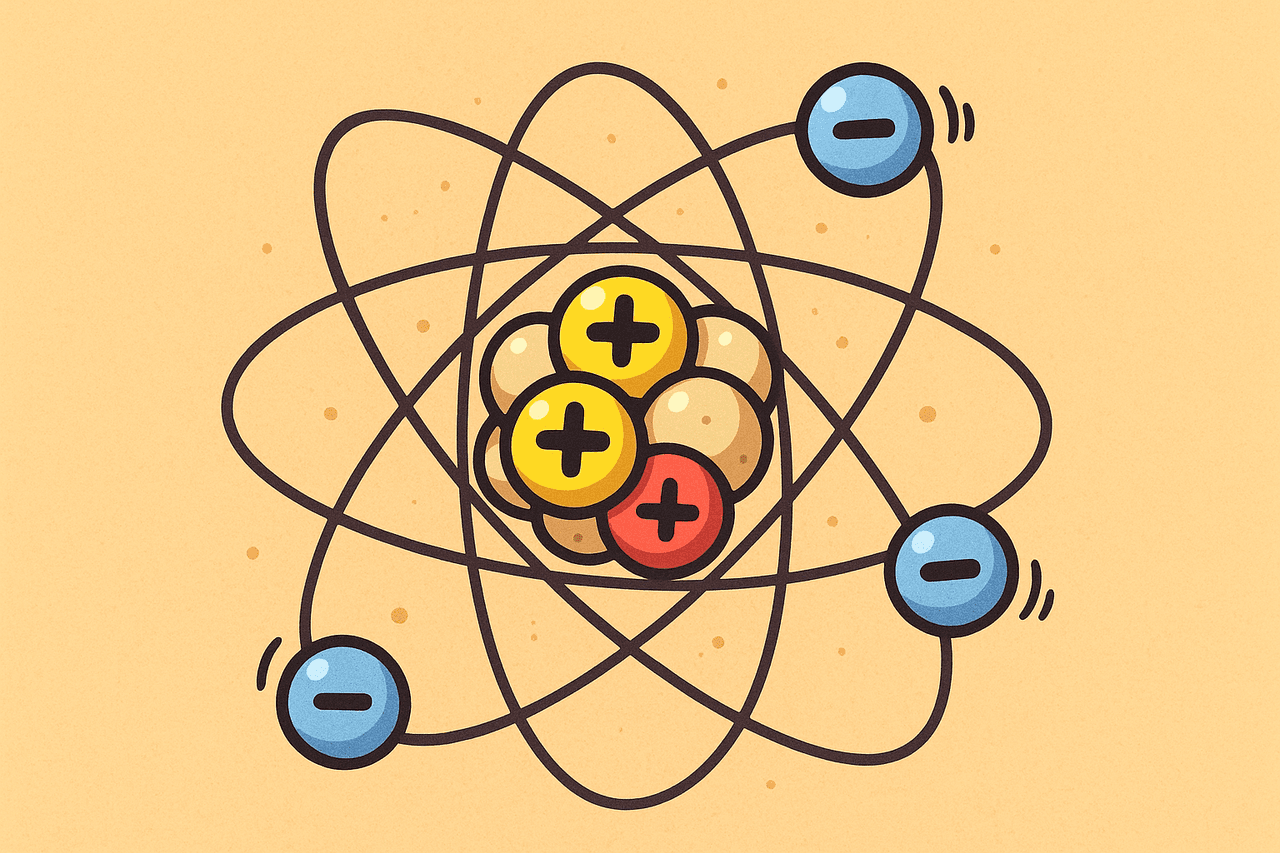
What is an Atom?
Atom is the smallest unit of matter. Everything we see around us — rocks, plants, animals, and even ourselves — is composed of countless atoms. Atoms are so small that even a single grain of sand contains trillions of them. An atom consists of two main parts: the nucleus and the electron cloud surrounding it. The nucleus contains protons (positively charged particles) and neutrons (neutral particles). Electrons (negatively charged particles) move rapidly around the nucleus. Structure of the Atom
EN
Melahat Pamuk
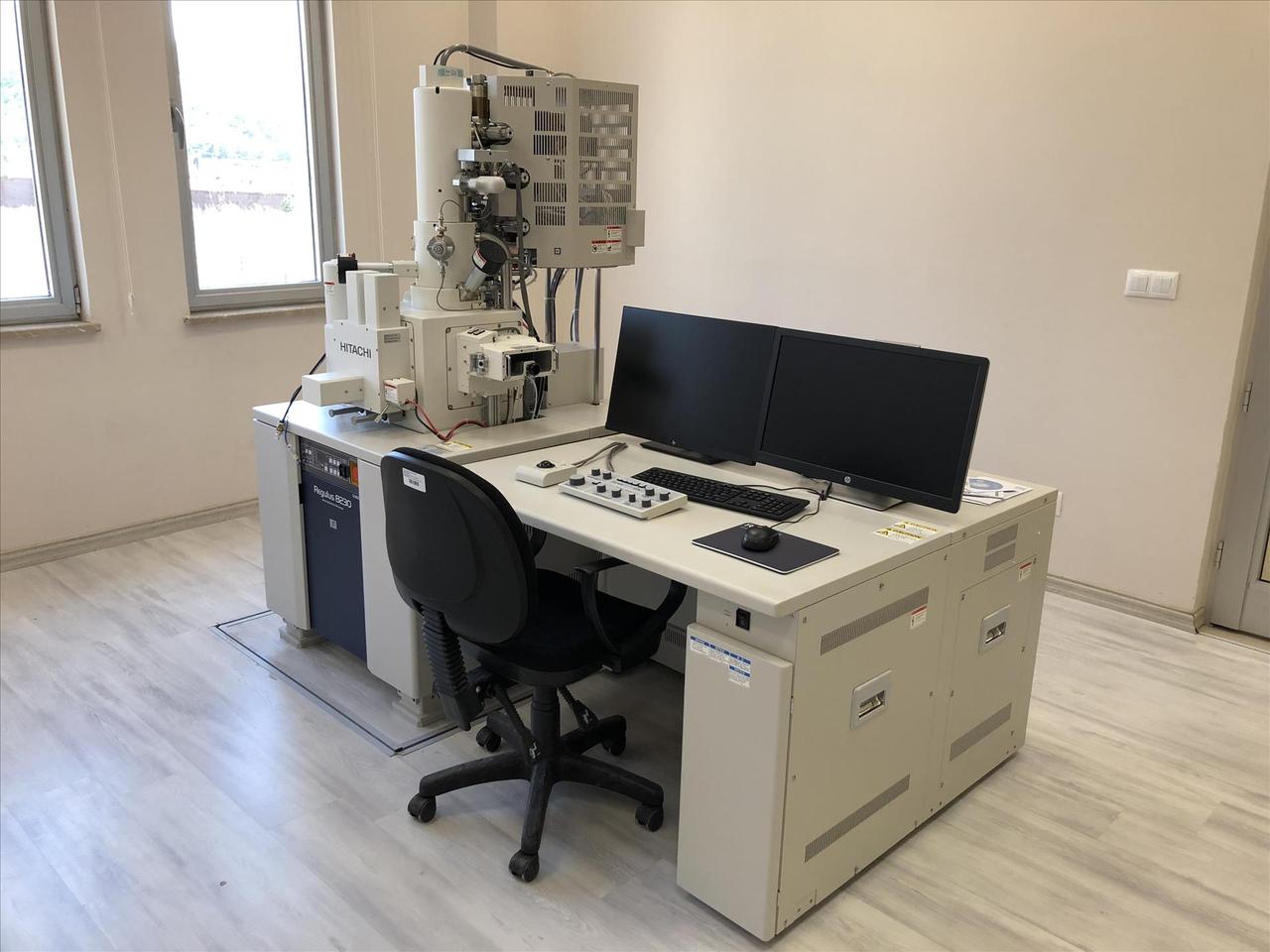
Field Emission Scanning Electron Microscope (FE-SEM)
Field Emission Scanning Electron Microscopy (FE-SEM) is a microscopy technique that offers approximately ten times higher resolution than conventional scanning electron microscopes (SEM). FE-SEM enables sub-nanometer resolution (theoretically up to 0.4 nm) by using a field emission gun (FEG), and its usage rate in nanotechnology has increased by 50% in recent years. This technology plays a critical role in the detailed examination of nanostructures in materials science, electronics, and biomedic
EN
Mürüvvet Doğangün
Discovery of the Electron
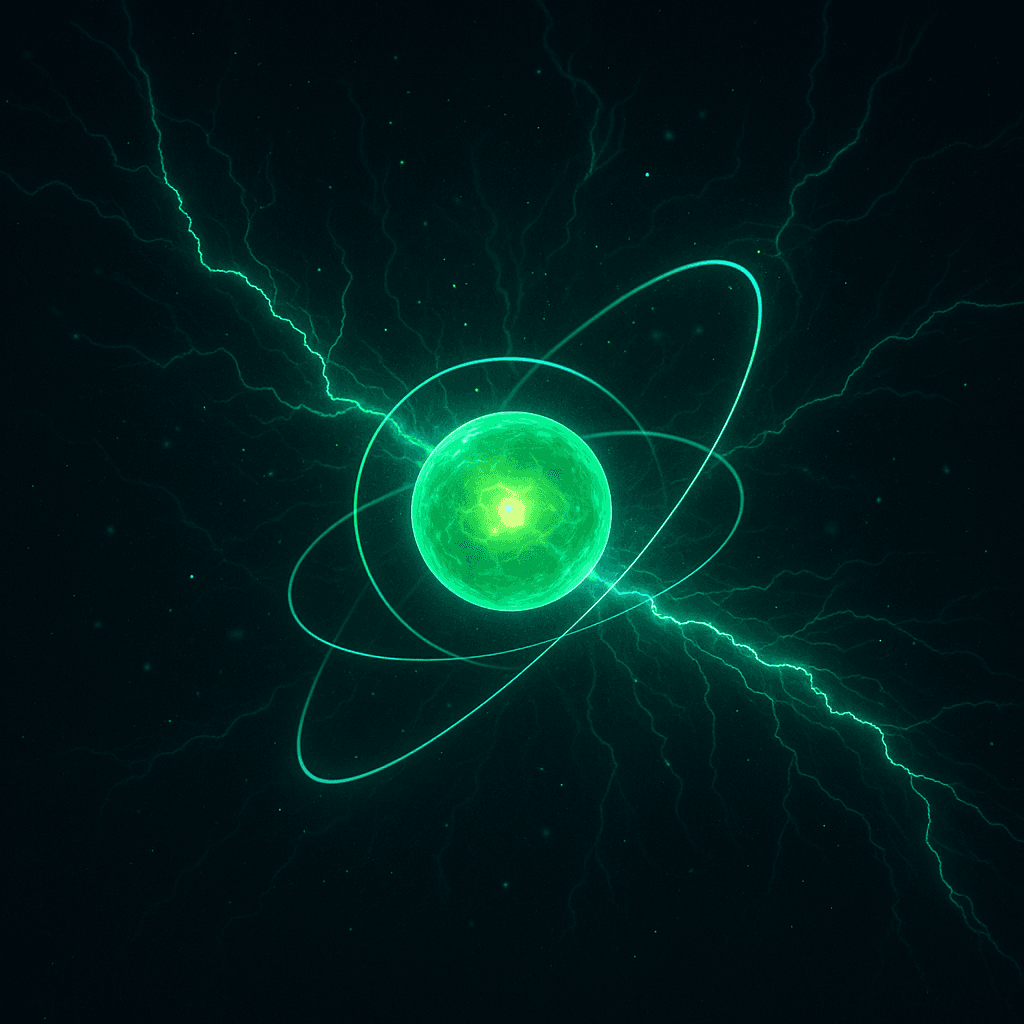
An electron is a fundamental subatomic particle with a negative electric charge. It is found in orbits around the atomic nucleus or may exist freely. In the Standard Model of particle physics, it is a member of the family of particles known as leptons. It was discovered in 1897 by the British physicist Joseph John Thomson through experiments on cathode rays. This discovery overturned the prevailing belief that atoms were indivisible, creating a breakthrough in modern physics and chemistry and pa
EN
Ömer Said Aydın

Proton (Subatomic Particle)
The proton is a positively charged (+) subatomic particle located in the atomic nucleus. It plays a central role in both atomic physics and high-energy particle physics. Within the framework of modern theoretical physics, the structure of the proton, its internal dynamics, and experimental measurement methods remain key areas of ongoing research. Definition and General Properties The proton is a baryon with a positive electric charge of +1e, a spin of ½, and a mass of approximately 938.272 MeV/c
EN
Zehra Yayla
Antimatter
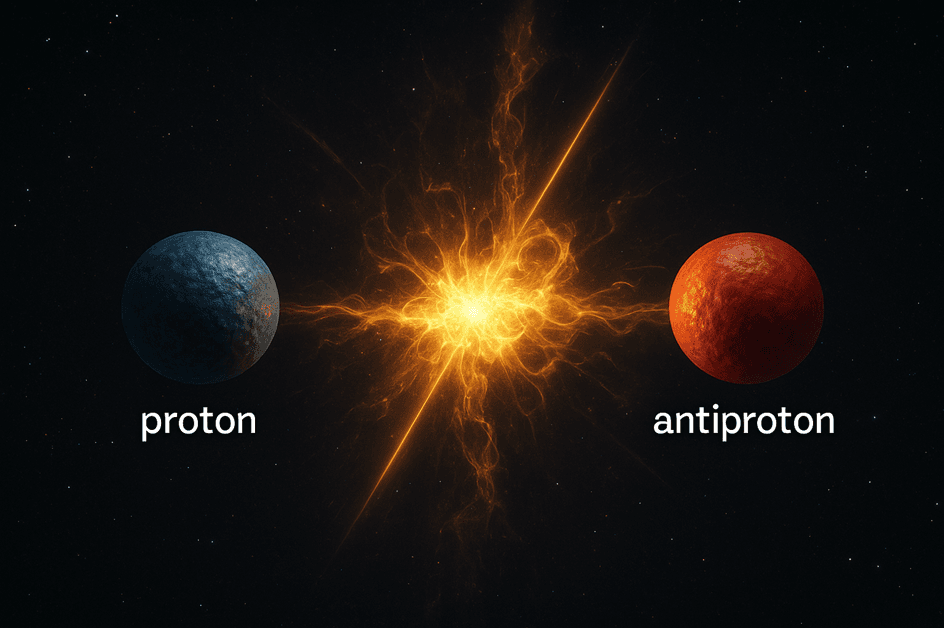
Antimatter is a type of matter composed of antiparticles, each of which has the same mass as the fundamental particles in the universe but opposite electric charge. In the context of modern physics, antimatter can be described as the mirror image of matter. The antiparticle of the electron is the positron, that of the proton is the antiproton, and that of the neutron is the antineutron. When antimatter comes into contact with matter, it transforms into energy through a process known as annihilat
ENMuhammed Mehdi İleri
Positronium
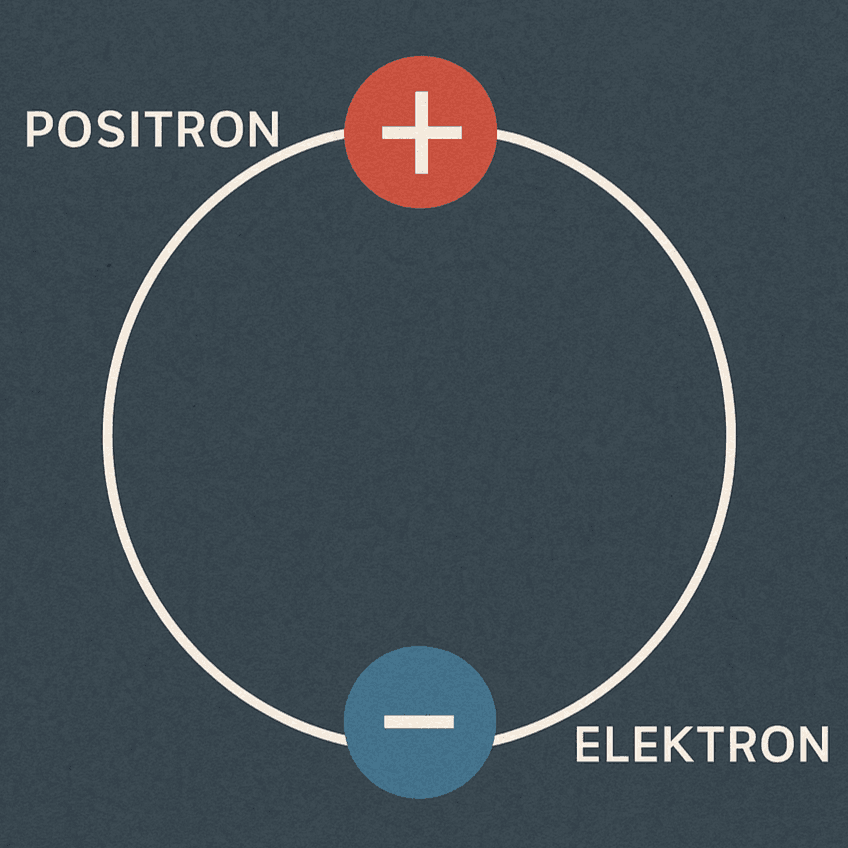
Positronium (Ps) is an exotic atom consisting of an electron (e⁻) bound by the Coulomb force to its antiparticle, the positron (e⁺). It has a structure similar to the hydrogen atom but replaces the proton with a positron. This composition makes Ps a unique model for studying particle-antiparticle systems. The existence of positronium was first predicted theoretically by Mohorovičić in 1934. Its spectroscopic structure was calculated by Ruark in 1945, and its binding energy and lifetime were dete
ENMuhammed Mehdi İleri
Antimatter
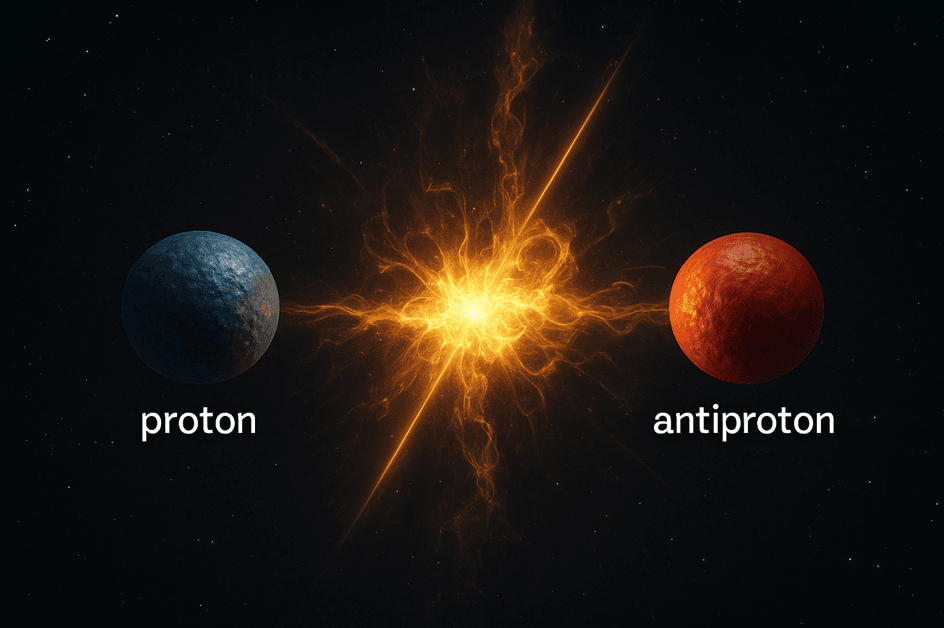
Antimatter is a type of matter composed of antiparticles, each of which has the same mass as the fundamental particles in the universe but opposite electric charge. In the context of modern physics, antimatter can be defined as the mirror image of matter. The antiparticle of the electron is the positron, that of the proton is the antiproton, and that of the neutron is the antineutron. When antimatter comes into contact with matter, it converts into energy through a process called annihilation. T
ENMuhammed Mehdi İleri