

`elasticity` Related Article Results
 Is
IsIsotropic Material
Isotropic materials are defined as materials whose physical and mechanical properties are identical in all directions. In such materials, parameters such as the modulus of elasticity, thermal conductivity, and electrical conductivity like are the same in all directions and independent of the chosen coordinate system. Isotropic Materials Uniform Properties: Isotropic materials exhibit identical mechanical properties in all directions. This means that characteristics such as strength and stiffness
EN
Elyesa Köseoğlu
DeDemand and Supply
Demand and Supply Economics is a branch of goods concerned with the production, distribution, and consumption of goods and services. One of the fundamental components of this process is the concepts of demand and supply. Demand refers to consumers’ willingness to purchase a specific good or service at a given price, while supply indicates producers’ intention to offer the same good or service in the market. Demand and supply play a central role in the functioning of the economy. In this article,
EN
Hatice Kubat
Elastic Deformation
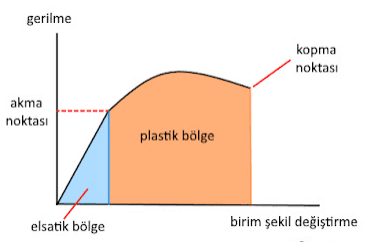
When the applied force is removed, the ability of a body to return to its original shape is called elastic deformation. How It Is Achieved In a stress-strain graph, the area under the linear portion is referred to as the elastic region. Whether a body exceeds its elastic deformation region is determined by the stress value the material reaches below its yield point. Accordingly, if the stress induced in a component under load does not exceed the material’s yield point, it remains within the boun
ENElyesa Köseoğlu
Plastic Deformation
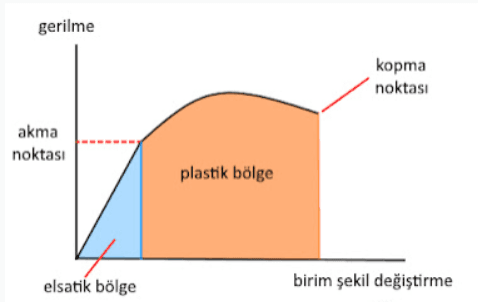
Definition The phenomenon in which a body together fails to return to its original shape after the applied force is removed is called plastic deformation. How It Is Obtained In a stress-strain graph, the area under the linear region region is called the elastic region while the area under the nonlinear region is called the plastic region elastic region plastic. Whether a body undergoes plastic deformation is determined by the stress value reached by the material below its load. Accordingly if th
ENElyesa Köseoğlu
Hooke’s Law
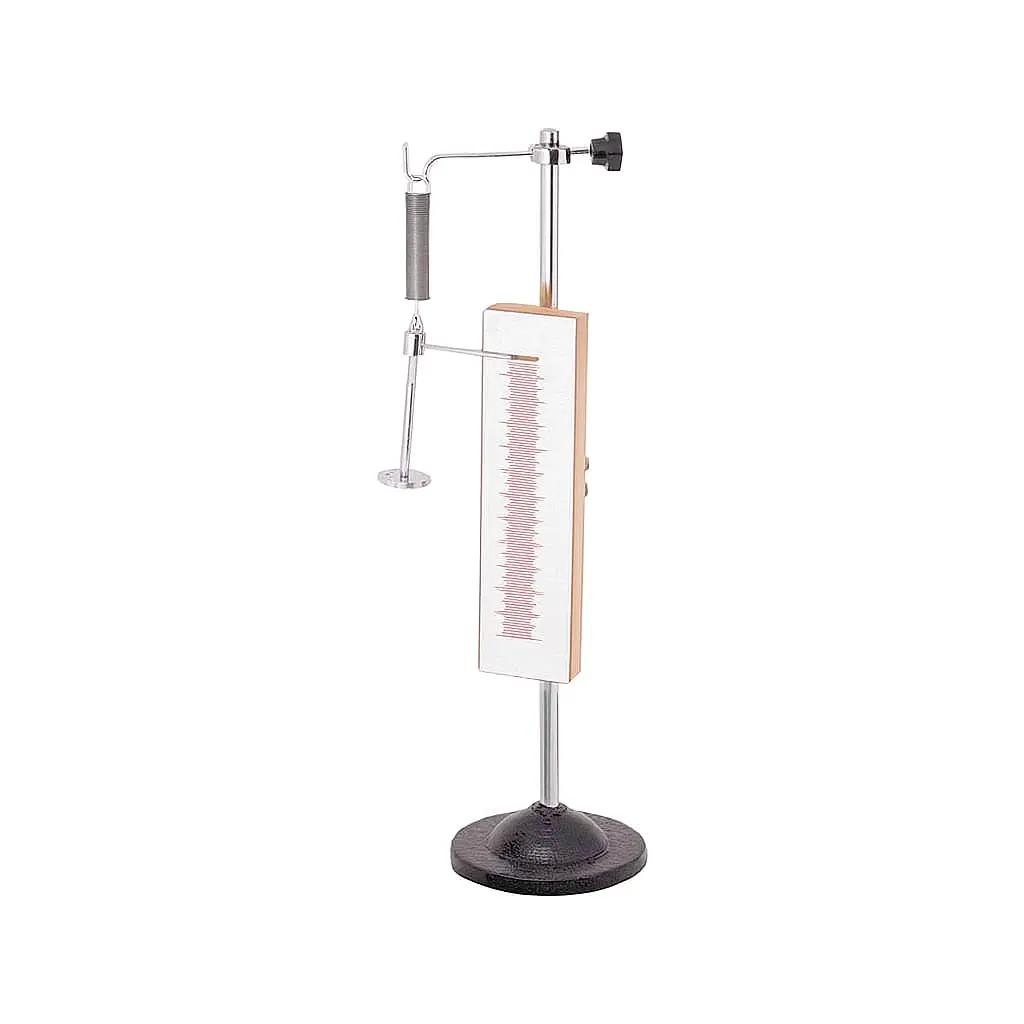
Hooke’s Law emerged during the 17th-century Scientific Revolution, particularly alongside advancements in mechanics and materials science. The English scientist Robert Hooke introduced this law in his 1678 publication titled “Lectures de Potentia Restitutiva, or of Spring.” Through experiments on various spring systems, Hooke discovered that there is a constant ratio between the deformation of an elastic object and the force applied to it. This ratio varies depending on the material and geometry
EN
Sümeyye Akkanat Terzioğlu
Stress-Strain Curve
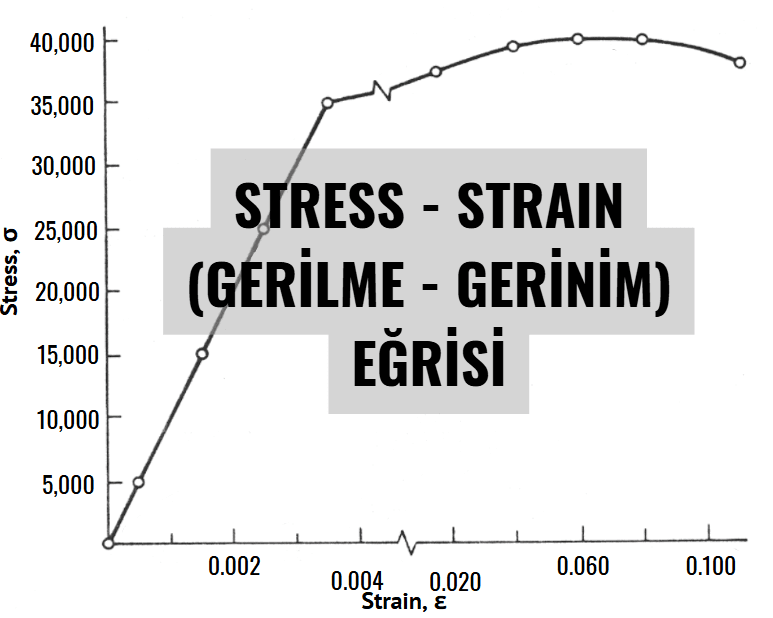
Stress-Strain Curve is one of the fundamental graphical tools used to characterize the mechanical behavior of a material. This curve defines the relationship between the applied external force (stress) and the resulting deformation (strain). In materials science and engineering, it holds central importance in evaluating elastic, plastic, and fracture behaviors. Purpose of Use Stress-strain curves enable the determination of parameters such as the elastic limit, melting point, fracture strain, du
ENMuzaffer Yalçın