

`design-patterns` Related Article Results
 St
StStructural Design Patterns
1. Adapter (Adapter) Design Pattern Enables communication between two incompatible interfaces. It converts the interface of an existing class into another interface that is expected. Ideal for integrating new code into legacy systems. -> When to Use When an existing class has the required functionality but does not match the expected interface. When integrating third-party libraries into your system. When backward compatibility is required. -> Code Example Suppose our application works wit
EN
Sinan Turan
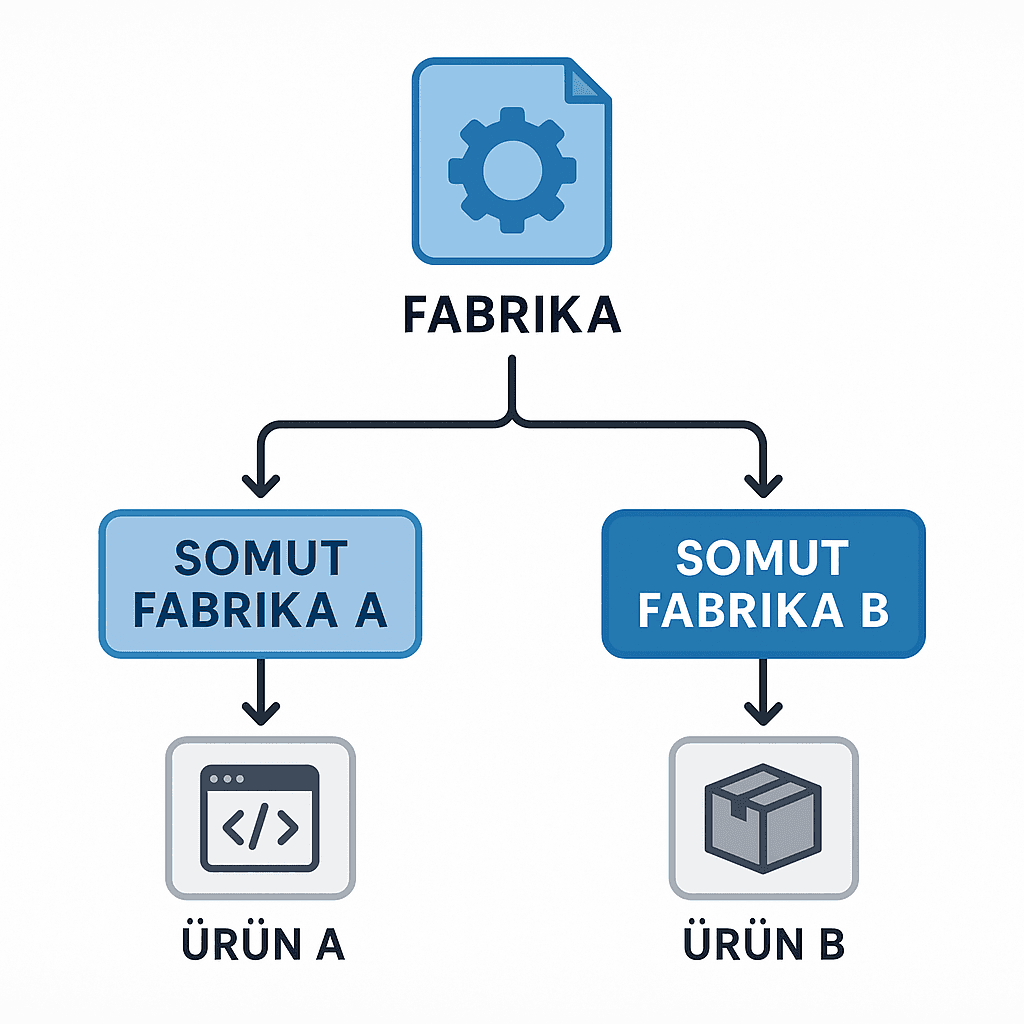
Factory Design Pattern
The Factory Design Pattern is a creational design pattern in software engineering that abstracts the object creation process, allowing the client to create objects without knowing the concrete class of the object to be created. This pattern reduces the dependency between client code and object creation logic, enabling a flexible and maintainable software architecture. History The concept of design patterns was first introduced by architect Christopher Alexander in his 1977 work titled "A Pattern
EN
Uğurcan Soruç
CrCreational Design Patterns
1. Factory Method (Factory Method) The Factory Method pattern delegates the object creation process to subclasses, allowing the superclass to operate without knowing exactly which class the object belongs to. By abstracting the class used for object creation, it provides flexibility and extensibility. The following code example shows a Java implementation of this design pattern. -> Interface Definition Let us define an interface named Araba and add a common sur() method to it for all car type
ENSinan Turan