

`decision-making` Related Article Results
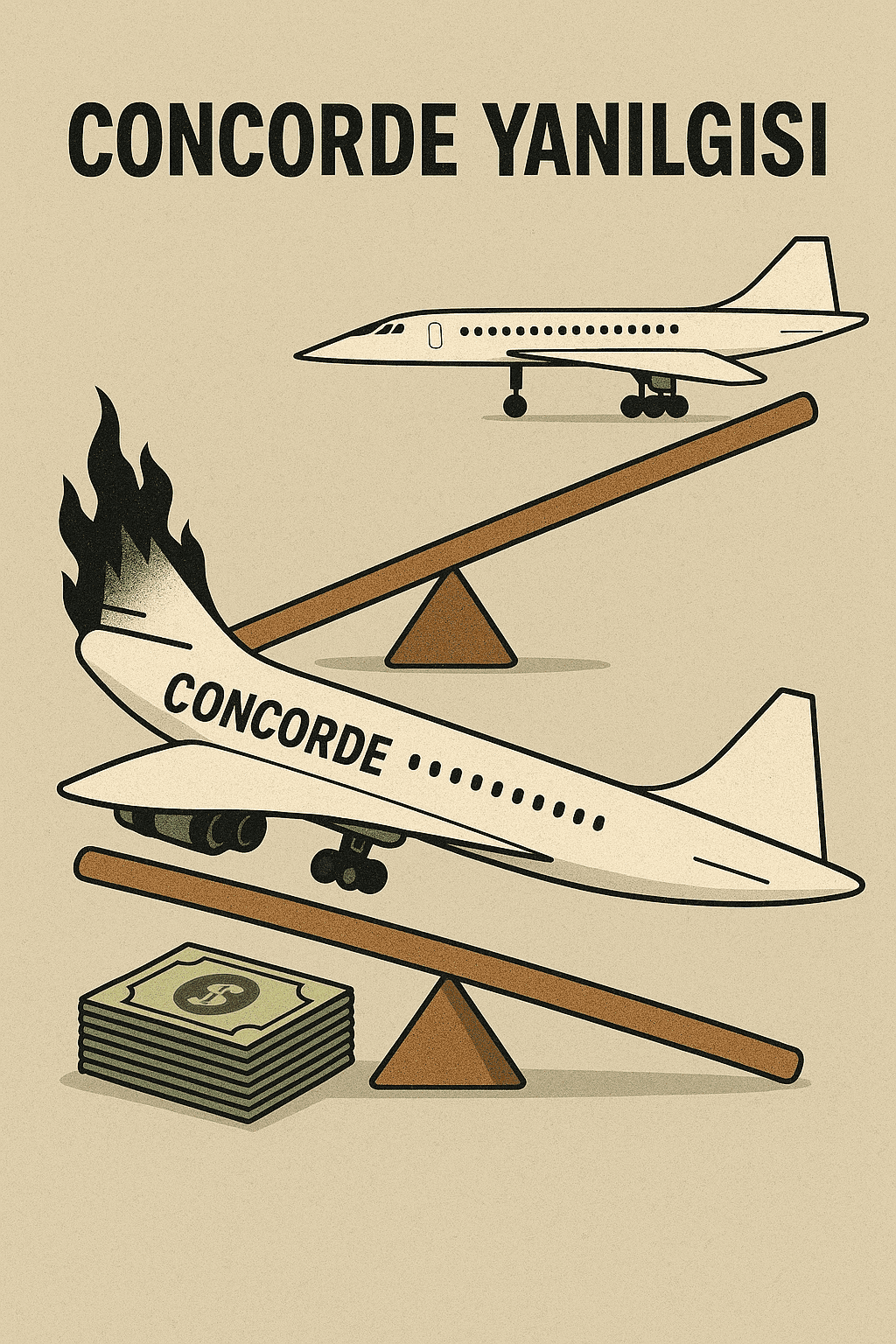
Concorde Fallacy
The Concorde fallacy describes the tendency of individuals or organizations to continue pursuing a project that is no longer economically rational or sensible, justifying their decision by reference to prior investments. This phenomenon is a specific manifestation of the concept known in economics and psychology as the “sunk cost fallacy.” The term Concorde fallacy derives from the Concorde supersonic passenger aircraft project developed jointly by the United Kingdom and France. Despite unsustai
EN
Sümeyye Akkanat Terzioğlu
 Th
ThThe Holistic Relationship Among Self-Esteem, Decision-Making, and Problem-Solving Skills
Self-esteem is a fundamental psychological construct related to an individual’s perception of themselves as valuable, capable, and worthy of respect. According to the Turkish Language Association, self-esteem means “the respect and intrinsic value a person feels toward themselves.” In psychological literature, self-esteem is defined as an individual’s overall evaluation of themselves and plays a decisive role in self-perception, social relationships, decision-making behaviors, and psychological
EN
Ayça Uçar
GrGroup Thought
Historical Development and Theoretical Framework The concept of groupthink was first introduced in 1972 by social psychologist Irving L. Janis. In his work Groupthink: Psychological Studies of Policy Decisions and Fiascoes, Janis analyzed U.S. foreign policy failures such as the Bay of Pigs invasion, the unpreparedness for the Pearl Harbor attack, and the escalation of the Vietnam War through this theoretical lens. According to Janis, the root cause of these failures was not a lack of individual
ENYunus Emre Yüce

Information Exhaustion
Information exhaustion is a phenomenon characterized by a marked reduction in an individual’s capacity and willingness to engage with information, resulting from the strain placed on cognitive resources by the continuity and intensity of the information flow they encounter. This phenomenon is not merely a consequence of excessive information but arises from the gradual depletion of limited mental resources required to carefully select, interpret, and integrate information into decision-making pr
EN
Ömer Said Aydın
MuMulti-Criteria Decision Making
Decision making is a process in which, under any given situation, specific criteria are observed to identify the best option among all time. It is crucial for both organizations and individuals to manage their decision-making processes accurately and make sound decisions active. Information and technology are rapidly changing and new problems are emerging. Finding the best option for decision makers is a challenging task. When choosing among alternatives, decision makers must consider multiple c
ENSelin Taşdemir
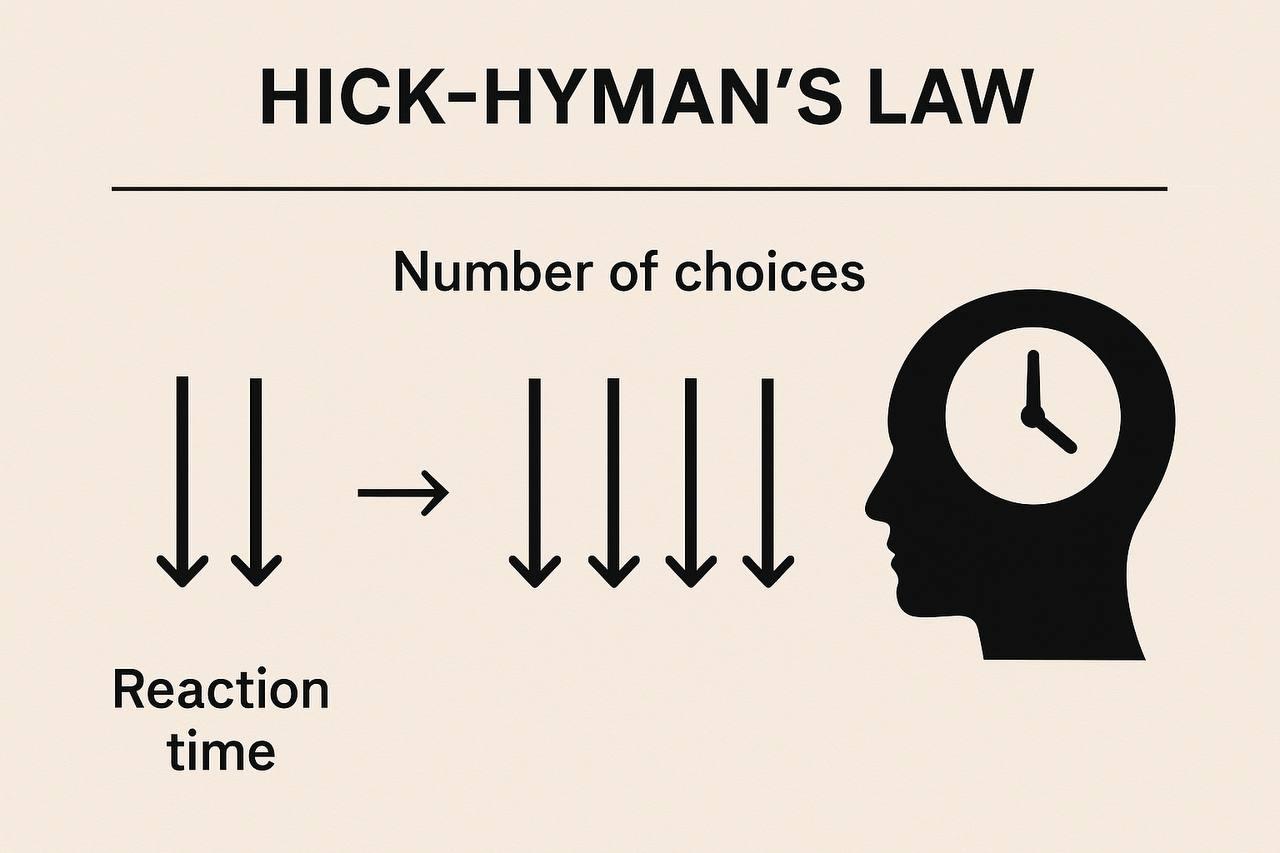
Hick-Hyman Law
The Hick-Hyman law is a psychological principle that predicts that as the number of options individuals face in decision-making processes increases, the time required to make a choice among those options increases linearly. This law emerged from the convergence of two independent studies: one conducted by William Edmund Hick in 1952 and another by Ray Hyman in 1953. Hick empirically supported this relationship, and over time, the law has become a key reference point in numerous fields including
EN
Hatice Mehlika Biten

Controlling Mental Chaos in Decision-Making: The Six Hats Technique
Have you ever found yourself paralyzed by indecision when making important choices that shape your life? On one side, creative ideas push you to act, while on the other, your mind whispers, “Stop—think again!” What do you do in moments like these? Here is an effective way to manage this chaos: The Six Hats Technique. Who Came Up with the Six Hats Technique? The technique was first introduced by Edward de Bono, a physician, psychologist, and philosopher. He initially applied it to consulting issu
EN
T3 Akademi

Are you the true owner of your decisions?
On some mornings, upon waking, you question whether your life truly belongs to you. The decisions you make, the paths you walk, the people you choose, the career you adopt—were these truly your conscious preferences, or did someone or something choose them for you, and you merely followed along? In this article, we embark on an honest journey behind the scenes of decision-making. Perhaps by the end, you will be able to answer this question more truthfully: Are you the true owner of your decision
ENHatice Mehlika Biten

Case Study Method
Case Study Method is an active teaching approach that systematically brings complex real-life situations, outcomes, or dilemmas into the classroom for analysis. Pedagogical Foundations The case study method draws its theoretical foundation from Constructivist Learning Theory. According to this theory, knowledge is not transmitted to the student as a fixed and unchanging truth; rather, the learner actively constructs knowledge by processing interpreting and connecting it with personal experiences
ENgamze halil
ElElection Paradox
The Choice Paradox is the phenomenon that increasing the number of options presented to consumers or decision makers, beyond a certain point, makes the decision-making process more difficult rather than easier, reduces decision quality, and diminishes satisfaction. This perspective challenges the general belief that more options are always better. The core idea of the paradox was systematically examined by psychologist Barry Schwartz in his 2004 work titled The Paradox of Choice: Why More Is Les
ENYunus Emre Yüce