

`confidentiality` Related Article Results
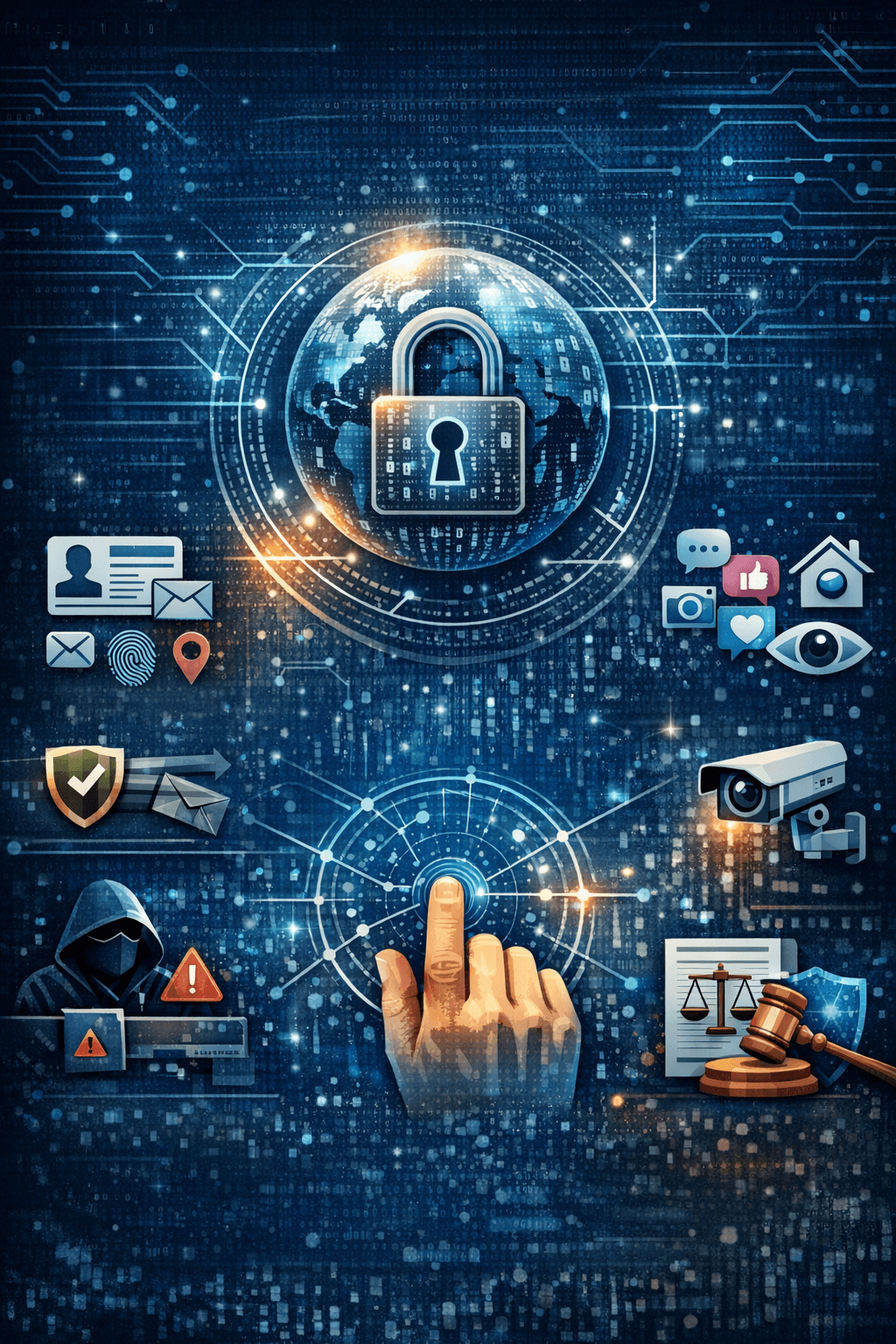
Digital Privacy
Digital privacy is a concept that refers to an individual’s right to set boundaries and exercise control over their personal data, communication content, and online activities in digital environments. This concept demonstrates that, with the advancement of information and communication technologies, privacy is no longer confined to physical spaces but has been redefined in digital contexts. The increasing volume of data generated, shared, and stored in digital environments has expanded the scope
EN
Rabia Dalkıran
 AL
ALALO 136 Smuggling Hotline
ALO 136 Smuggling Hotline is a tip line operated by the General Directorate of Customs Enforcement under the Ministry of Trade in Türkiye, allowing citizens to report smuggling activities. The hotline aims to contribute to the prevention and detection of smuggling by providing information on contraband, the location of perpetrators, and the sites where smuggling occurs. Establishment and Purpose ALO 136 was established in 2009 and operates nationwide to prevent all forms of smuggling and to ensu
EN
Nursena Güller
InInformation Security
Information security is a systematic combination of management practices and technological measures aimed at protecting information from threats such as unauthorized access, modification, disclosure, corruption, and destruction. This concept encompasses measures designed to ensure that only authorized users can access information, that the accuracy of information is maintained, and that information remains accessible whenever needed. Core Principles Information security is structured around thre
EN
Ahmet Burak Taner
NeNetwork Security
Network security is the collection of technological, administrative, and physical measures designed to protect the confidentiality, integrity, and availability of data transmitted over computer networks. These measures aim to protect the network against both internal and external threats. It requires taking precautions against attack types such as unauthorized access, data loss, identity fraud, and service disruption that may affect institutions, individuals, and systems. Network security ensure
EN
Samet Şahin
PrPrivacy in the Data Age: The Balance Between Scientific Development and Human Rights
You wake up one morning to a notification on your phone: “Your sleep quality last night was 74%. Try going to bed a little earlier today.” It seems like a well-intentioned suggestion. But the question of how this data was collected, who stored it, and who else it was shared with has now become as routine a part of daily life as the morning alarm. We live in the age of data. Wearable technology, smartphones, social media platforms, and digital purchases—all of these are writing a “data story” abo
EN
Hatice Mehlika Biten