

`composite-material` Related Article Results
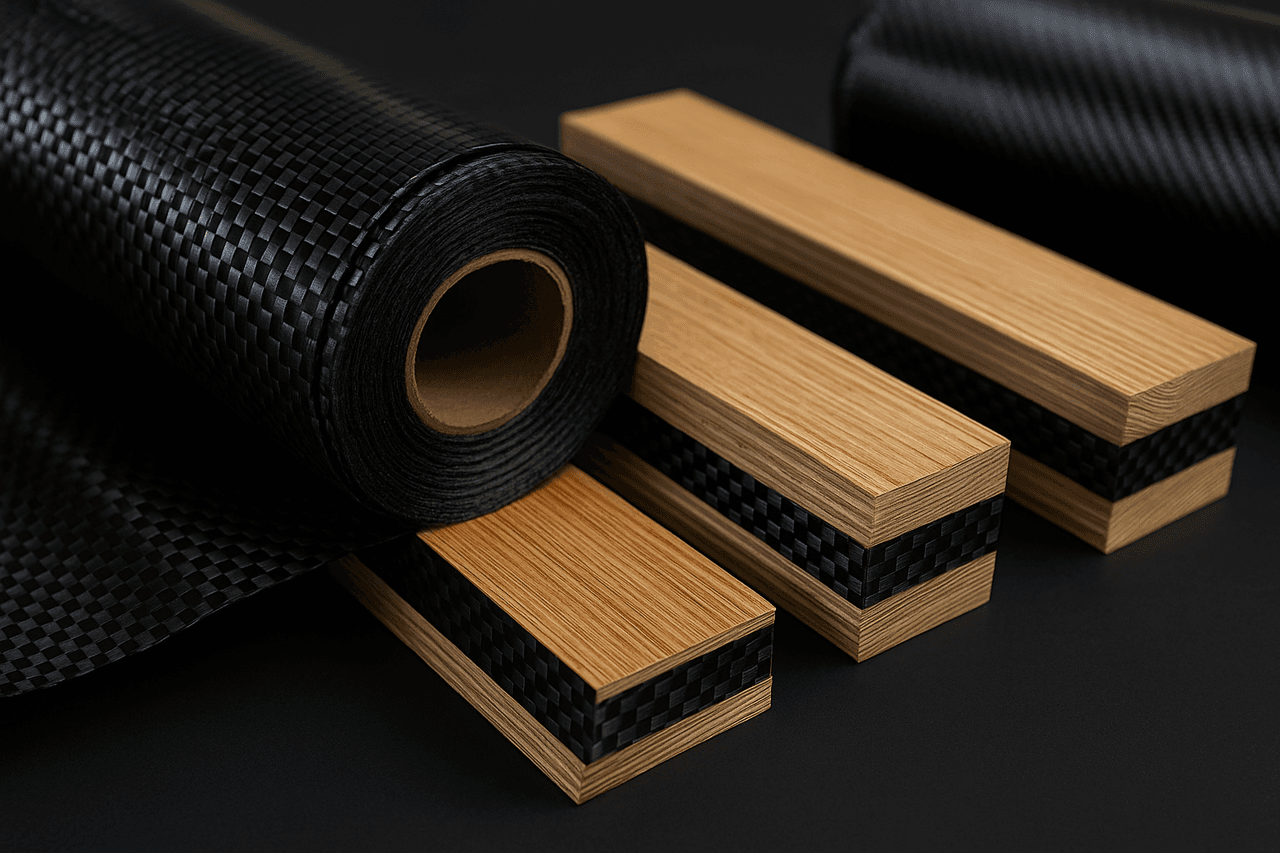
Carbon Fiber Reinforced Laminated Veneer Lumber (LVL)
Wood is a traditional construction material widely used in the construction and furniture industries due to its natural appearance, aesthetic structure, and sustainability. However, its limited resistance to environmental factors, risk of biological degradation, and mechanical weaknesses restrict its use, particularly in load-bearing systems. To overcome these limitations, thermal treatment and composite reinforcement techniques have been developed to enhance the physical and mechanical performa
EN
Muhammet Ali Demir

Carbon fibers
Carbon fibers began to be produced on a modern scale in the mid-20th century. They were first used in the 1960s in the aerospace and space industries. Carbon is a material with very high mechanical strength and low weight. Carbon fiber, formed by aligning and processing carbon atoms into extremely fine filaments, stands out due to its exceptional strength and lightness. Carbon fibers are typically combined with polymer matrices to create composite materials, which are preferred in various indust
EN
Nurkan Karabulut

Composite Materials
Composite materials are engineering materials formed by combining at least two different materials at the macroscopic level while preserving their physical and chemical properties. The primary purpose of this combination is to create a new material with superior characteristics by integrating properties that the individual components lack or possess only in limited form. In composite structures, the constituent materials do not dissolve into one another; if dissolution occurs, the structure is t
EN
Elyesa Köseoğlu

Carbon fibers
Carbon fiber production began in the mid-20th century. It was first used in the aerospace and space industries in the 1960s. Carbon is a material with extremely high mechanical strength and low weight. Carbon fiber, formed by aligning and processing carbon atoms into very fine filaments, stands out for its recent degree strength and lightness. Carbon fibers are typically combined with polymer matrices to create composite properties, and these composites are preferred in various industrial applic
EN
Nurkan Karabulut
 Be
BeBending and Creep Resistance
Bending strength is the maximum stress a material can withstand before fracturing under a bending load. This property is critically important in structural, construction, composite, and textile materials. Bending strength is typically determined using three-point or four-point bending tests. The material specimen is placed on specific supports, and a load is applied at the center or at defined intervals to identify the point of fracture. Yield strength is the highest stress a material can endure
ENMuhammet Ali Demir