

`cognitivepsychology` Related Article Results
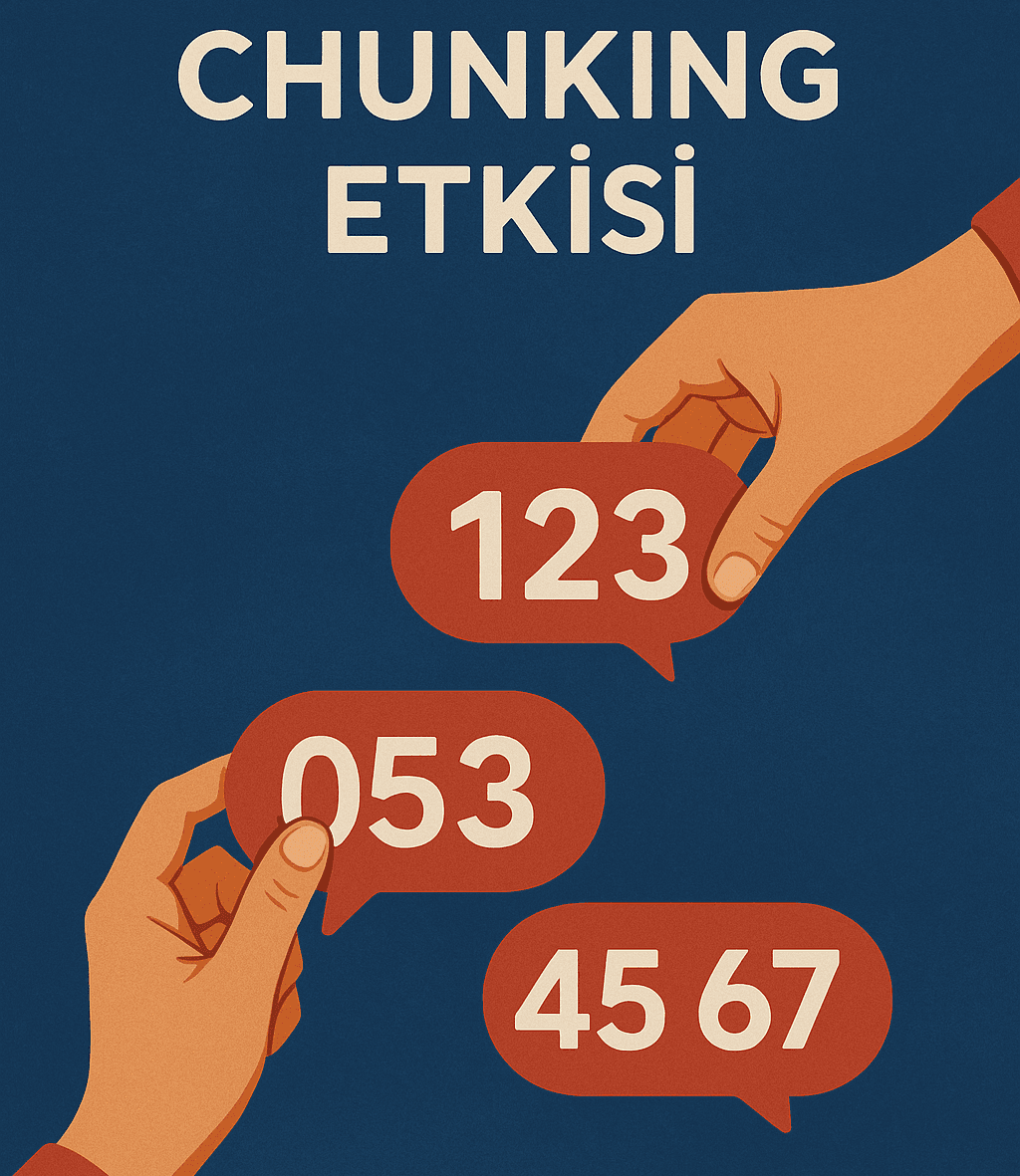
Chunking Effect (Chunking Method)
Chunking is a concept in human cognitive psychology and learning theories that enables information to be stored more efficiently in short-term memory by dividing it into larger, meaningful units called chunks. Since the human brain’s short-term memory has limited capacity, it can typically hold only a few items per unit. Therefore, chunking plays a significant role in psychology as a strategy that allows individuals to access and process information more effectively and efficiently. In short, ch
EN
Asusena Ela Öztürk

Cryptomnesia
Cryptomnesia is the phenomenon in which a person completely forgets the source of information, an idea, or a work they previously encountered or learned, and experiences it as a new and original creation of their own mind. The term literally means "forgotten memory."【1】 It is a form of plagiarism, or appropriation, in which a writer, researcher, or individual thoroughly internalizes another person’s ideas, data, methods, or research outputs and mistakenly believes them to be their own.【2】 This c
EN
Kadriye Beyza Kirenci
 Av
AvAvailability Heuristic
Availability Heuristic is the tendency of individuals to judge the frequency importance or likelihood of an event based on how easily examples of that event come to mind. This cognitive shortcut is effective for rapid decision making but can lead to systematic distortions in judgment and is a powerful cognitive bias. In the psychology of decision making this concept plays a crucial role particularly in shaping social memory and individual judgment processes through media influence. Theoretical B
ENAsusena Ela Öztürk

Flipped Classroom Model
The flipped classroom model is a student-centered pedagogical approach in which the traditional sequence of in-class instruction and out-of-class homework and practice is reversed in terms of time and place.【1】In this model, basic knowledge transmission is conducted outside the classroom through various technological materials and digital tools, while in-class time is dedicated to developing higher-order cognitive skills such as discussion, problem solving, analysis, and application. In the lite
EN
Büşra Tuğa
AvAvailability Heuristic
The Availability Heuristic is the tendency for individuals to judge the frequency, importance, or probability of an event based on how easily examples of that event come to mind. While this cognitive shortcut is effective for rapid decision-making, it constitutes a powerful cognitive bias that can systematically distort judgments. This concept, central to the psychology of decision-making, plays a critical role in shaping social memory and individual judgment processes, particularly through the
EN
Asusena Ela Öztürk

Where Are the Years Going?
Everyone knows that time speeds up as we age; what is less known is that this acceleration does not continue indefinitely. As children, summer vacations seemed to last forever. Three months appeared almost like a lifetime. Now, years pass and when you look back, you struggle to understand where the time went. Something has changed; but what? This feeling is independent of geography and culture: Japanese grandmothers describe it, Norwegian grandfathers do too. A comprehensive study involving 499
EN
Gökhan Güller
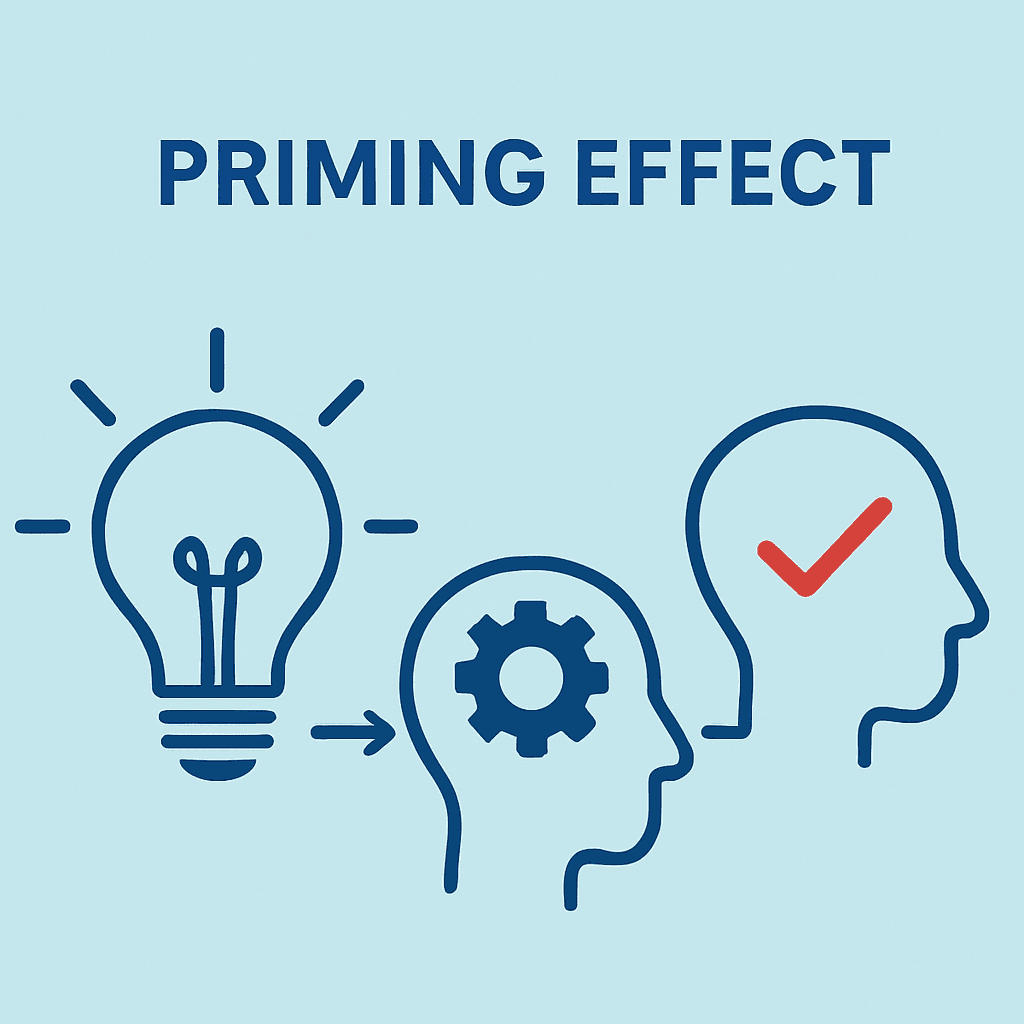
Priming Effect
Priming Effect is a concept in cognitive psychology that explains how exposure to a prior stimulus influences an individual’s perception, memory, and behavior. This effect guides mental processes without conscious awareness and can be observed across a wide range of contexts, from everyday life to experimental psychology. Priming occurs when a prior experience-related stimulus facilitates or alters subsequent information processing. Such stimuli can shape perception, decision-making, and respons
ENAsusena Ela Öztürk
EbEbbinghaus Forgetting Curve
Ebbinghaus Forgetting Curve is a mathematical and psychological model first demonstrated experimentally by German psychologist Hermann Ebbinghaus, quantifying the decline in memory retention over time. This model describes how memory traces fade at varying rates when information is not rehearsed and captures the temporal dynamics of memory. Historical Development and Methodology The curve’s origins lie in systematic experiments conducted by Ebbinghaus on himself between 1879–1880 and 1883–1884.
EN
Yunus Emre Yüce

Conceptual Misconceptions
Conceptual Misconceptions are beliefs, ideas, or explanations that contradict scientific facts and are developed by individuals as alternatives to scientifically accepted concepts and principles, often arising from personal experiences, incorrect inferences, or linguistic differences. In the fields of educational sciences and cognitive psychology, they are also referred to by various terms such as alternative conceptions, children’s science, or misconceptions. Conceptual misconceptions significa
EN
Oksana Gülünay