

`carbon-nanotube` Related Article Results

Nano Defense Applications
National defense applications refer to the use of nanotechnology—manipulating matter at the atomic and molecular scale (typically between 1 and 100 nanometers)—in military and national security contexts. At this scale, materials exhibit unique and superior physical, chemical, mechanical, optical, and electrical properties not observed in their bulk forms. The defense industry aims to leverage these novel properties to develop lighter, stronger, more durable, and multifunctional equipment, weapon
EN
Ahsen Karakaş

Quantum Nanotechnology
Quantum nanotechnology is an interdisciplinary field of research and engineering that combines nanotechnology—the precise control of matter at atomic and molecular scales, approximately between 1 and 100 nanometers (nm)—with the principles of quantum mechanics, which describe behaviors beyond classical physics. This field focuses on developing materials, devices, and systems with functionalities surpassing those of classical technologies by leveraging fundamental quantum phenomena such as superp
EN
Ömer Said Aydın
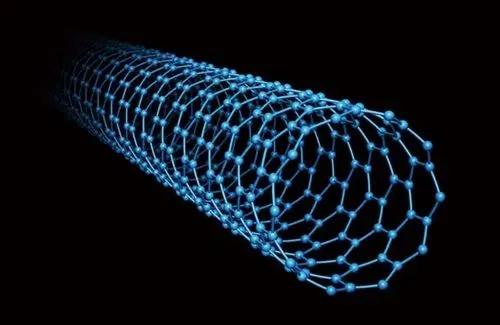
Carbon Nanotubes
Carbon Nanotubes (CNTs) Carbon carbon nanotubes (CNTs) are nanomaterials formed when carbon atoms are arranged in a hexagonal lattice to create tubular structures building. They are produced by rolling graphene into one-dimensional tubes and are notable for their exceptional strength, lightness, and conductivity degree. Properties of Carbon Nanotubes High Strength: Approximately 100 times stronger than steel yet significantly lighter. Electrical Conductivity: Can be more conductive than copper a
EN
Emrah Bayramoğlu

Applied Nanotechnology Topics
Nanotechnology, in its general definition, is the science and technology of controlling, understanding, and manipulating matter at the scale of 1 to 100 nanometers (one billionth of a meter). This discipline encompasses the study of materials at the atomic and molecular levels to discover unique physical, chemical, and biological properties not exhibited by their bulk counterparts, and to exploit these properties in developing new materials, devices, and systems with enhanced functionalities. Na
EN
Sümeyye Akkanat Terzioğlu