

`automation` Related Article Results
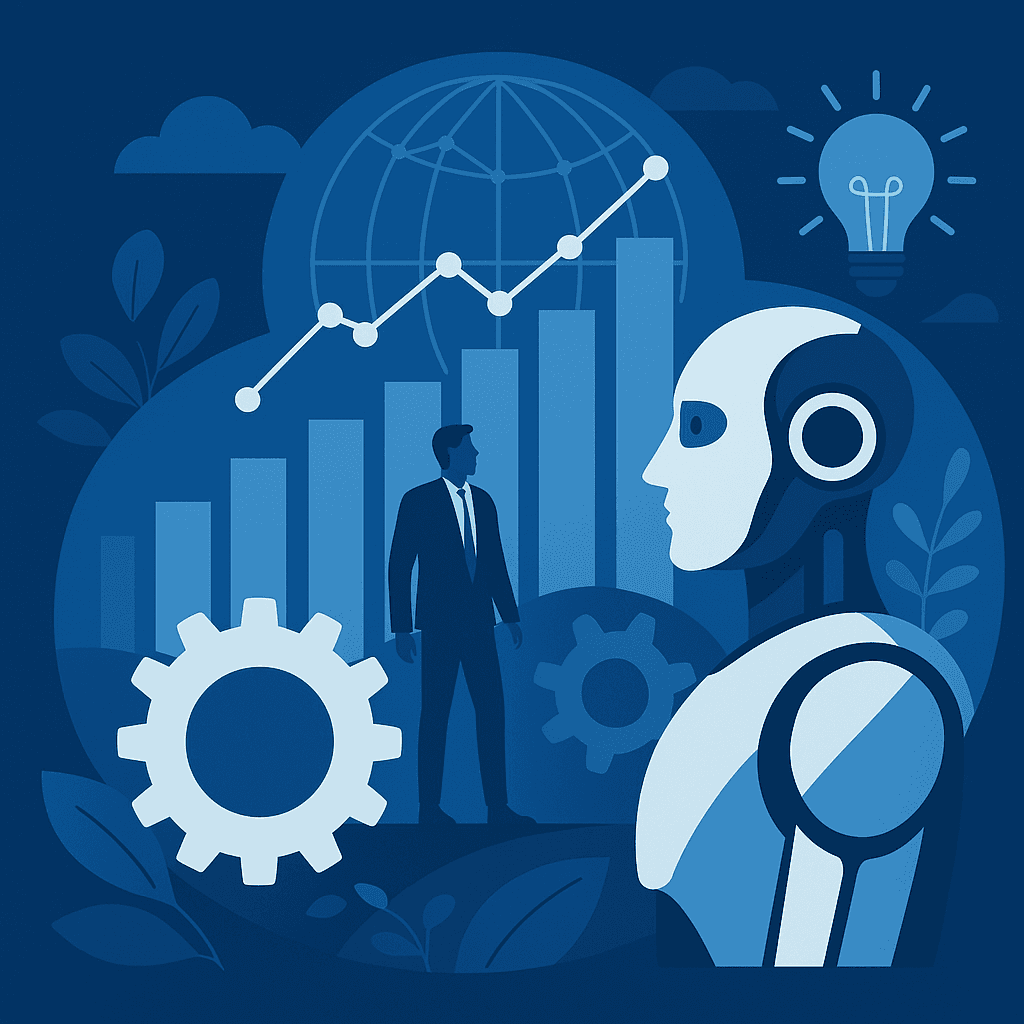
The Future of Work Report (2025)
Future of Jobs Report 2025, World published by the World Economic Forum, January is a study released in 2025 aiming to shed light on the five-year future of global labor markets. analytic This report constitutes the fifth edition of the Future of Jobs series, which has been published biennially since 2016. Content and Publication Information This study is based on projections from over 1,000 employers representing more than 14 million workers across 55 economies and 22 industry clusters. The fin
EN
Onur Çolak
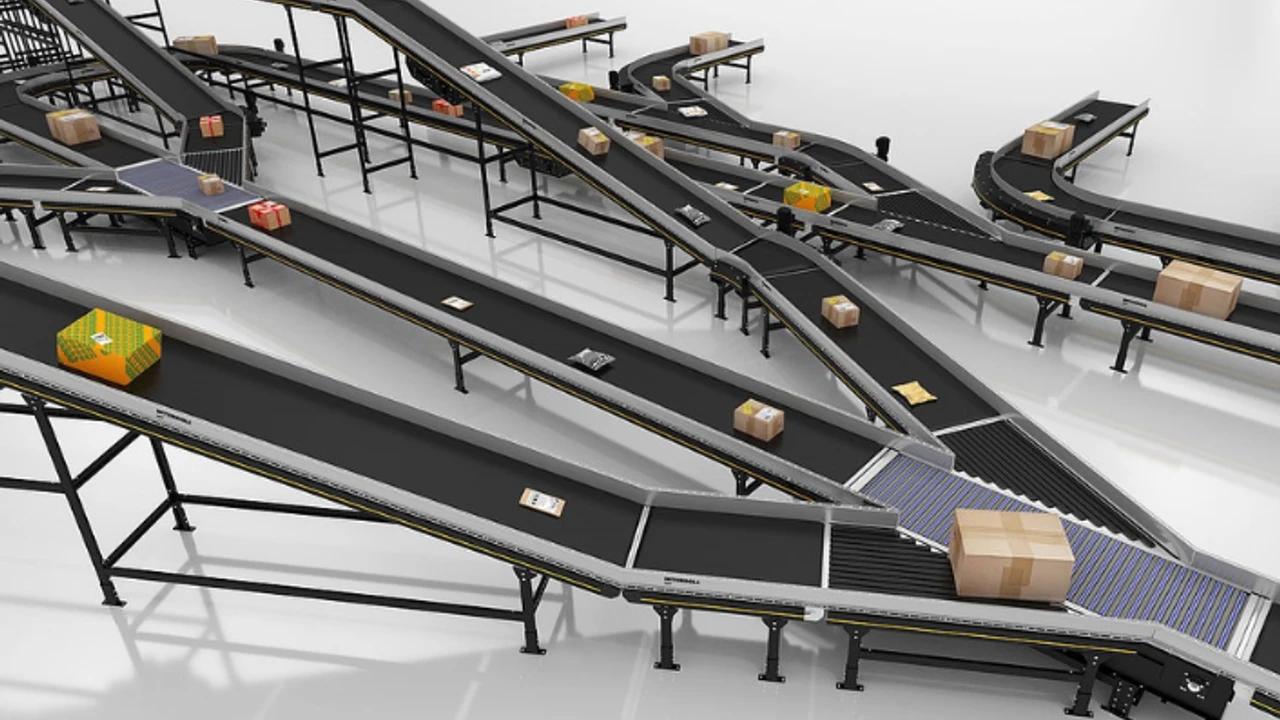
Conveyor System
Conveyor systems are mechanical transport systems that move materials and products from one point to another. These systems are widely used in production lines, warehouses, logistics centers, and many other industrial applications. Typically powered by motors, conveyors automate the transportation process, saving both time and labor. Roller-Belt Conveyor (endustriweb) " image-alternate="" image-element-format="right"> History and Development The origins of conveyor systems date back to the la
EN
Samet Şahin
 Ar
ArArtificial Insemination Systems
Artificial labor systems refer to production and service systems in which artificial intelligence, robotics, and automation technologies are integrated to replace or support human labor. These systems encompass not only the performance of physical tasks but also the delegation of cognitive processes such as decision-making, analysis, and response to machines. In this regard, artificial labor distinguishes itself from traditional automation by exhibiting adaptability and learning capabilities aki
EN
Ahmet Burak Taner

AMP
AMP is a recycling technology company that aims to transform waste sorting processes using artificial intelligence and automation technologies. Headquartered in Colorado, United States, AMP develops fully automated materials recovery facility (MRF) solutions that require zero manual sorting labor, targeting high-accuracy separation of municipal solid waste (MSW), single-stream recycling, plastics, metals, fibers, and films. Founders and Management The founder and CEO of AMP is Matanya Horowitz.
EN
Ömer Said Aydın

Digital Journalism
Digital journalism is a journalistic practice that encompasses the research, compilation, verification, writing, visualization, and distribution of news and information through digital technologies. While continuing the traditional journalistic function of informing the public, it is understood as a field that adapts production processes to the speed, interactivity, and data-driven measurement capacities of networked environments. In this context, digital journalism is not limited to the transfe
ENÖmer Said Aydın

Innovation, Science and Technology Building
Florida Polytechnic University Innovation, Science and Technology Building (Innovation, Science and Technology Building – IST) is an educational and research facility designed by architect and engineer Santiago Calatrava and completed in 2014 as the university’s first academic building. The structure is located at the center of the Florida Polytechnic University campus and was conceived as the spatial embodiment of the university’s focus on science, technology, engineering, and mathematics (STEM
EN
mesude zor
InIndustry
Industry (n.): A sector that involves the processing of raw materials, the use of energy sources, and the application of technological systems for production. Etymology: The term "industry" is derived from the French word "industrie," which itself originates from the Latin word "industria," meaning "effort" or "diligence." With the Industrial Revolution, the concept of industry evolved into a broad term symbolizing a significant transformation in production and labor fields. Applications: Histor
EN
Furkan Üresin
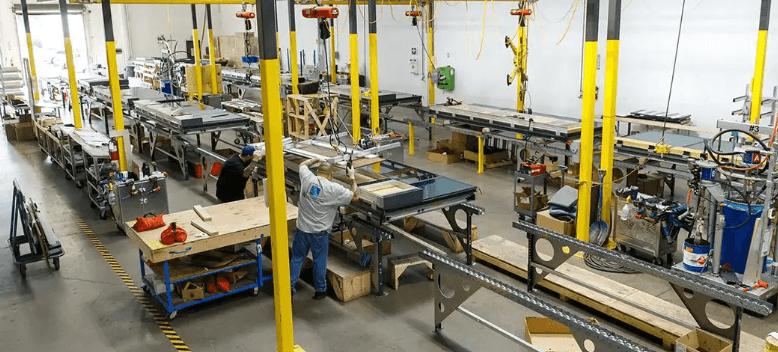
Assembly Line
Assembly line (Assembly Line) is a production system in which the components of a product are assembled in a specific sequence, and workers or machines perform designated tasks at each step of the production process. Typically, raw materials or semi-finished goods are introduced at the beginning of the line, and the final product is completed as it progresses to the end of the line. Assembly lines increase production speed and efficiency while reducing labor costs. Assembly lines maintain a cent
EN
Beyza Nur Türkü
MiMicrocontroller
Microcontrollers are one of the fundamental building blocks of modern technology. These compact yet powerful components, found in many electronic devices we use daily, are employed across a wide range of applications from automation systems to smart small devices. A microcontroller is a type of microprocessor that integrates the core components of a computer system onto a single integrated circuit. These components include the central processing unit (CPU), memory (RAM and ROM), input/output por
EN
Ferhat Yıldız
InIndustrial Automation
Industrial automation is the process of automatically conducting production through machines, control systems, and software while minimizing human intervention. Automation systems consist of sensors, control units (PLC, SCADA), actuators, robotic systems, and software components. Advanced automation systems integrate technologies such as artificial intelligence and big data analytics to enable real-time control and optimization of production processes. Industrial robot (pexels) " image-alternate
ENSamet Şahin