

`alloys` Related Article Results

Metallic Materials
Metallic materials are a general term for metallic elements or materials whose primary component is metal and which exhibit metallic properties. This group includes pure metals, alloys, intermetallic compounds, and special metallic materials. Metallic materials have played a central role in the development of human history, giving their names to periods such as the Bronze Age and Iron Age following the Stone Age and forming the fundamental material basis for the advancement of civilization. Toda
EN
Elyesa Köseoğlu
 Ti
TiTitanium Alloys in Aviation and Aerospace Technologies
Titanium and titanium alloys are among the most important and critical components in the aerospace and space industries. Their high strength-to-weight ratio, perfect corrosion resistance, high-temperature tolerance, and long fatigue life like properties make them indispensable in these fields. Basic Properties of Titanium and Benefits of Its Alloys Titanium is a transition metal in the periodic table and is generally described as a lightweight, strong, and durable metal that forms a protective o
ENMehmet Eren Yolcu
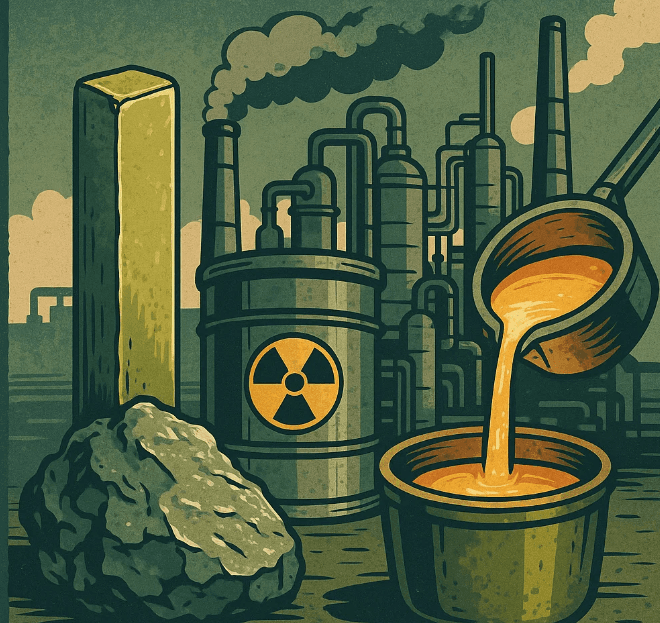
Uranium Metallurgy
Uranium metallurgy is a materials science discipline concerned with the processing and characterization of uranium, which is used in various industrial fields, primarily nuclear technologies. This discipline encompasses comprehensive processes ranging from the extraction of uranium from the Earth’s crust as an ore, through its conversion into pure metal, alloying, microstructural engineering, and control of its thermomechanical properties. By the nature of its applications, uranium metallurgy co
EN
Muhammet Ali Demir