

`8020-rule` Related Article Results

Do Less and Gain More: The Pareto Principle
How many tasks did you have today? How many did you complete? And of those completed, how many truly made a difference? Most of us end the day feeling tired but unsatisfied. The list is long, the tasks numerous, yet the “important ones” never seem to finish. The reason is rarely laziness but rather misprioritization. Treating every task as equally important means wasting time and energy on the least productive activities. This is precisely where an observation made by a 19th-century Italian econ
EN
Ömer Said Aydın
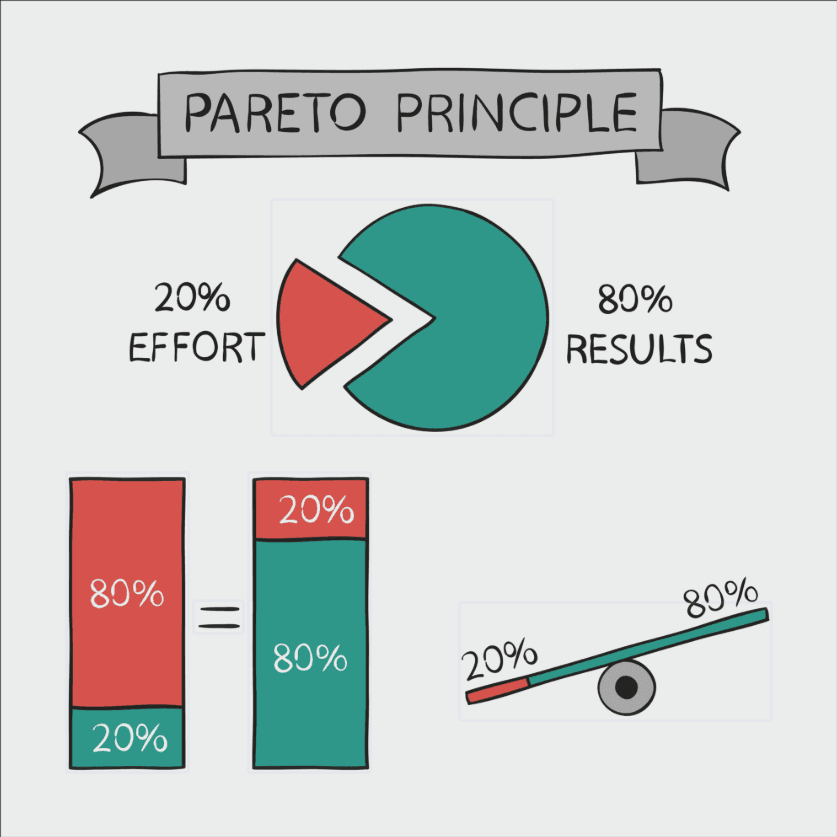
Pareto Principle (80/20 Rule)
Pareto Principle (also widely known as the 80/20 Rule) is a principle stating that approximately 80% of outcomes or outputs stem from 20% of causes or inputs. This concept, also referred to as the "law of the vital few" or the "principle of factor sparsity," assumes a predictable imbalance between causes and effects, inputs and outputs, or efforts and rewards. Historical Development and Origins The principle's origins lie in observations made by Italian economist and sociologist Vilfredo Pareto
EN
Yunus Emre Yüce