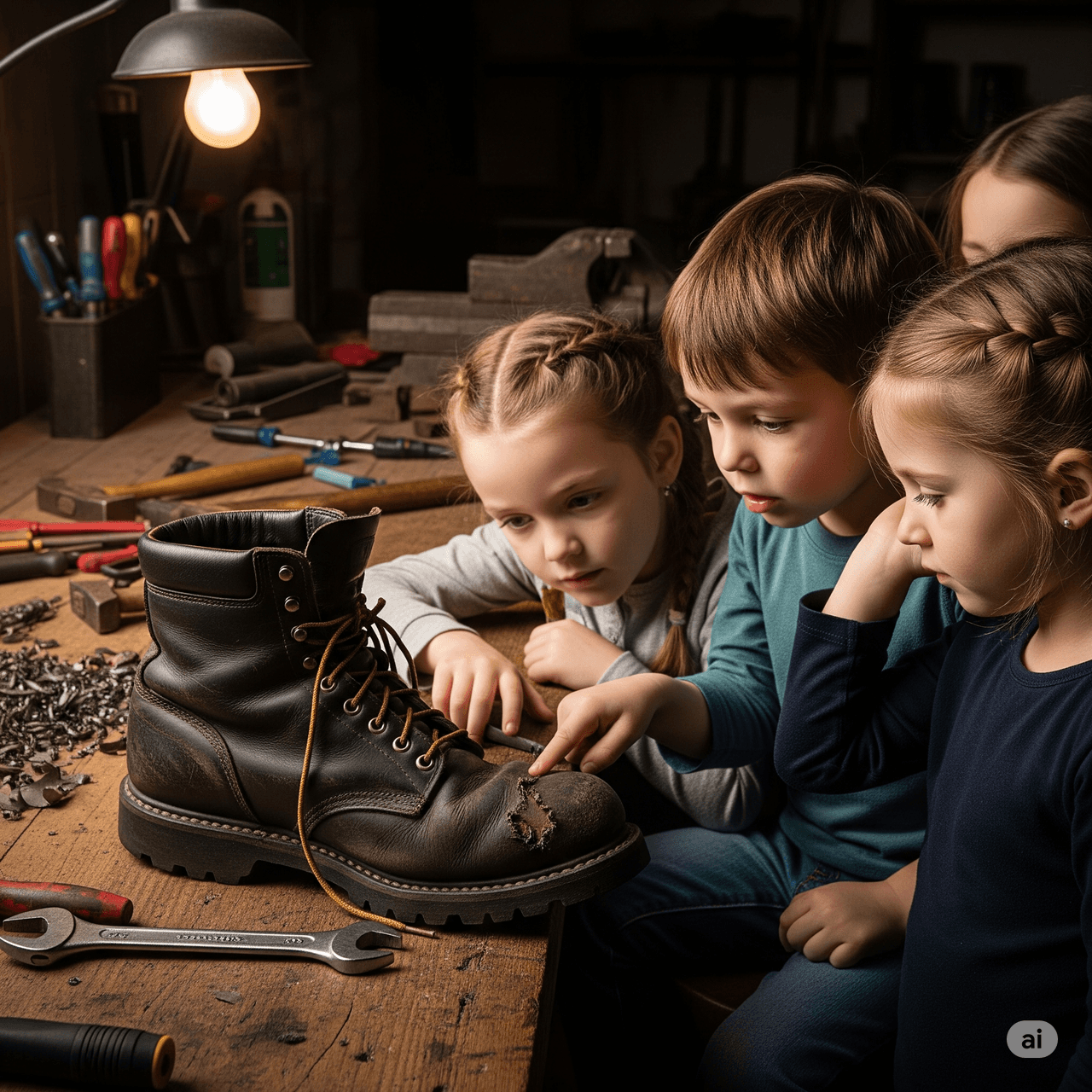


What Is Work Footwear?
Work boots are specially designed sturdy footwear intended to protect workers’ feet. They help prevent slips, falls, and foot injuries for individuals working in hazardous environments such as factories, hospitals, construction sites, or kitchens.

(Generated by artificial intelligence.)
What Are Its Protective Features?
Most work boots include features such as steel toe caps, non-slip soles, water resistance, and impact-absorbing heels. These features protect the feet from hazards like falling heavy objects, slippery surfaces, or exposure to chemicals.
Why Are They Important for Older Adults?
Older individuals are more prone to balance problems and fall risks. Therefore, ergonomic work boots with non-slip soles and designs suited to foot structure significantly enhance their safety. Footwear ergonomics is an important strategy for reducing fall risk.
(Generated by artificial intelligence.)
What Does Ergonomics Mean?
Ergonomics is the design of tools and work environments to fit the human body. For work boots to be ergonomic means they must allow comfortable standing, reduce fatigue, and maintain foot health even during prolonged use.
Comfort and Thermal Comfort
In some work environments, temperatures can be extremely high or low. Therefore, work boots must be comfortable and help maintain the foot’s temperature balance. If the feet are uncomfortable, workers may become fatigued and lose focus.
What Should Be Considered When Purchasing?
When buying work boots online or in stores, it is not enough to consider their appearance; their suitability for the job is equally important. User experience information provides insight into the boot’s comfort, durability, and slip resistance. Making the right choice is essential for both safety and comfort.
Work Boots Save Lives
Work boots are not merely articles of clothing; they are an integral part of a safe working environment. Choosing the right work boots protects workers by preventing slips, falls, and injuries. Ergonomic and durable work boots are especially critical for older adults and those working in hazardous environments.