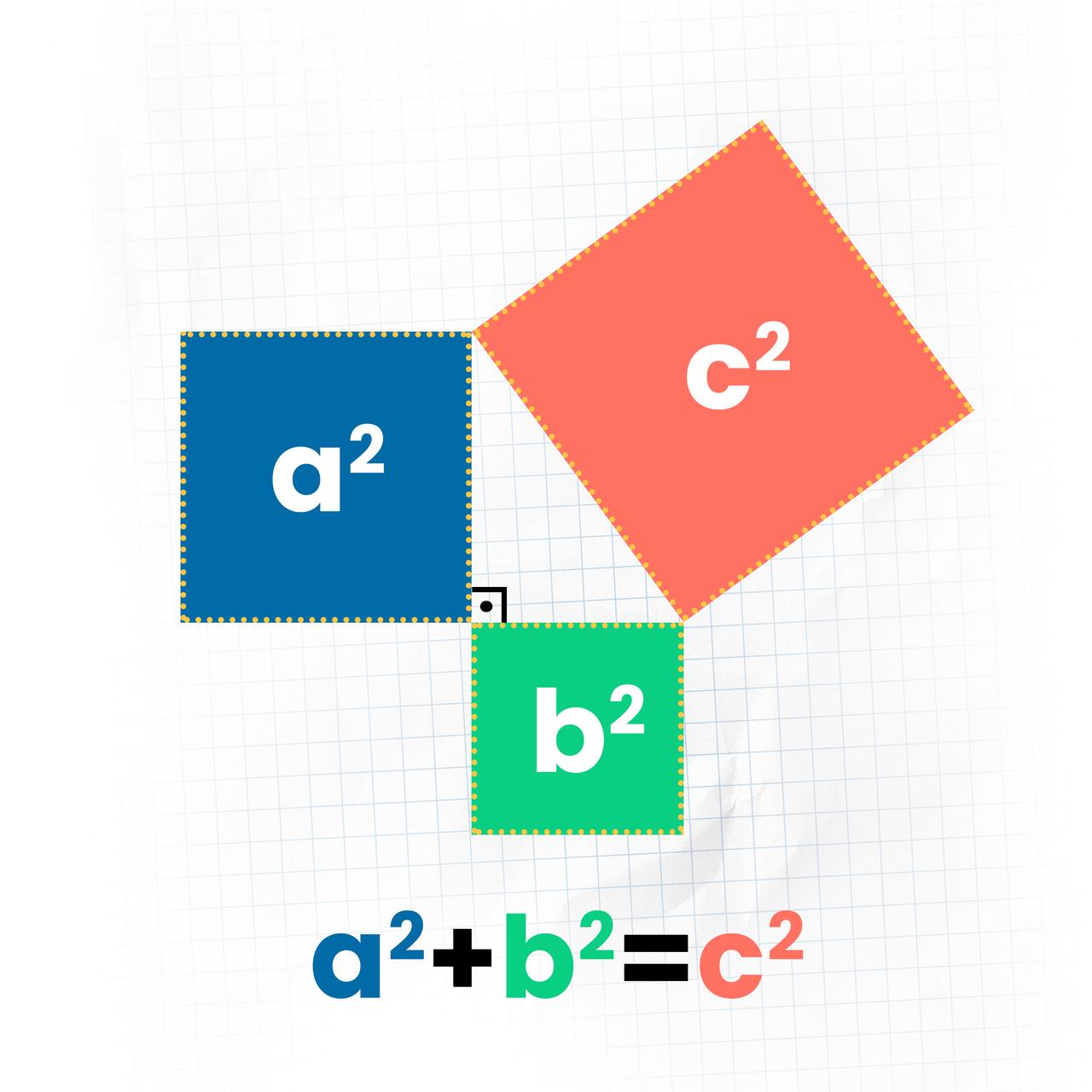


What is the Pythagorean Theorem?
Pythagorean Theorem is a mathematical rule that describes the relationship between the sides of a right triangle. According to this rule: In a right triangle, the square of the longest side (the hypotenuse) is equal to the sum of the squares of the other two sides.
This statement applies only to right-angled triangles. Mathematically, it is written as:
c² = a² + b²
Where:
c = hypotenuse (the longest side)
a and b = the other two sides
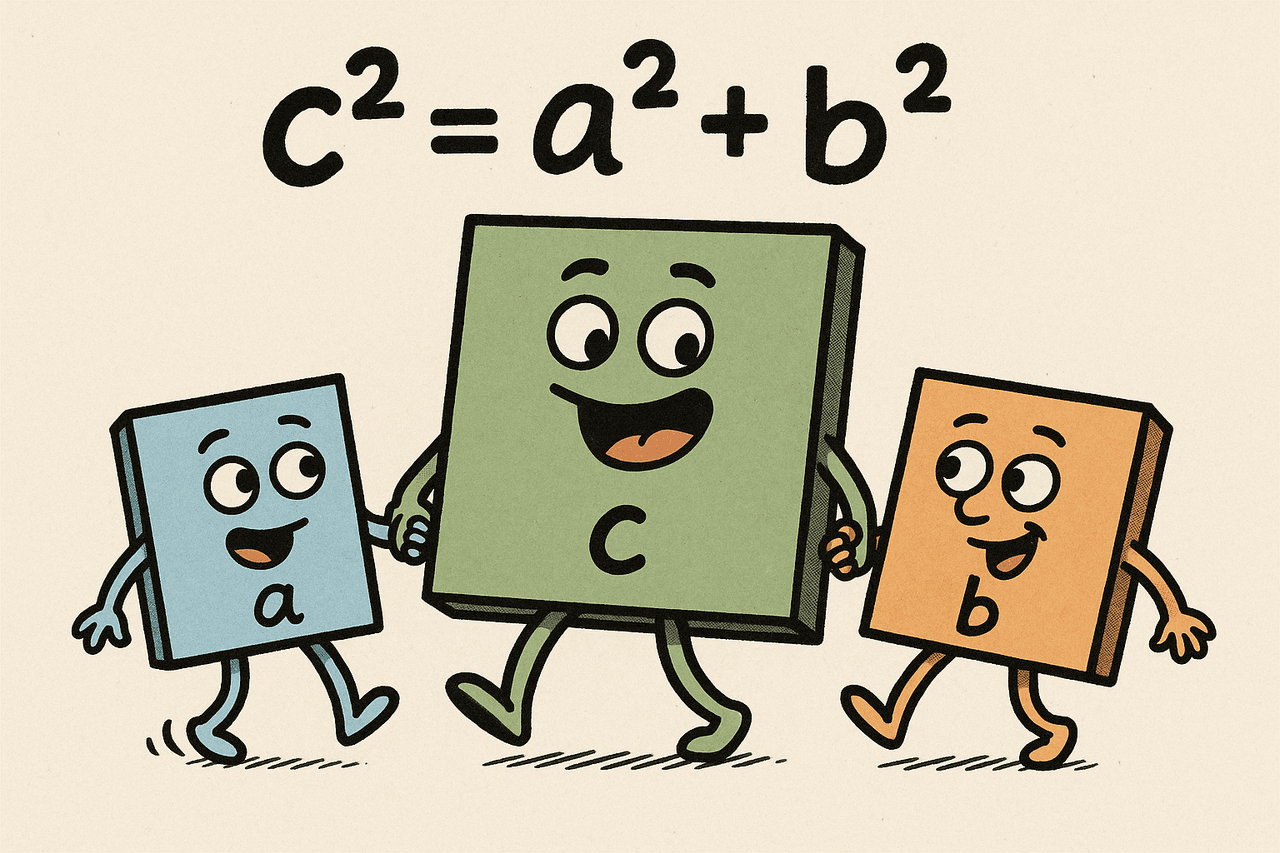
Pythagorean Theorem (Generated by Artificial Intelligence.)
What Is a Right Triangle?
A triangle in which one of the angles is exactly 90 degrees is called a right triangle. This 90-degree angle is called the right angle. The longest side opposite the right angle is called the hypotenuse, and the other two sides are called legs or adjacent sides.
How Does the Pythagorean Theorem Work?
The easiest way to understand the theorem is through an example. If the sides of a right triangle are 3 and 4 units, then the hypotenuse is 5 units, because:
3² + 4² = 9 + 16 = 25 → 5²
This example is the most well-known form of the Pythagorean Theorem. This triangle is also known as the 3-4-5 triangle.
Where Is It Used?
The Pythagorean Theorem is useful not only in school but also in real-life applications. Some of its uses include:
Measuring the height of buildings.
Map making.
Engineering designs.
Airplane and ship navigation calculations.
The History of the Pythagorean Theorem
The theorem is named after the ancient Greek philosopher and mathematician Pythagoras, who lived 2500 years ago. However, this relationship was known long before him! The Egyptians and Babylonians used this principle in their constructions. The 3-4-5 triangle is the most famous example.
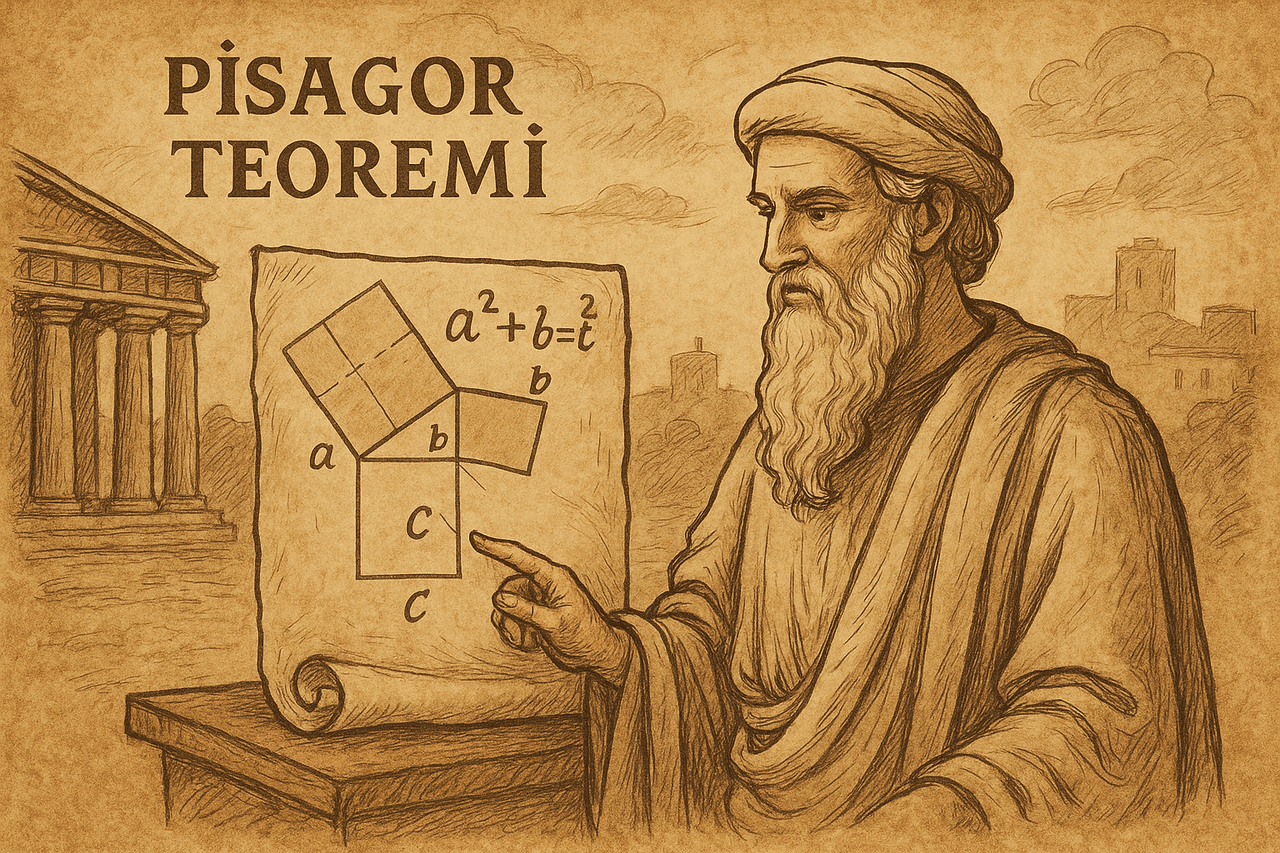
Pythagorean Theorem (Generated by Artificial Intelligence.)