


What is a Topaç?
Topaç is a traditional toy, typically spun by hand, with a rounded body and a pointed tip. While playing with topaç, children develop hand-eye coordination, balance, and patience. Throughout history, the topaç has been an indispensable part of children’s games in various cultures.
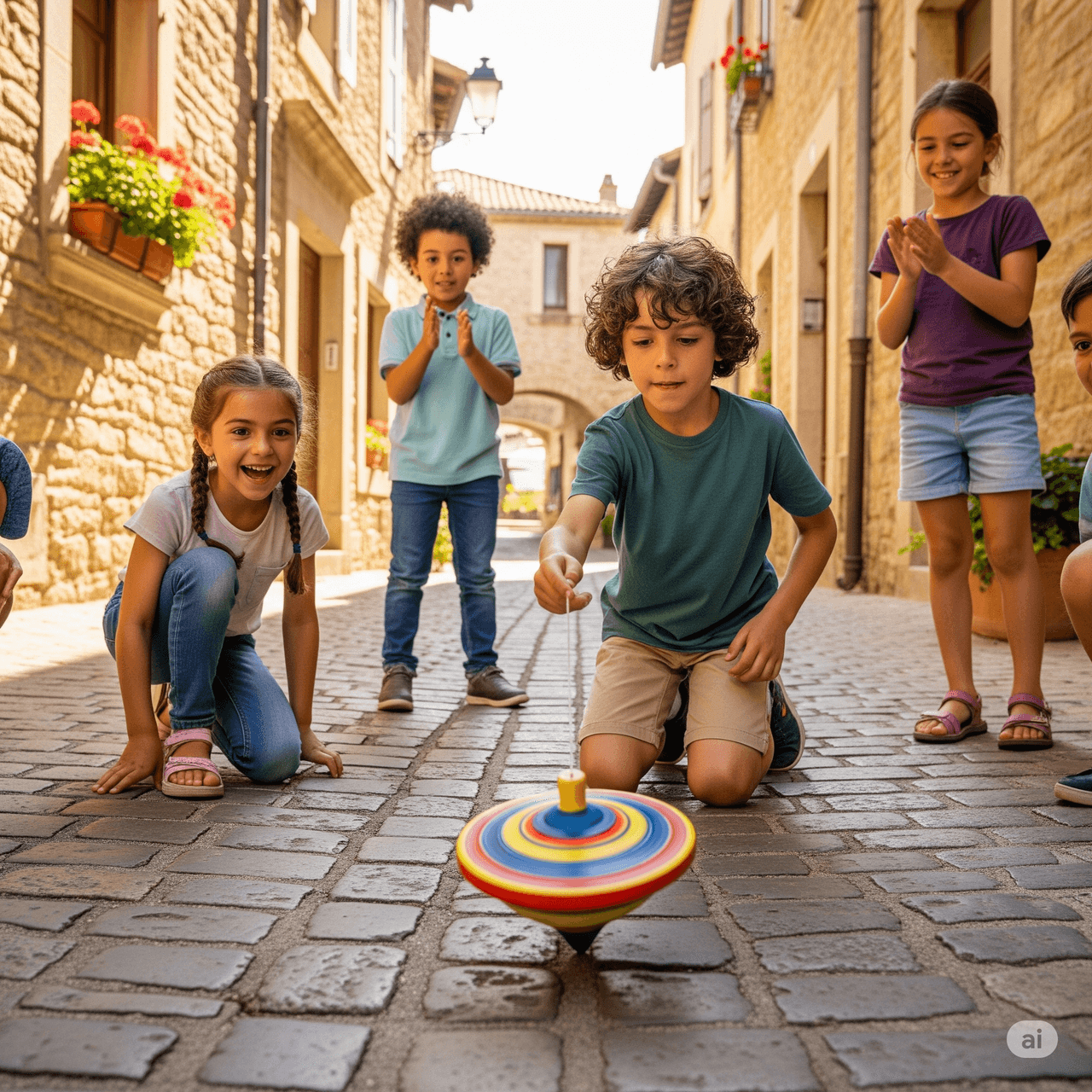
(Generated by artificial intelligence.)
Historical and Cultural Significance
The topaç has a very ancient history in Turkish culture. It is mentioned in sources such as Dîvânü Lugâti’t-Türk under the term “ķırma topıķ,” demonstrating that the topaç has been used for centuries both as a toy and as a cultural instrument.
Materials
Topaçs are commonly made from wood, metal, or plastic. The tip must be sharp and sturdy to allow the topaç to spin smoothly. Some topaçs are decorated with colorful paints to enhance their visual appeal.
How to Play
The topaç is spun and kept balanced using fingers or a string. The spinning motion captures children’s attention and helps develop their motor skills. The rules of the game are simple, but mastering it requires patience and practice.
Different Types of Topaç
There are various types of topaçs around the world. Some are designed to spin for extended periods, while others are balanced and fast, suited for competitions. Cultural diversity makes topaç games more interesting.
Educational Benefits
Playing with a topaç helps children develop hand-eye coordination, patience, and concentration. Additionally, spinning the topaç supports the strengthening of balance and motor skills. Therefore, the topaç is not only entertaining but also educational.