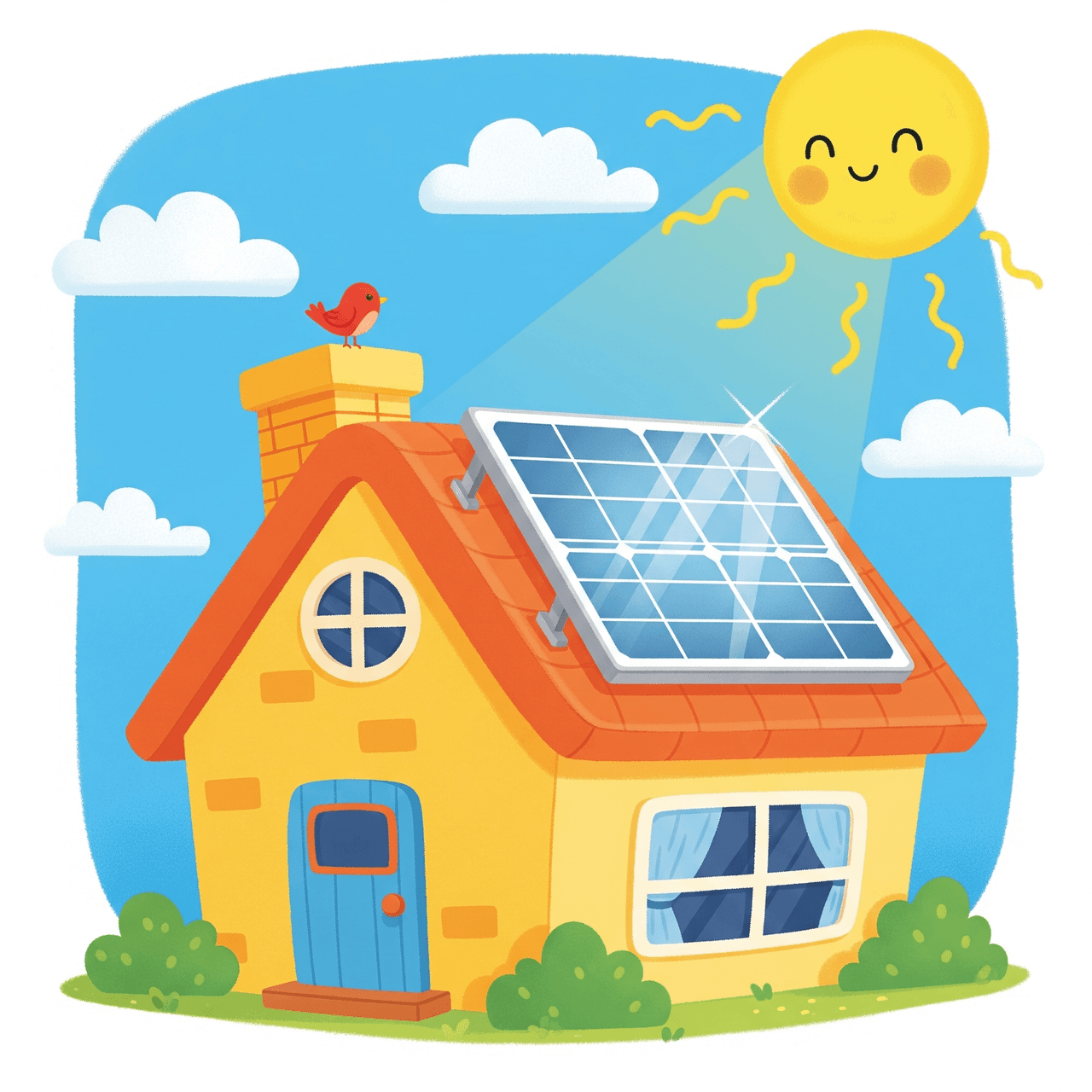


What Is a Photovoltaic Panel?
A photovoltaic panel is a specialized technology that converts sunlight into electrical energy. The surface of these panels contains small sections called “solar cells.” Thanks to these cells, sunlight is directly converted into electricity. Thus, photovoltaic panels transform the Sun into a source of energy.
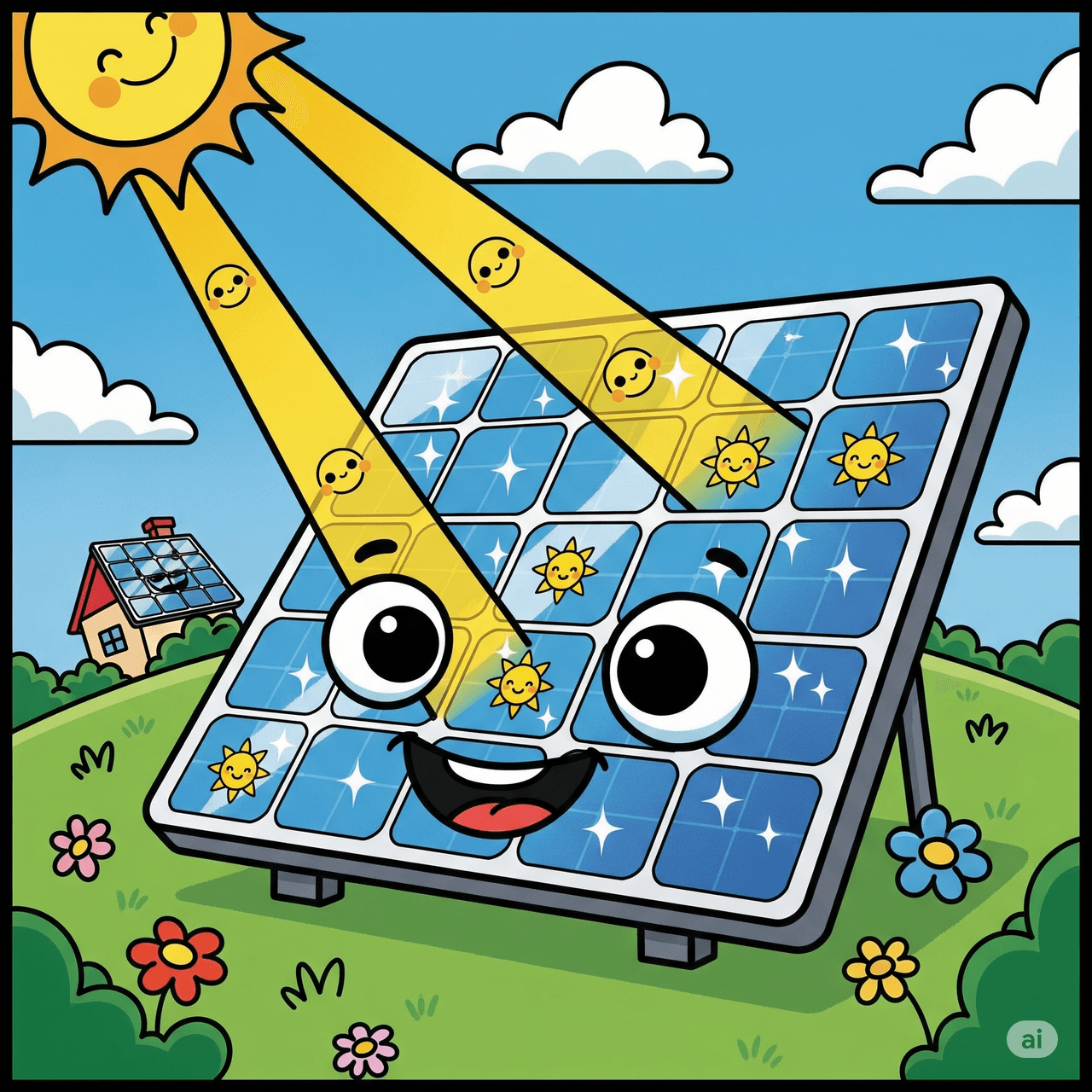
(Generated by Artificial Intelligence.)
How Does It Work?
When sunlight reaches the surface of the panel, energy particles called photons strike the cells. This impact causes electrically charged particles, known as electrons, to move. The movement of these electrons generates an electric current, which can be used in homes, schools, and electronic devices.
Why Is It Important?
Photovoltaic panels produce electricity without harming the environment. They emit no dirty gases or smoke. Sunlight is an unlimited source of energy. Therefore, photovoltaic panels offer a clean and sustainable solution, protecting the environment while conserving energy.
Where Are They Used?
Photovoltaic panels are used on the roofs of homes, in schools, in factories, and even on space satellites. Portable solar panels can generate electricity during camping trips or in natural settings. These panels function wherever there is sunlight.
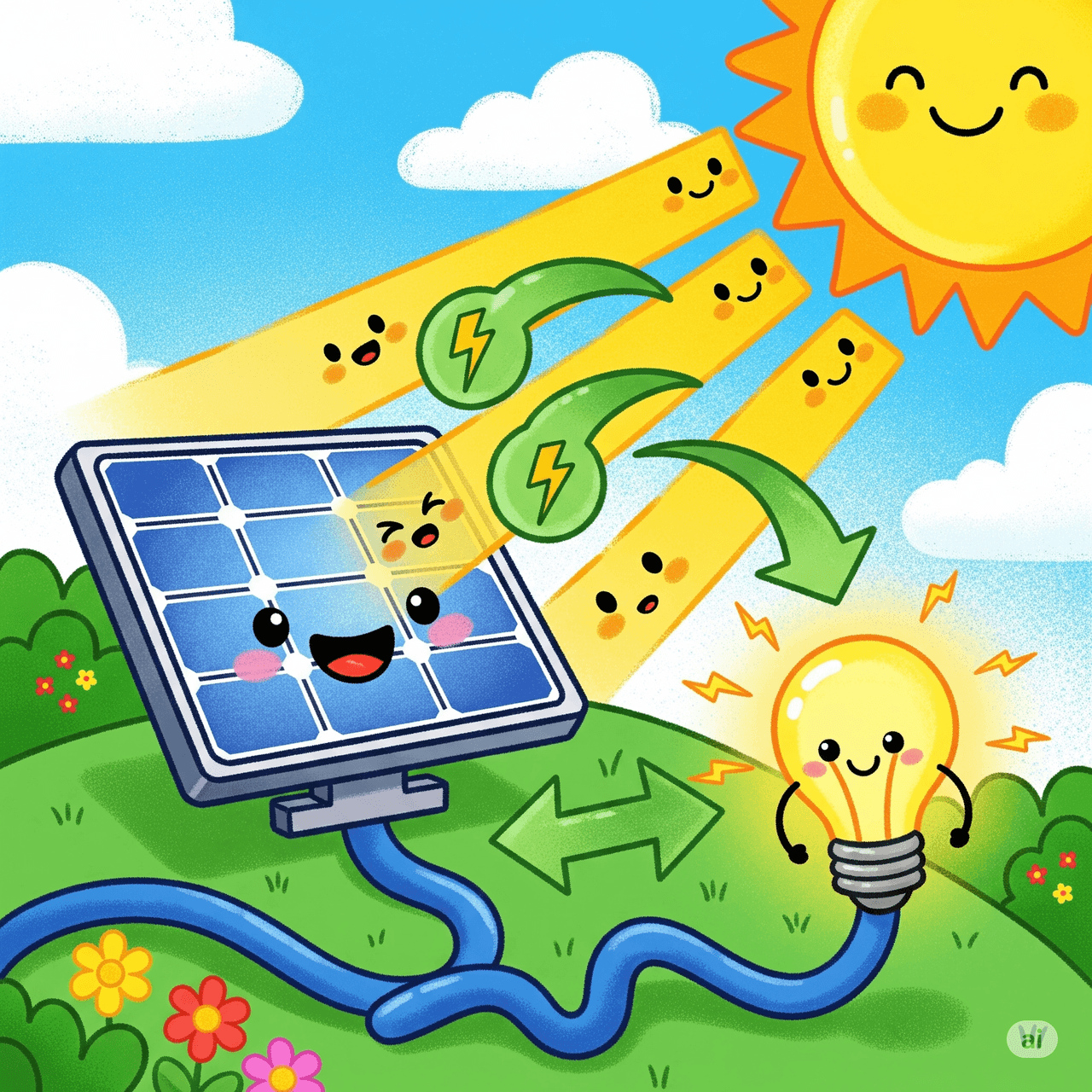
(Generated by Artificial Intelligence.)
What Does It Teach?
Through this technology, children learn how the Sun is converted into energy. They realize that electricity can be generated not only from power plants but also directly from the Sun. At the same time, they discover that one way to protect nature is by using clean energy.