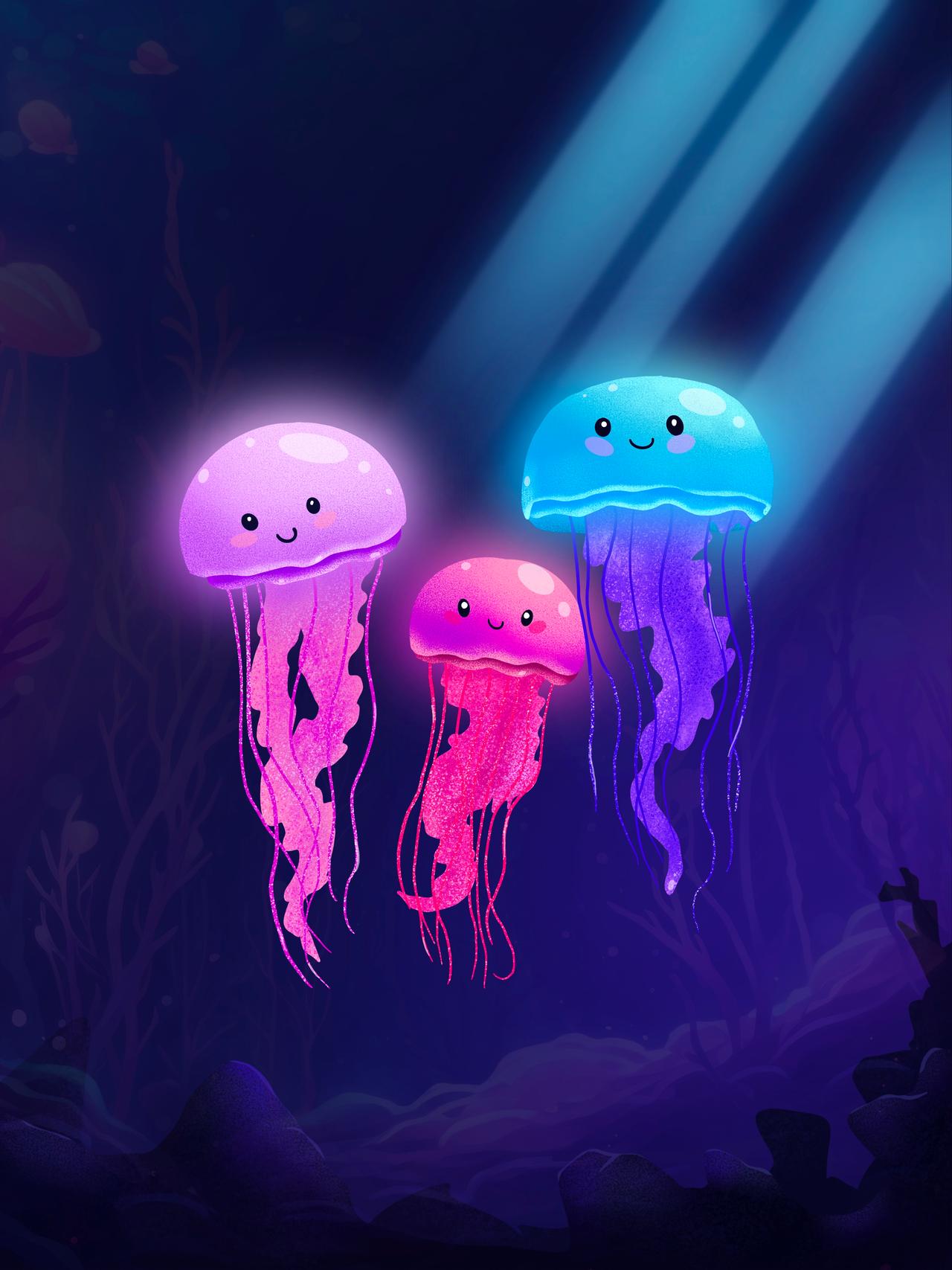


What Is a Jellyfish?
While swimming near the shore, you have surely seen translucent, jellyfish-like creatures gliding slowly through the water: jellyfish. Some people fear them because their stings can cause painful burns. But jellyfish are ancient and fascinating organisms that play a vital role in maintaining the balance of our oceans.
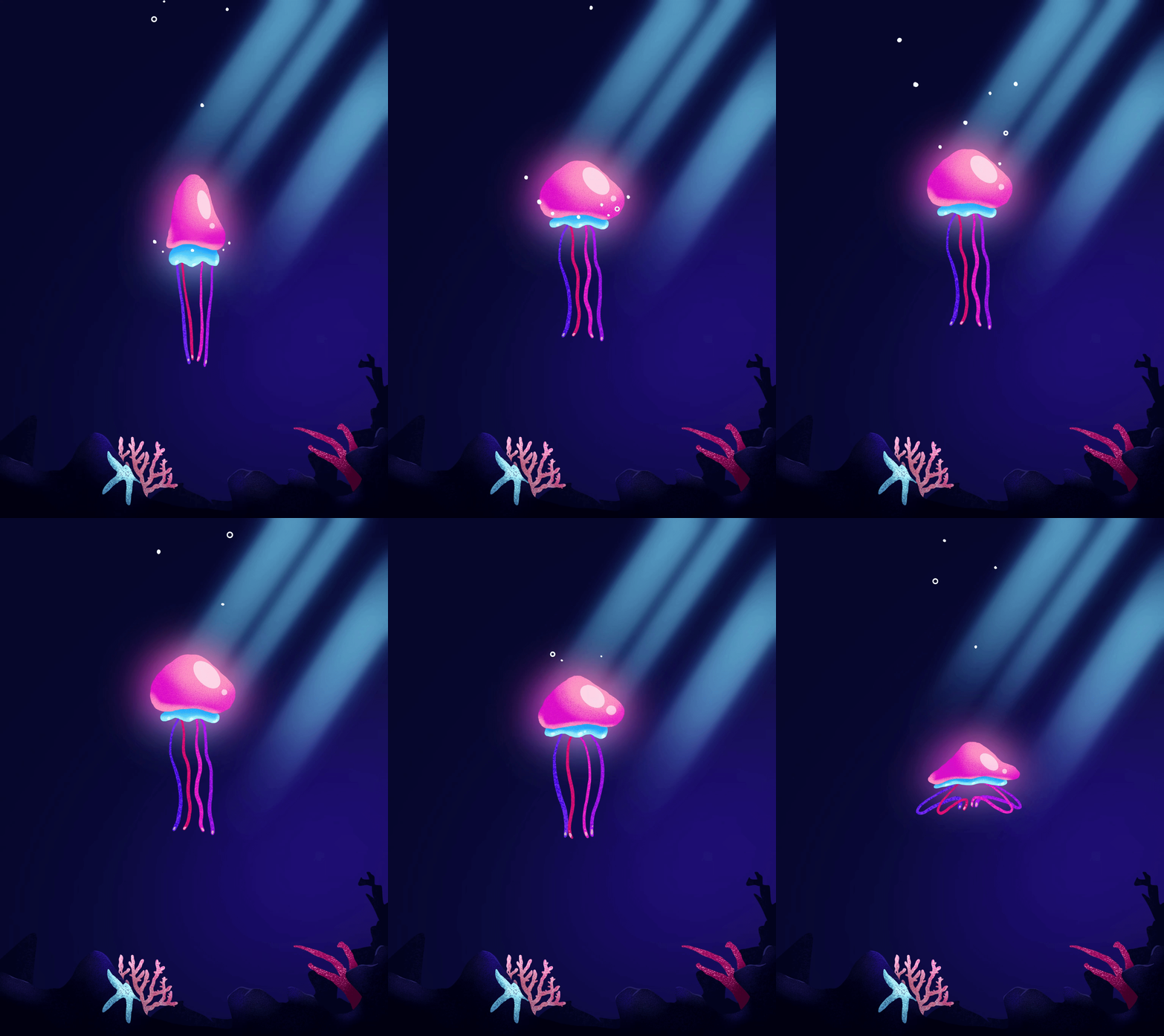
Jellyfish (Gif: Nazlı Kemerkaya)
What Kind of Organism Is It?
Jellyfish are invertebrate animals, meaning they have no backbone or bones like ours. Scientifically, they belong to the group Cnidaria and are related to hydras and corals.
Their bodies are typically shaped like an umbrella or a bell. From the underside of this umbrella, numerous arms and fine thread-like structures called tentacles hang down. In the same area, the mouth is located along with thicker oral arms.
More than 90 percent of a jellyfish’s body is water. This is why they appear soft, gelatinous, and either transparent or semi-transparent. While most are colorless, they can also appear in dirty white, blue-purple-white, or brownish tones.
How Do Jellyfish Feed?
Jellyfish capture their prey by stinging. When small organisms come into contact with them, specialized cells on their arms activate. Once the prey is stunned or immobilized, the jellyfish uses its oral arms to direct the food toward its mouth.
Their diet includes small fish, fish larvae, shrimp, tiny crustaceans such as krill and copepods, creatures called amphipods, and minute plant-like organisms such as algae. Sometimes they even eat other jellyfish.
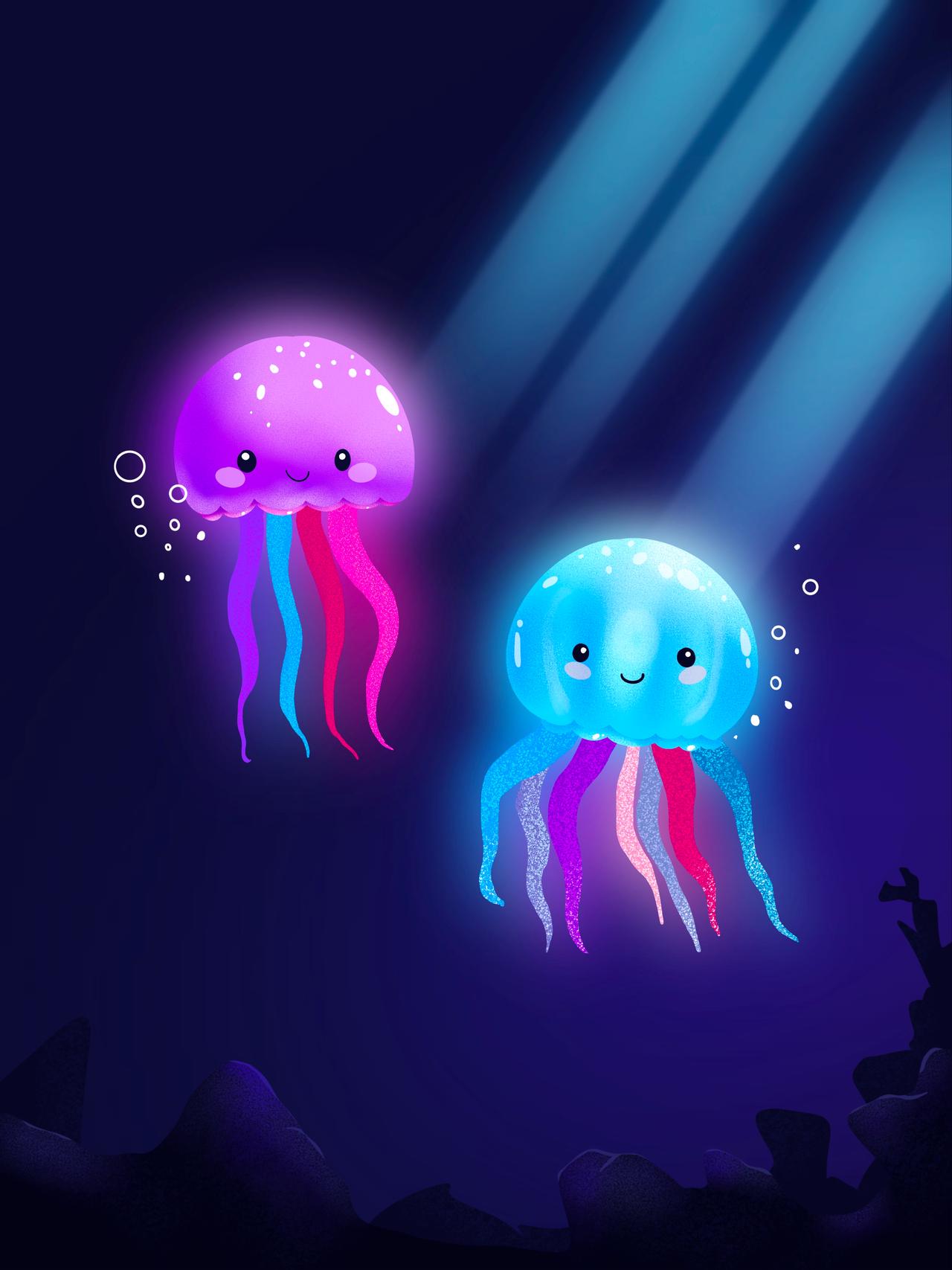
Jellyfish (Drawing: Nazlı Kemerkaya)
How Do They Reproduce?
The life cycle of jellyfish is filled with dramatic transformations. First, adult jellyfish release eggs and sperm into the water. These cells meet and fertilize in the ocean. The fertilized egg develops into a free-swimming larva.
After swimming for some time, this larva finds a hard surface to attach to: a rock, a stone, or any solid substrate. It settles there and transforms into a structure called a polyp.
The polyp grows in place and eventually begins to bud off juvenile jellyfish. These young jellyfish detach and drift into the water, eventually developing into the familiar free-swimming form we recognize as jellyfish.
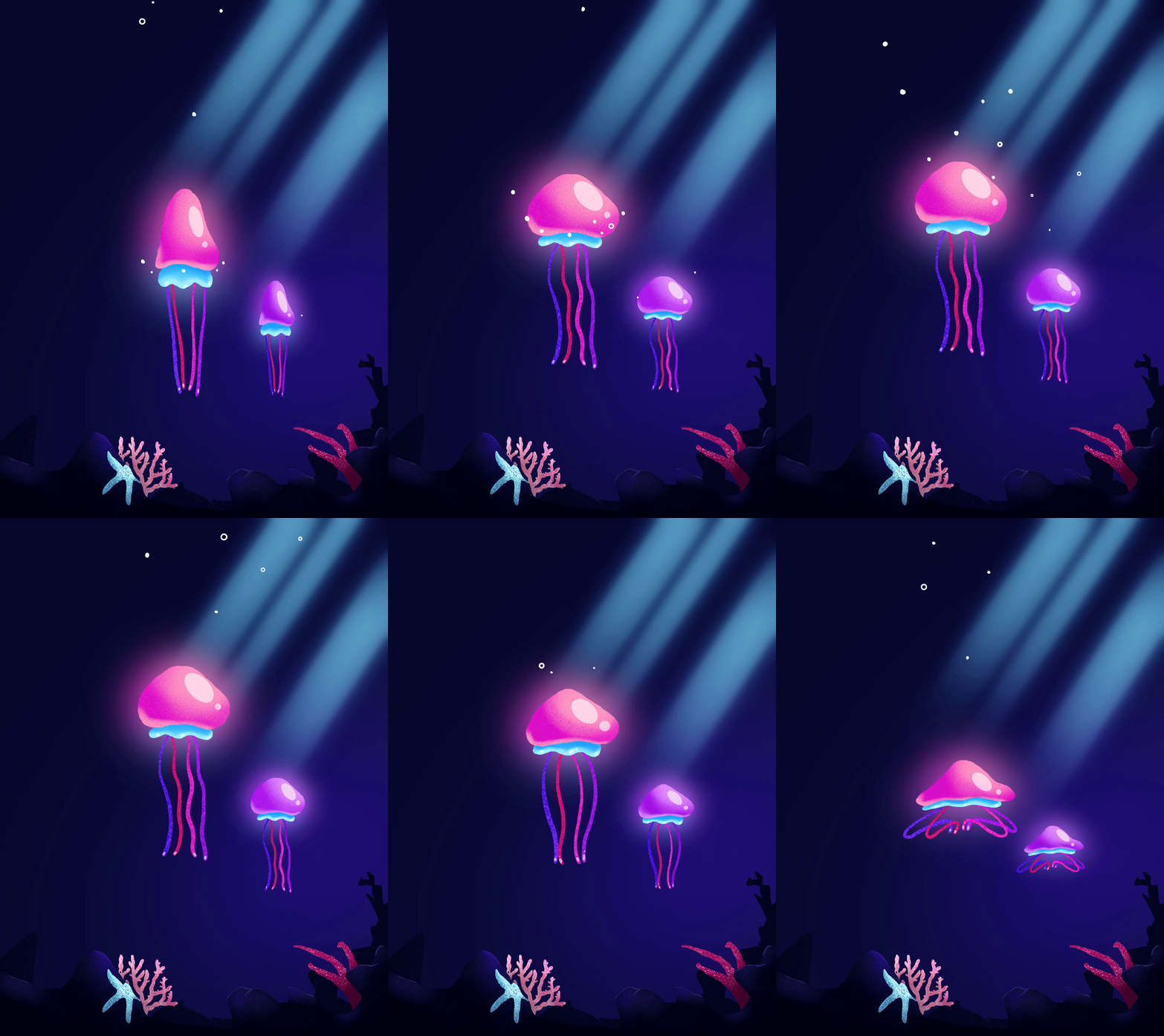
Jellyfish (Gif: Nazlı Kemerkaya)
📦 Time Travel: The Ancient History of Jellyfish
Fossil records indicate that jellyfish have lived on Earth for approximately 650 million years. This means they appeared long before dinosaurs.