


Social Rules
Rules are guidelines established to enable us to live safely within society and to protect both our own rights and those of others. Since humans began living together, they have needed these rules to ensure that everything proceeds in an orderly manner. Remember that rules are not merely prohibitions; they are the greatest guarantee of our freedom to live.
Why Are Rules Important?
Social rules prevent chaos in our lives and allow people to coexist peacefully under one roof. Without rules, only the strong would be able to oppress the weak, leading to widespread injustice.
Rules give us a sense of security. The existence of a rule allows us to anticipate how others will behave. Even the simplest rules are far better than having no rules at all and everything being done randomly or arbitrarily.
What Purpose Does Each Rule Serve?
There is no single type of rule that governs our lives. We can categorize them into several main groups:
- Legal Rules: Rules imposed by the state that everyone is required to follow. Those who violate them are punished by the state.
- Moral Rules: The inner voice that defines a person’s duties toward themselves and their surroundings. For example, not lying is a moral rule.
- Religious Rules: Rules based on belief in a divine power and followed through conscience.
- Customary, Traditional and Etiquette Rules: Long-standing practices in our social environment that make life more polite and respectful. Greeting others and showing respect to elders are examples.
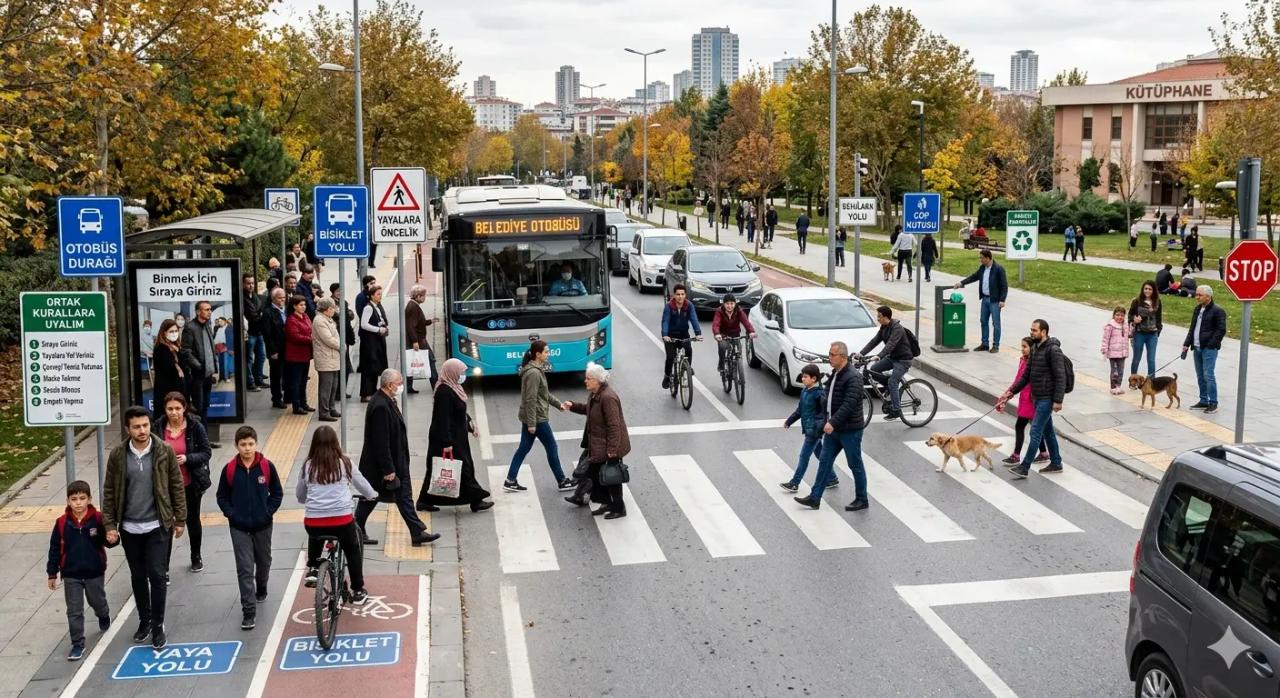
Representative Image of Social Rules (Generated by Artificial Intelligence)
Internal Brake or External Obstacle?
To understand how rules function, we can use an automobile metaphor. Legal rules are like a wedge placed outside the wheel of a car parked on a hill; if the wedge is removed, the car may roll. However, religious and moral rules are like the handbrake inside the car. If the handbrake is engaged, the car stops safely without needing any external obstacle. The ideal situation is when rules from within (morality) and from outside (law) work in harmony.
"Act So That..." (Kant’s Principle)
The renowned philosopher Immanuel Kant said this about rules: "Act only according to that maxim whereby you can at the same time will that it should become a universal law." This means asking yourself before acting: "What kind of world would it be if everyone acted as I am about to do?"
Forgiveness and Justice
Sometimes an action may not be illegal but still be ethically wrong. For example, a contractor may build a structure that complies with all legal regulations yet blocks the city’s beautiful view. While this may be "legal," it may not be "halal" (ethical). This is why in society it is essential to act not only according to laws but also with compassion and respect for others’ rights.