


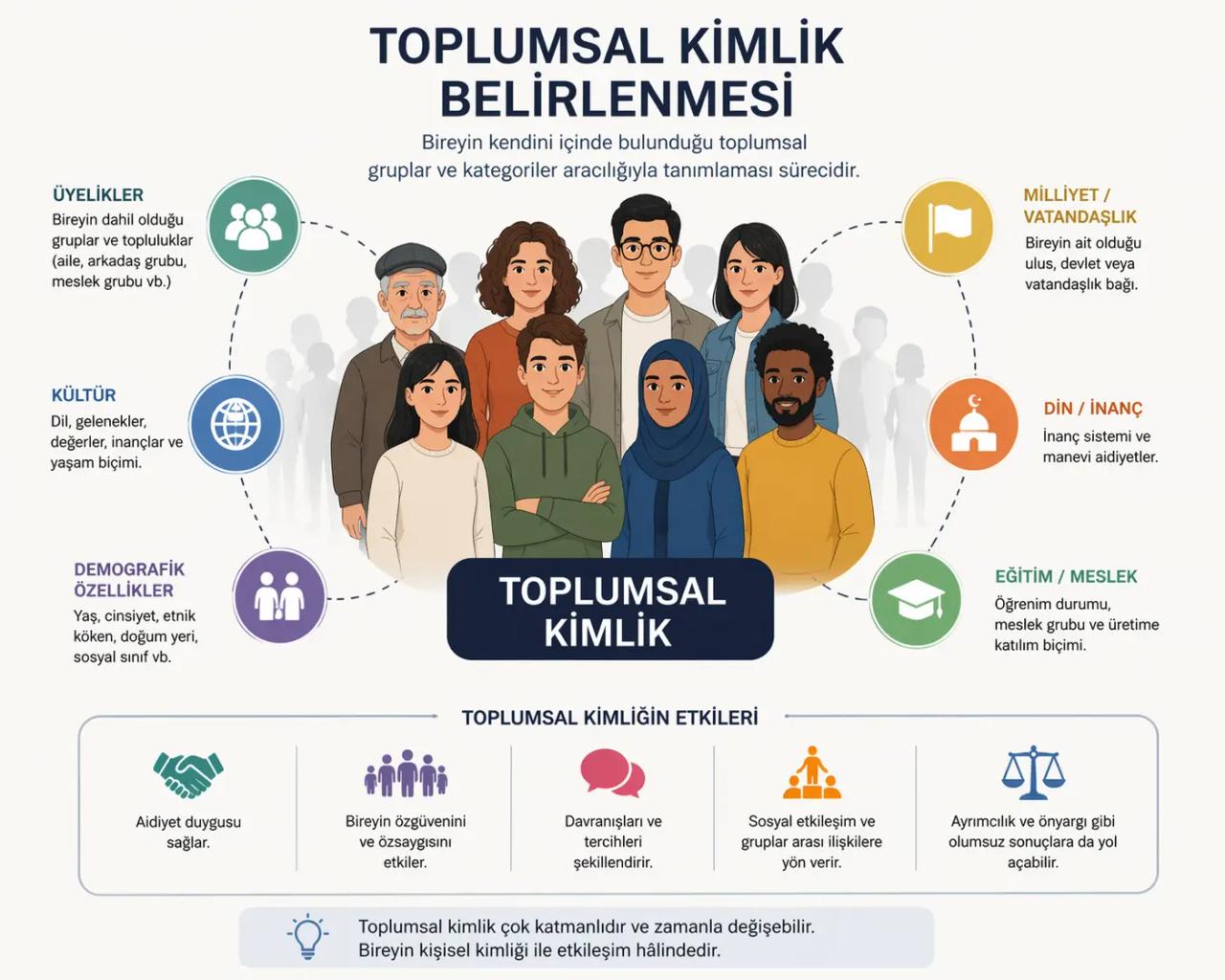
Social Identity Determination
Gender is a concept that refers to socially constructed characteristics such as norms, roles, and relationships between women and men. From the moment of birth, the society in which each individual lives begins to assign them various values and judgments based on their biological sex; during this process, our biological sex gradually transforms into what is known as gender.
Self-Efficacy: Our Belief in Ourselves
Self-efficacy is the belief an individual has in their ability to organize and execute the actions necessary to succeed in a specific task. Individuals with a strong sense of personal competence put forth greater effort to accomplish a task. If our belief in our abilities is low, we may perceive tasks as more difficult than they actually are, which can lead to anxiety and stress.
Representative Visual of Gender Identity Formation (Generated by Artificial Intelligence)
Identity: The Answer to “Who Am I?”
Identity concerns how an individual or group defines itself and positions itself among others. In forming our identities, we use three distinct perspectives:
- Individual Identity: Our personal traits and preferences.
- Social Identity: Our place within the groups to which we belong.
- Collective Identity: Our sense of belonging to larger groups such as our race or religion.
The Importance of Friendship and Groups
Especially during adolescence, being accepted by friends and belonging to a group enhances our self-worth. People can more easily solve problems through cooperation with others in a group that they could not manage alone. Membership in a group gives us a sense of security and helps us feel better about ourselves.
The Evolution of Identity from Past to Present
Throughout history, people have defined themselves in different ways. In earlier times, individuals primarily identified themselves through their religion or family (dynasty); over time, national identity—the awareness of being a citizen of a state—has come to the forefront.