Secretariat
Secretarial Work is a vital profession and service field that ensures the smooth and efficient operation of an office or manager’s duties. Have you ever seen someone waiting outside a school principal’s office, answering phones or greeting visitors with a smile? That person is a secretary. Without secretaries, the “order heroes” of offices, appointments could become混乱 and important documents might be lost.
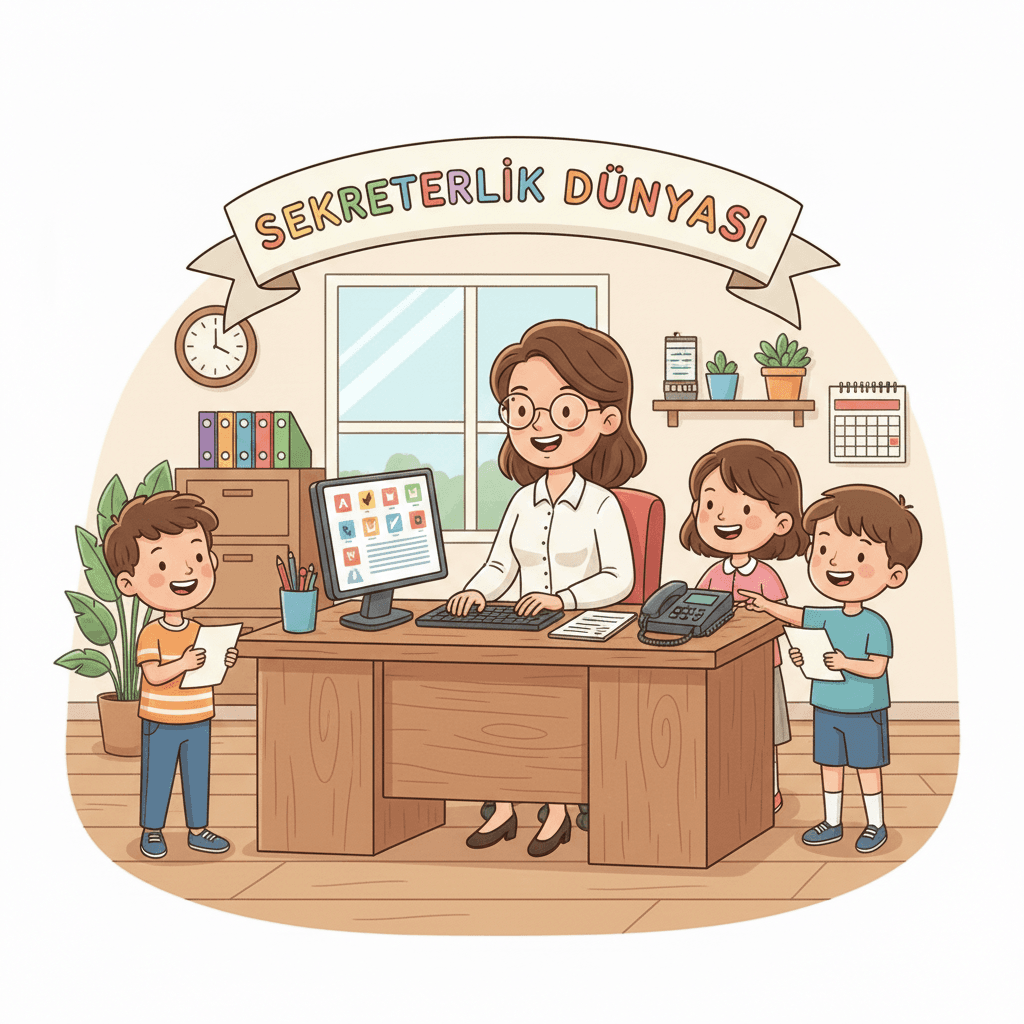
The World of Secretarial Work (Generated by Artificial Intelligence)
What Does a Secretary Do?
The most important duty of a secretary is to manage communication and workflow within their workplace. They answer phones, take notes, and prepare their manager’s daily schedule. They also organize incoming emails and letters, forwarding the most important ones to their manager. They plan meeting times and ensure everything is ready on time.
What Are the Qualities of a Good Secretary?
A good secretary is always polite, honest and highly attentive. As the first person to greet visitors to the office, they represent the organization’s public face. They must be proficient in using technological tools such as computers, printers and telephones. Moreover, one of their greatest responsibilities is to safeguard and keep confidential all sensitive office information, meaning they must not share it with anyone.
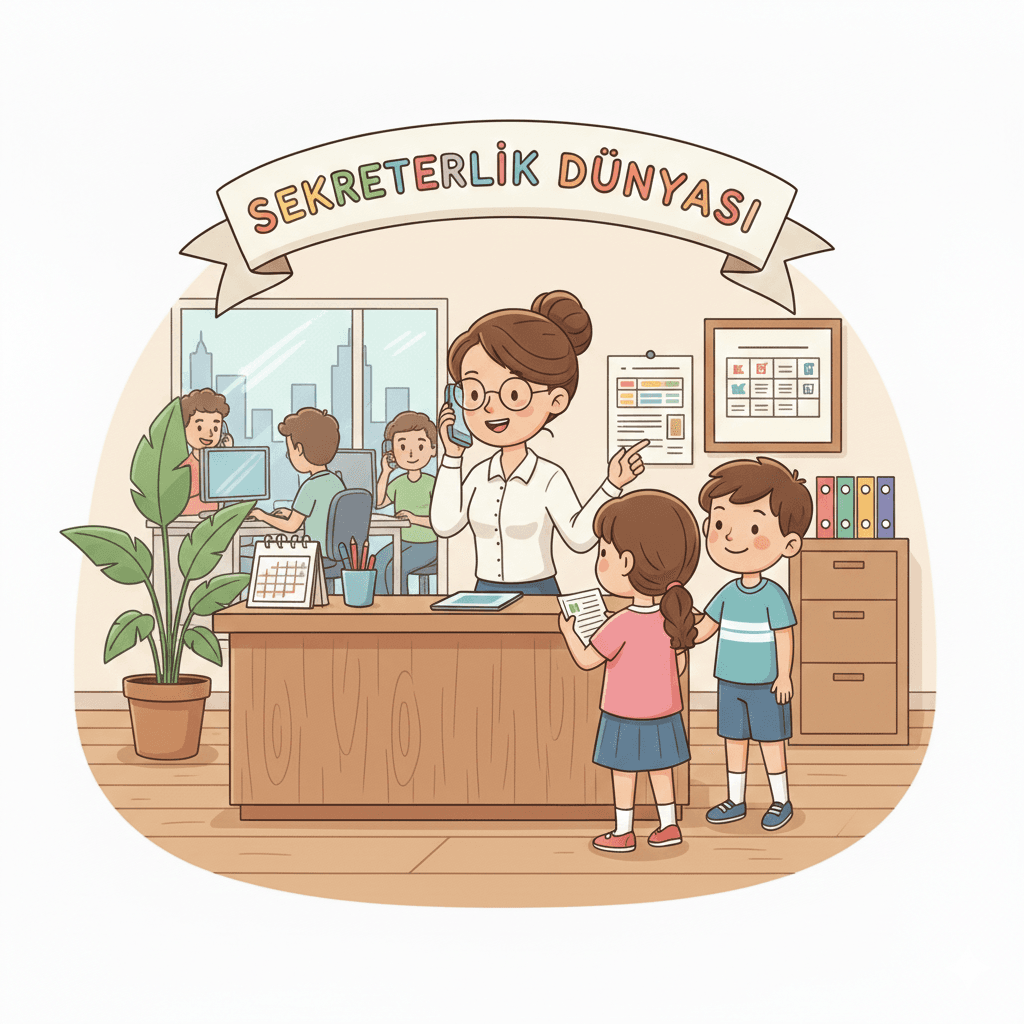
Representative Image of Secretarial Work (Generated by Artificial Intelligence)
Protocol: Rules of Courtesy in the Office
In secretarial work, there are special courtesy rules known as "protocol". These rules ensure that official relationships in the workplace are conducted with respect. For example, when entering their manager’s office, a secretary pays attention to their attire and stands up when their superior rises, demonstrating respect. These rules create a serious and harmonious working environment within the office.
Time Travel
In the past, when computers and smartphones did not exist, secretaries typed everything on machines called "typewriters". A typewriter was a heavy device that imprinted inked letters onto paper when keys were pressed. When they made a mistake, they could not easily erase it as we do today, so they had to be much more careful!