KURE Kids Header Line
badge icon

This content was originally written in Turkish for children and is automatically translated into English using artificial intelligence.

article-image

Sadaka Stone

Last Updated: 02/27/2026

Sadaka stones are one of the most elegant and thoughtful methods of mutual aid used by people in the past. During the Ottoman period, these stones served as quiet corners of charity that enabled assistance to be given without causing harm or embarrassment to anyone.


What Is a Sadaka Stone?

Sadaka stones are stone pillars typically erected at mosque corners, street entrances, or beside hospitals, featuring a small hollow at the top. These stones functioned as invisible bridges of kindness, connecting those who wished to give help with those in need without either party being seen or identified.
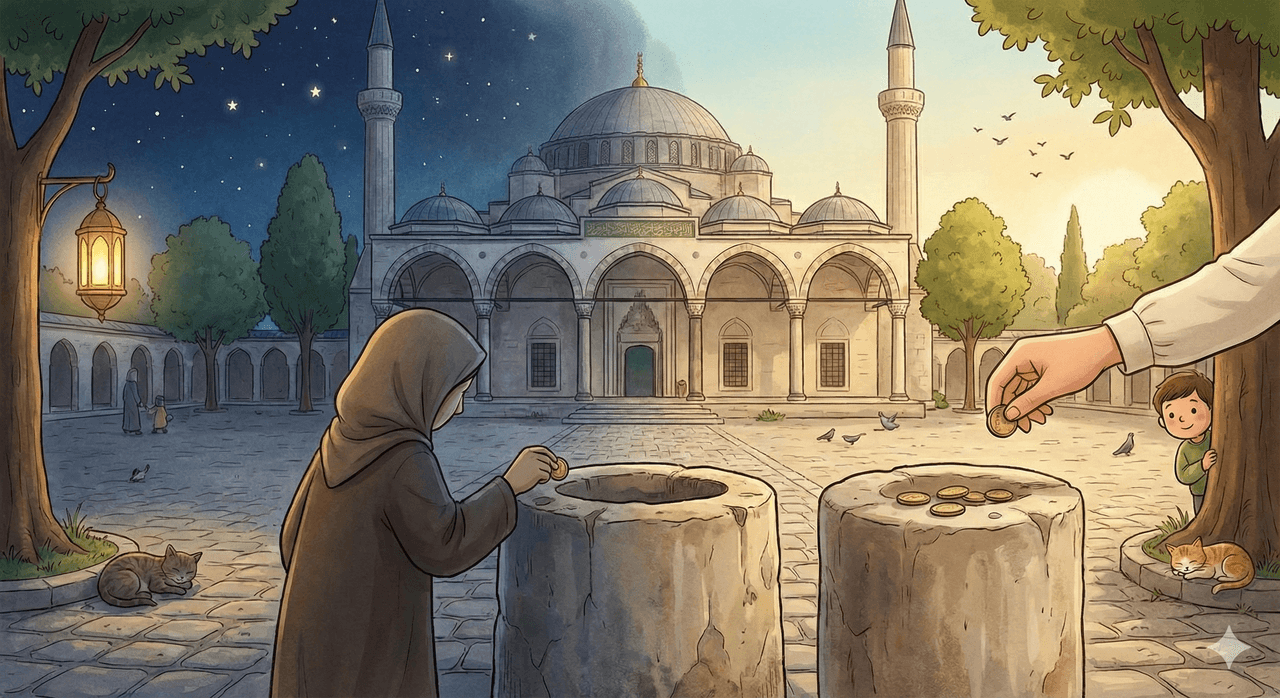


An image depicting a sadaka stone (generated by artificial intelligence)

How Was It Used?

The mechanism was simple yet profound: those in better circumstances would quietly leave a small amount of money in the stone’s hollow, usually under cover of night, so that no one would see them. Those in need would come to the stone and take only the amount required for their immediate needs. In this way, neither the giver knew to whom they had given, nor the receiver knew from whom they had received.


Why Is It Called the “Stone That Does Not Break the Heart”?

In the past, our elders placed great importance on ensuring that those receiving help did not feel shame or emotional pain. Thanks to the sadaka stone, a child or family in need could meet their requirements without having to ask anyone directly. Moreover, from an outsider’s perspective, it was impossible to tell whether a hand reaching the stone was leaving money or taking it. This was the finest embodiment of the principle that “the right hand should not know what the left hand gives.”
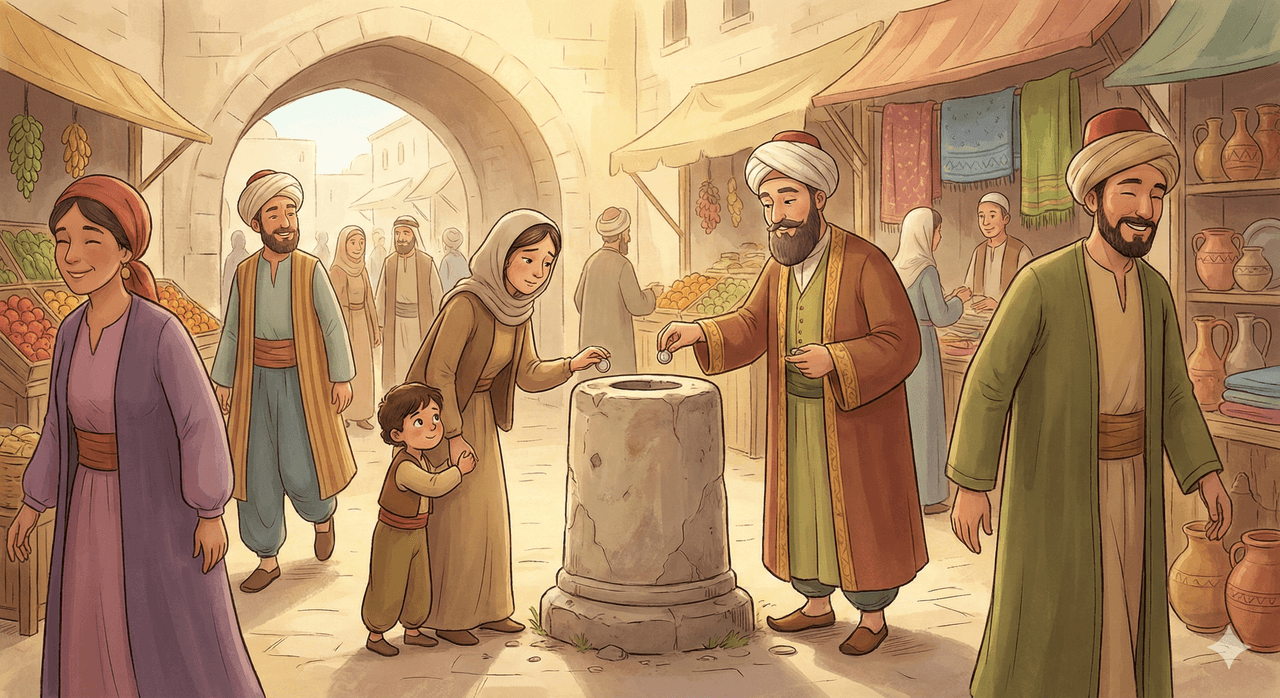


Depiction of the sadaka stone in public perception (generated by artificial intelligence)

Where Are They Found?

These stones were not only places for monetary aid. Sometimes, nearby, there were also “lost property stones” where people could leave or retrieve misplaced items. Today, you can still see these historic and benevolent stones in the courtyards of old mosques in many of our cities, including Edirne, Istanbul and Aydın.

Don't Forget to Look at These!
Science and Technology
cat img
Natural Sciences
cat img
Art and Literature
cat img
image
Most Read
Thomas Edison
arrow
image
Last Added
Pardus
arrow
ilham-notu-bg
INSPIRATION NOTE FOR CURIOUS KIDS!

If you come across a charity stone in a mosque courtyard or a historic street, you may try quietly placing a small coin you set aside from your piggy bank without drawing attention to yourself. Knowing that your tiny act of kindness could transform into a wide smile on the face of someone you’ve never met will bring you great joy!

Charity stones teach us the most elegant form of sharing. When you help a friend or do a good deed for someone, doing so silently and keeping it known only between the two of you, you can feel the noble spirit of those old charity stones within your heart.

If one day you truly find yourself in need, you may demonstrate the virtue of taking only what you require at that moment from the charity stone and leaving the rest for others in greater need. Remember: honesty and consideration for others are the greatest treasures a child can possess!

When helping someone, acting so that you do not embarrass them—“so that your left hand does not know what your right hand gives”—makes you a true hero of kindness. Like charity stones, you too can warm hearts by keeping your good deeds hidden!

Who Wrote?
Kids Writing
AuthorMustafa Cem İnciFebruary 27, 2026
bottom-bg-effect-bottom
bottom-bg-effect-top

Sadaqa derives from the Arabic word “siddq.” During the Ottoman period, the most refined expression of this charity was the “sadaqa stones”—hollow-capped pillars erected in mosque courtyards or street corners. Money was typically left on these stones at night to ensure anonymity and avoid humiliating those in need, who would take only what they required for that day. This practice, in which “the giving hand does not see the receiving hand,” strengthened trust and civility within society and transformed mutual aid into a contest of goodwill.

Bibliographies

Aydın İl Directorate of Culture and Tourism. "Sadaka Taşı." Ministry of Culture and Tourism of the Republic of Turkey. Accessed February 26, 2026. https://aydin.ktb.gov.tr/TR-243108/sadaka-tasi.html.

Baran, Salih. "Osmanlı Medeniyetinin Hassasiyeti 'Taşlarda' Gizli." Anadolu Ajansı, May 23, 2019. https://www.aa.com.tr/tr/kultur-sanat/osmanli-medeniyetinin-hassasiyeti-taslarda-gizli/1485236.

Sadakataşı Derneği. "Sadaka Taşları." Accessed February 26, 2026. https://www.sadakatasi.org.tr/page/sadaka-taslari/216.

Social Work Specialists. "Sadaka Taşları." Accessed February 26, 2026. https://sosyalhizmetuzmanlari.com/genel/sadaka-taslari/.

Somuncu Baba Türbesi ve Külliyesi. "Sadaka Taşı Nedir?" Accessed February 26, 2026. https://somuncubabaturbesi.com/sadaka-tasi-nedir/.

ilham-notu-bg
ilham-notu-bg
ilham-notu-bg
HEYY!
Did You Know?
These?
Lamb
Lamb
Ask to Küre