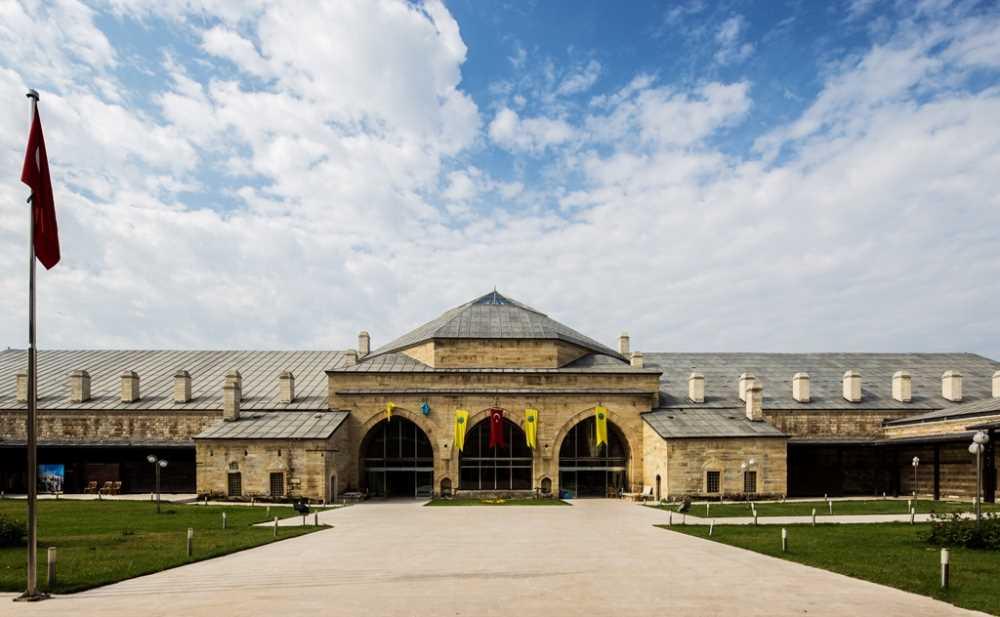


Ekmekçizade Caravanserai (Edirne)
Ekmekçizade Kervansarayı is an Ottoman-era structure located in the province of Edirne. Caravanserais were facilities built throughout history to accommodate traveling merchants and passengers, as well as their animals. This building is an example exhibiting architectural features characteristic of the 17th century.
Time Travel: The Construction Process
The caravanserai was constructed in 1609 (Hijri 1018). Its construction was commissioned by Ekmekçizade Ahmed Pasha, who served as the Chief Treasurer (the official responsible for the Ottoman finances) at the time. The caravanserai was presented to Sultan Ahmed I, the reigning monarch of that era.
The chief architect of the structure was Sedefkâr Mehmed Ağa, one of the master builders trained by Mimar Sinan. During construction, he was assisted by Hacı Şaban Ağa, a local architect from Edirne. The building materials used included cut stone, brick, and wood.
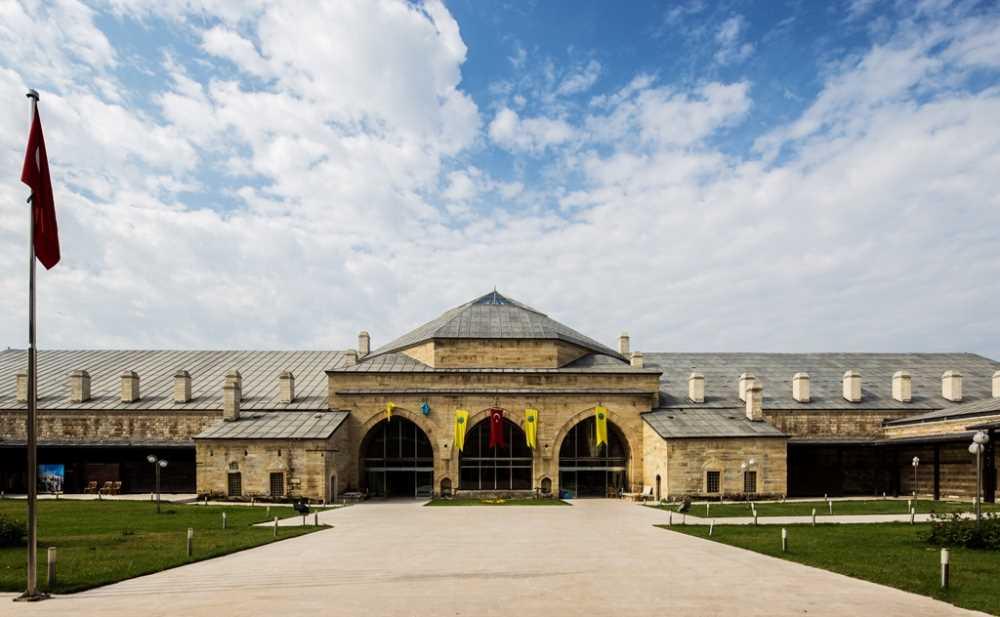
Ekmekçizade Kervansarayı (Culture Portal)
Location and Function
Ekmekçizade Kervansarayı is situated in the Ayşekadın neighborhood of Edirne, along the historical route to Istanbul. Throughout history, this area served as a key stopping point along major trade routes.
The caravanserai was established to provide travelers with lodging, shelter for their animals, opportunities for commerce, and places for rest. Its architectural plan included sleeping quarters, large stables (animal shelters), two şadırvans (fountain structures used for drinking water and ablutions), and shops facing the street.
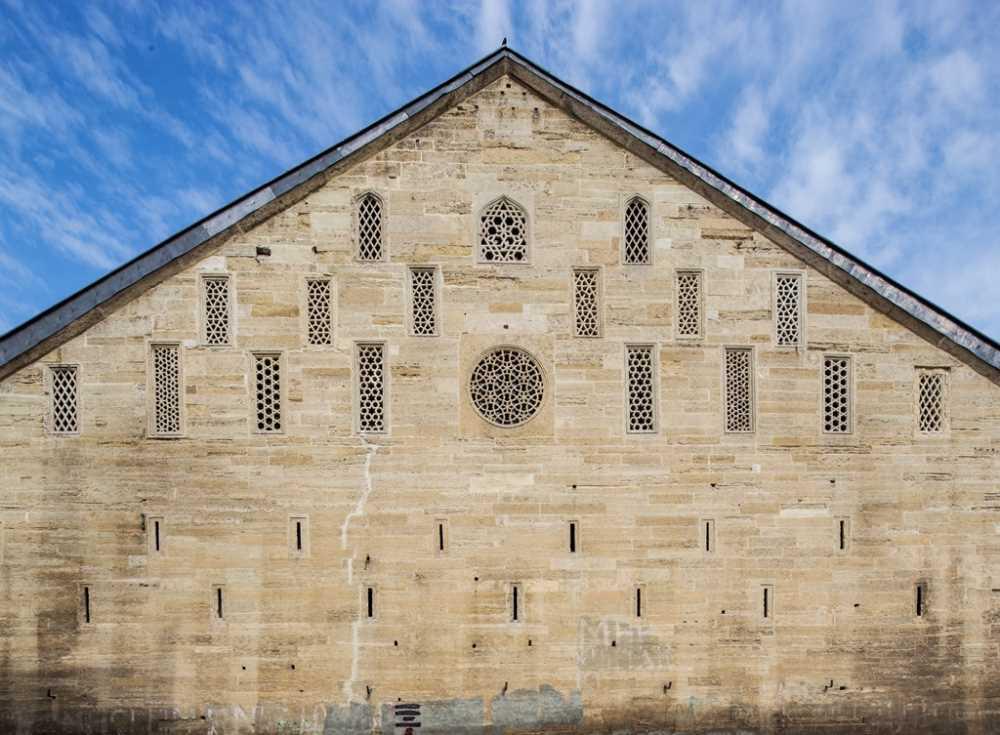
Ekmekçizade Kervansarayı (Culture Portal)
Architectural Structure
The building is organized into two main sections. The first section consists of two large rectangular spaces oriented northwest-southeast, covered by a broken roof. The second section comprises a spacious courtyard in front of these enclosed areas, surrounded by rows of shops.
Access to the caravanserai is provided through a portal with a flat arch (an arch whose rise is less than its radius). Above the entrance is a marble inscription (epigraph) containing details about the building’s construction. Beyond the entrance lies a pointed-arched eyvan (a three-walled, open-fronted vaulted space), followed by a courtyard surrounded by arcades (covered, open-fronted passageways).