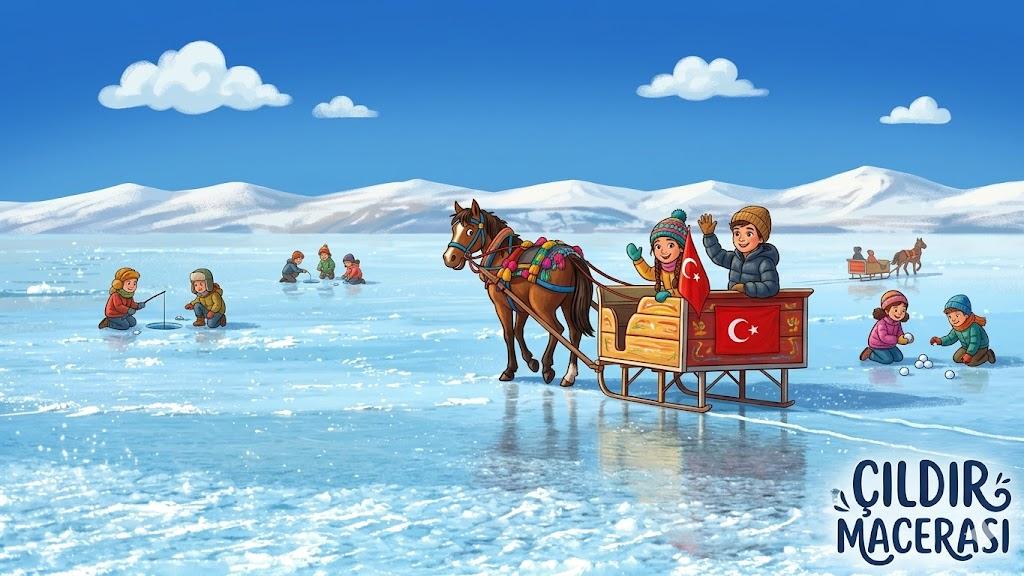
Çıldır Lake
Çıldır Gölü is a freshwater lake located on the border between the provinces of Ardahan and Kars in Türkiye's Eastern Anatolia Region. At an elevation of 1959 meters above sea level, it covers an area of 123 square kilometers and is the largest freshwater lake in the region and the second largest lake overall.
How Was It Formed and What Are Its Characteristics?
Çıldır Gölü is a natural dam lake. It was formed when lava flows from volcanoes and accumulated debris blocked a river. The deepest point of the lake has been measured at 42 meters.
The lake is fed by numerous streams and springs in the surrounding area. Its only outflow is the Telek Çayı river, which lies on the border with Armenia. The lake contains several islands, the largest of which is located near the ruins of Akçakale.
Life and Fishing on the Lake in Winter
During winter, when temperatures drop, the lake's surface freezes completely. It becomes possible to walk on the ice, camp, cycle, and travel using horse-drawn sleds.
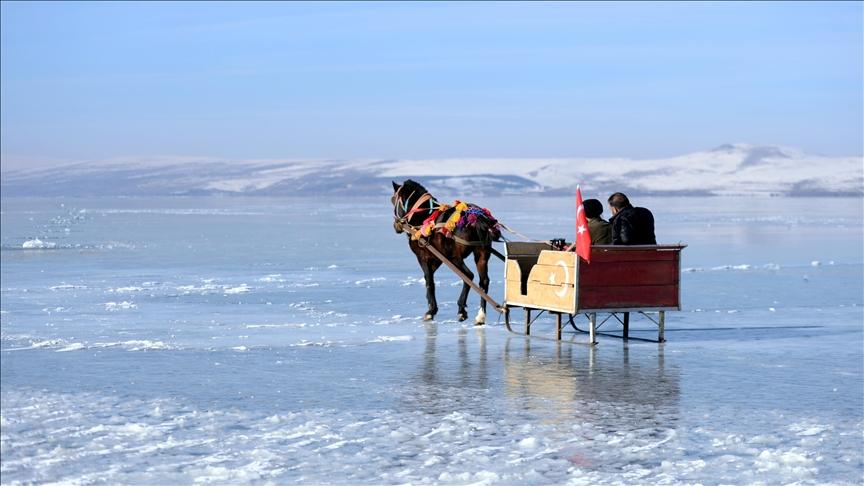
Horse-drawn Sled (Anadolu Ajansı)
Fishing, which can be carried out year-round, is an important economic resource for the local population. In winter, fishermen use a method known as the "Eskimo method", breaking through the thick ice layer with picks, oars, and saws to catch fish. The most commonly caught fish species in the lake is the mirror carp.
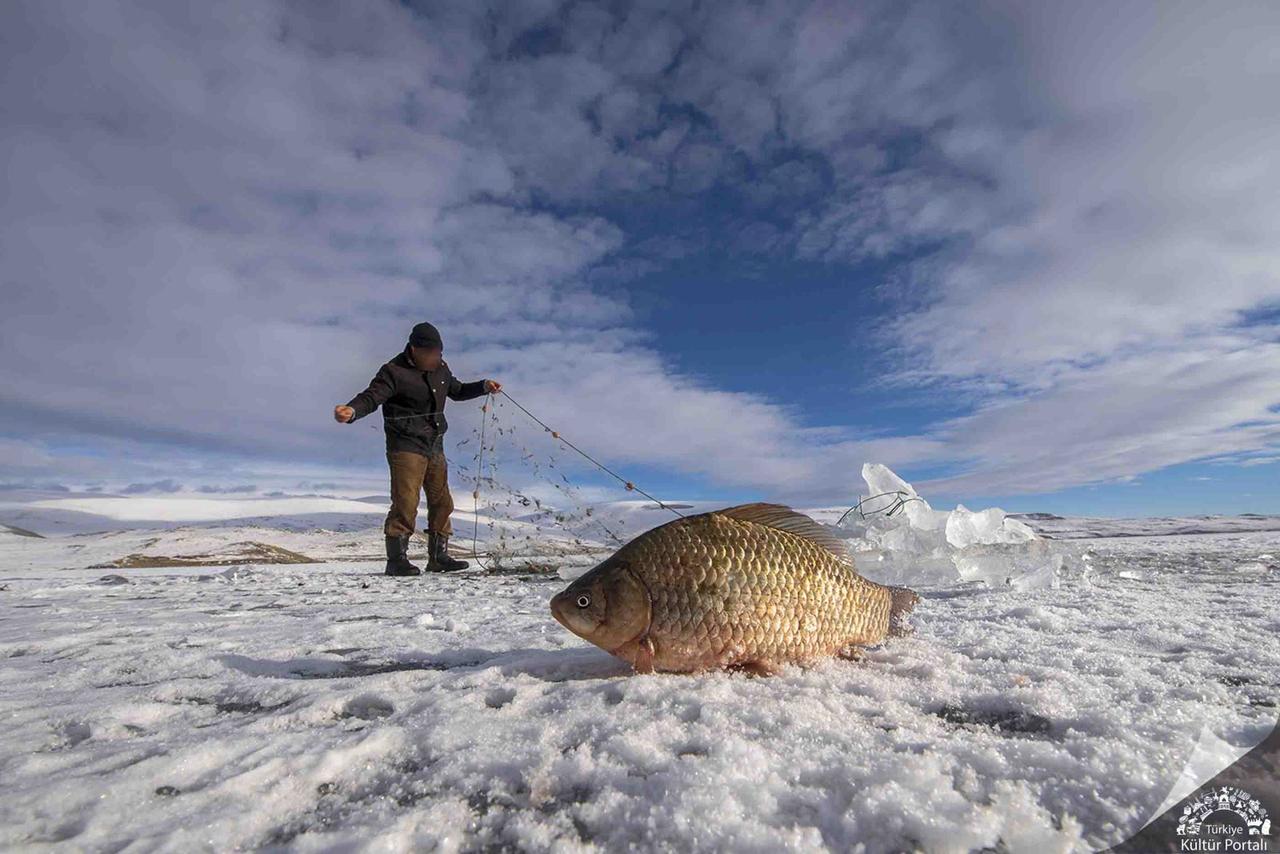
Mirror Carp (Kültür Portali)
Natural Life and Environment
Çıldır Gölü and its surroundings serve as a habitat for a wide variety of bird species and lie along a major migratory route. An observation tower has been built along the lakeshore for those interested in birdwatching.
Due to the unsuitability of the climate for agriculture, the lands surrounding the lake are generally used as pastures, supporting intensive livestock farming.
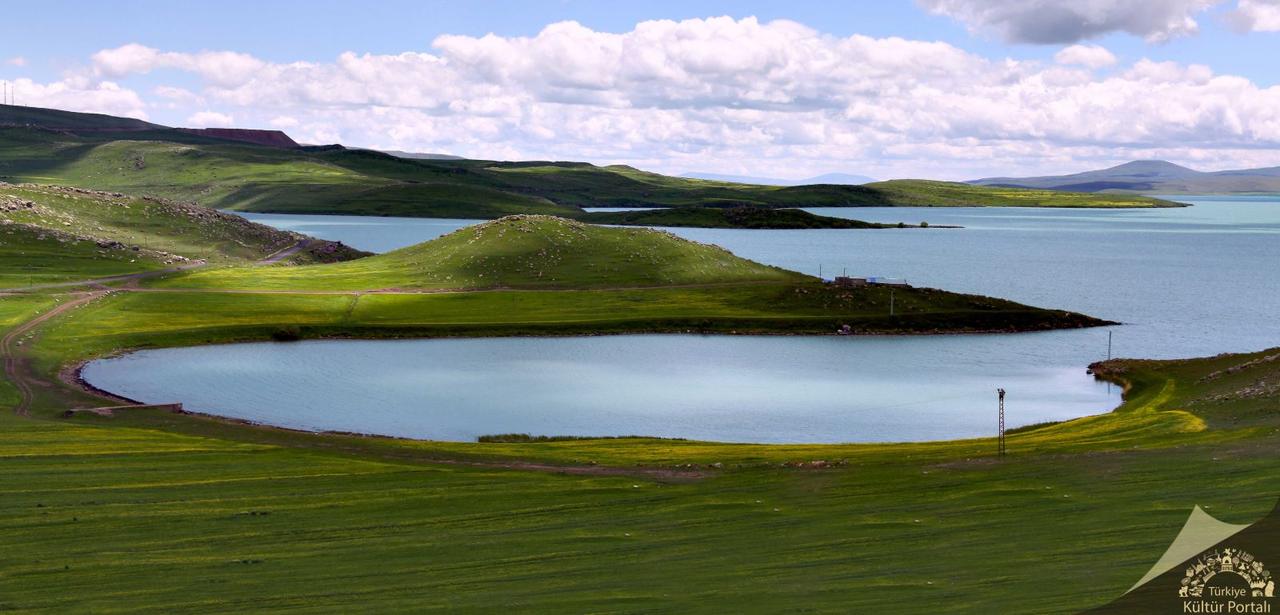
Çıldır Gölü (Kültür Portali)
Preserving the Natural Balance of the Lake
Several environmental threats have been observed at Çıldır Gölü. During dry seasons, the drop in water level has led to the shrinking of reed beds essential for fish spawning.
In addition, uncontrolled fishing, erosion, and domestic pollution negatively affect aquatic life in the lake. The runoff of chemical fertilizers from agricultural fields into the lake water also poses a risk to the ecosystem.