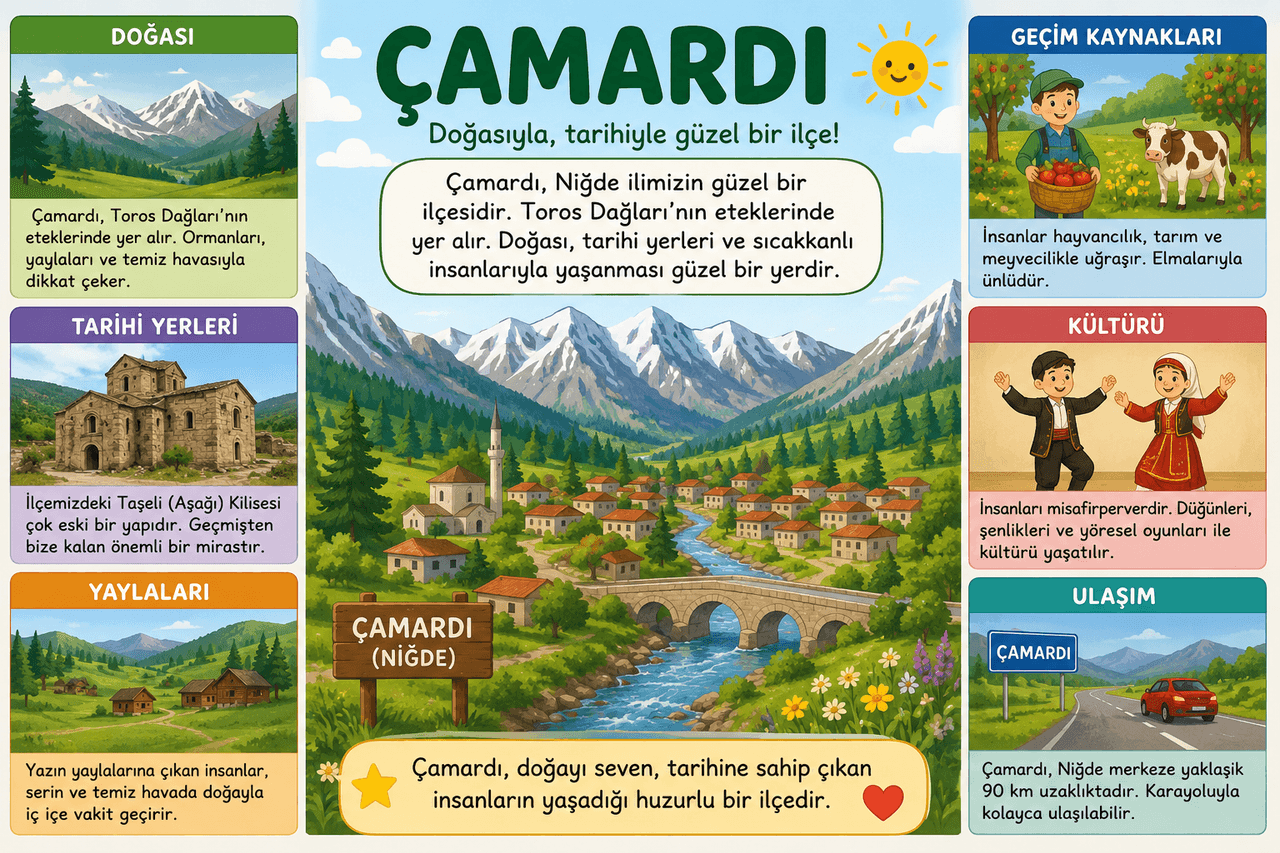
Çamardı (District)
Çamardı, one of the highest and most exhilarating places in Niğde province. Nestled among giant mountains, this district offers a unique natural environment that makes you feel as if you are touching the sky. Let us explore this natural wonder more closely.
Where Is Çamardı?
Çamardı is a district of Niğde province in Türkiye’s Central Anatolia Region. It lies at the foot of the Aladağlar, one of the most majestic sections of the Taurus Mountains. This is a very high-altitude area; the district’s average elevation reaches approximately 1600 meters.
The surrounding area is covered by massive mountains, with virtually no flatlands. In winter, everything is blanketed in pure white snow, while in summer the crisp, icy mountain air brings refreshing coolness.
Journey to the Summit of the Mountains
The region’s most famous landmark is Demirkazık Peak, which at 3756 meters is the highest summit of the Aladağlar. Mountaineers from many parts of the world come to Çamardı to climb this peak and experience the beauty of nature.
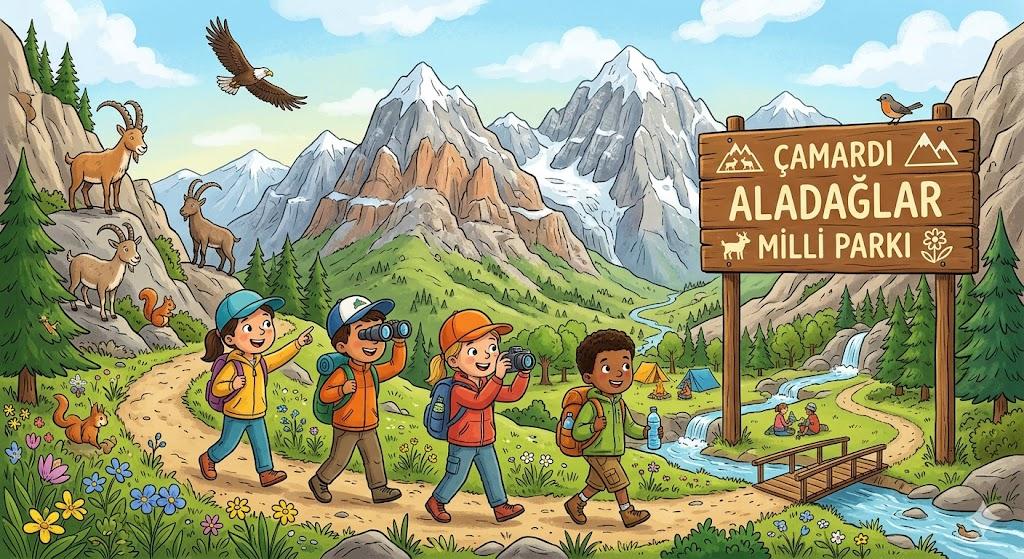
Children exploring Aladağlar National Park in Çamardı. (Generated by artificial intelligence.)
Aladağlar National Park is a vast playground for nature lovers. Here you can camp, embark on long hiking trails, and try thrilling activities such as rock climbing.
A Journey Through Time
The name Çamardı appears in ancient records as “Şamardı,” meaning “the land beyond Sham.” The district’s history stretches back thousands of years to the Hittite period. Its former name was “Bereketli Maden,” as this area was once rich in valuable minerals.
What to Eat and What to Do?
One of the first flavors that come to mind when thinking of Çamardı is its famous Çamardı ice cream. The region’s orchards also produce bright red apples and juicy cherries that are exceptionally delicious. Potato and bean cultivation are also widespread here.
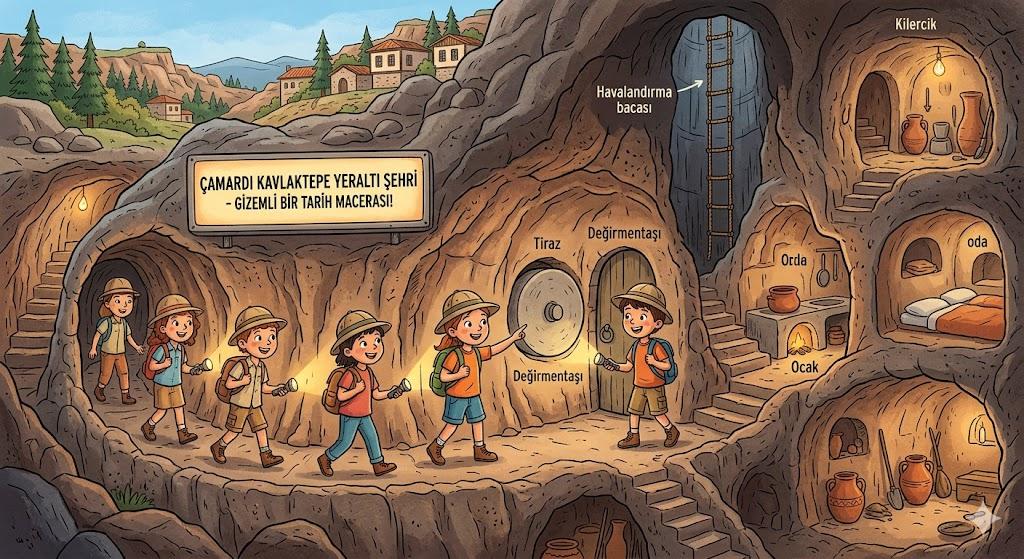
Children discovering the history of Çamardı. (Generated by artificial intelligence.)
If you enjoy exploring historical sites, you must visit Kavlaktepe Underground City. This site from the Byzantine era is a mysterious world carved into the rocks by people seeking shelter, much like those in Cappadocia.