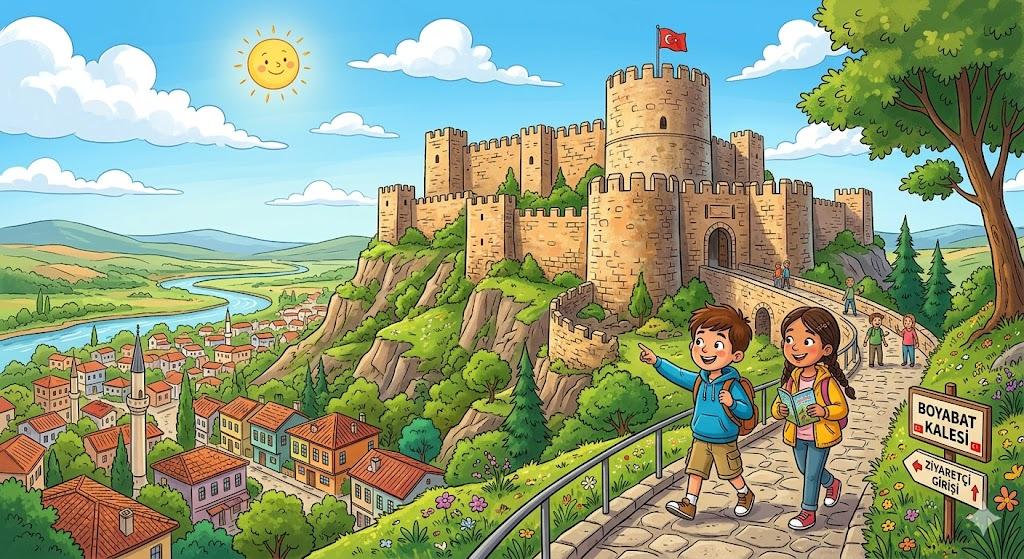
Boyabat Castle
Imagine a massive stone structure rising from one of two steep cliffs facing each other in the Gökırmak Valley. This magnificent edifice appears as if it is a natural extension of the landscape, having been constructed precisely to conform to the shape of the rocks upon which it stands. Boyabat Castle has stood there for thousands of years, telling us the stories of the past.
Sections and Structure of the Castle
The walls surrounding the castle are called “sur.” Between these walls, both circular and rectangular towers can be found. Using the staircases inside these towers, it is possible to climb all the way to the highest point. To enter the castle, you must use the small gate located beside the large circular tower at the southeast corner.
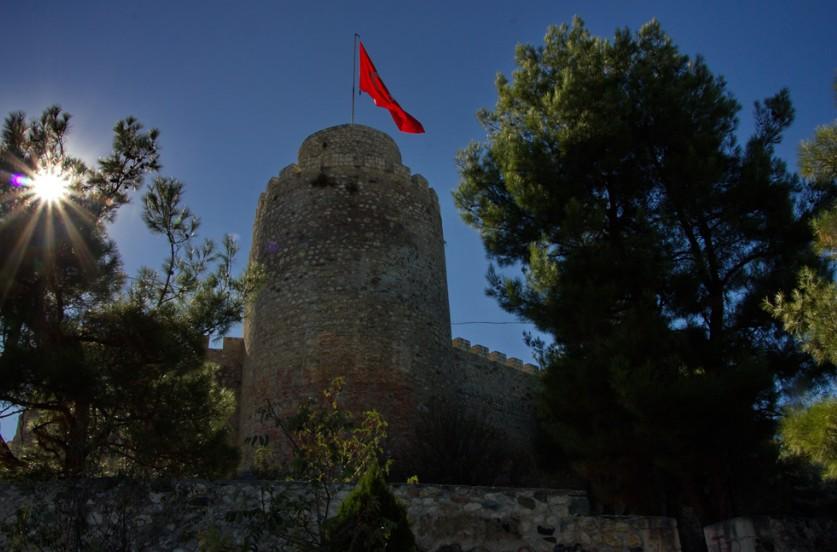
Side view of Boyabat Castle (Boyabat Municipality)
A History of Thousands of Years
Boyabat Castle actually consists of two distinct sections: the Old and the New castle.
- Old Castle: Its foundations were laid over two thousand years ago, in the 6th century BCE, by the Paphlagonians. Traces from the Roman and Byzantine periods can still be found among its walls.
- New Castle: The castle’s present appearance largely dates from the Ottoman Empire period. The materials used in the construction of the walls and towers indicate that the castle was renovated during this era.
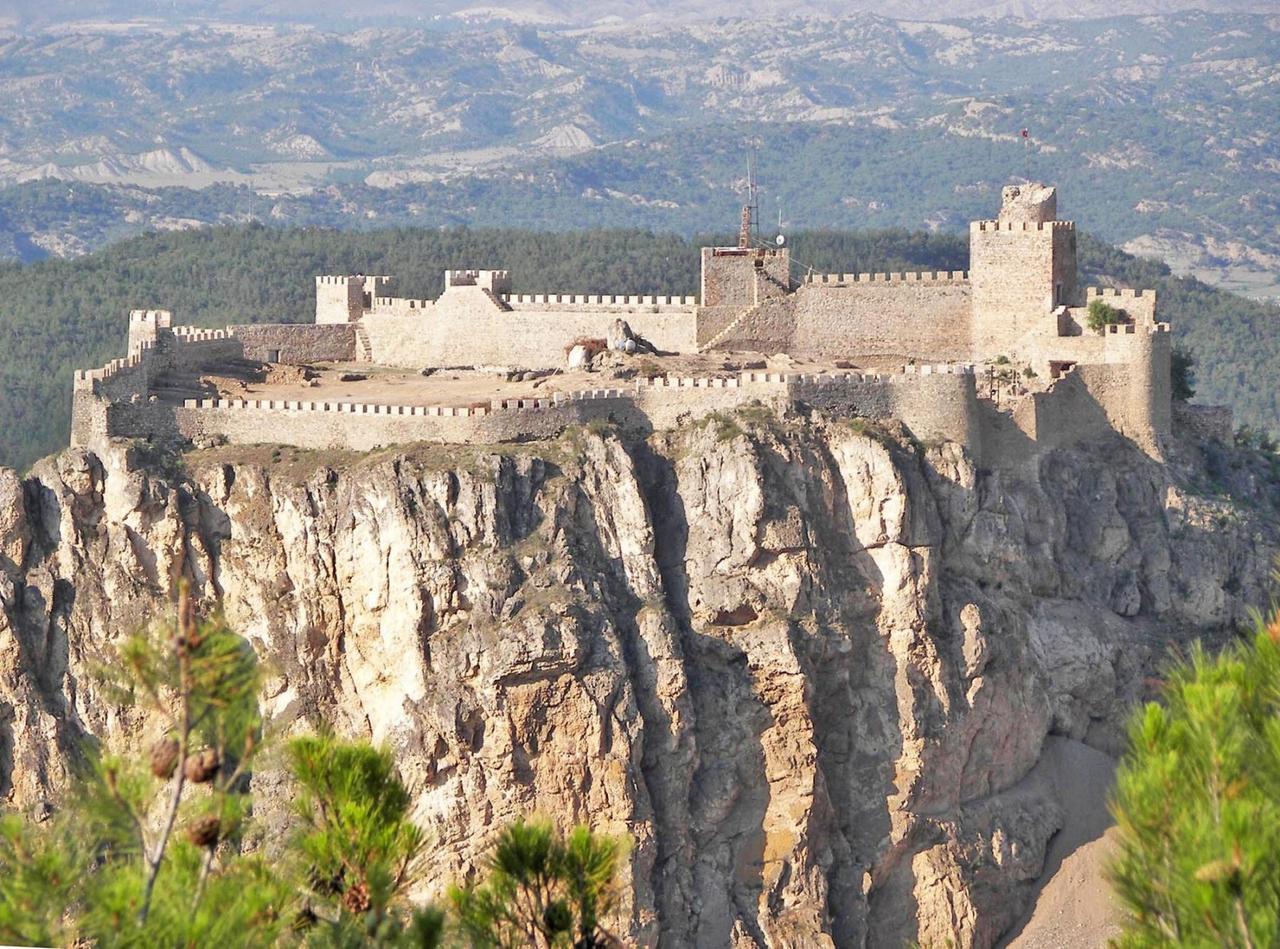
Boyabat Castle (Culture Portal)
The Mystery Beneath the Castle: The Underground City
Not only the upper part but also the underside of Boyabat Castle is highly intriguing. Beneath the castle lie tunnels resembling a labyrinth. Archaeologists believe these mysterious tunnels are part of a vast underground city that extends beneath the entire Boyabat district. Numerous artifacts from the Roman and Byzantine periods have been discovered within these tunnels.
A Journey Through Time
Approximately 2600 years ago, in the 6th century BCE, when paper and pens were not yet widely used, the Paphlagonians laid the foundations of this castle. Since then, the castle has been used by the Romans, the Byzantines, and finally the Ottomans.