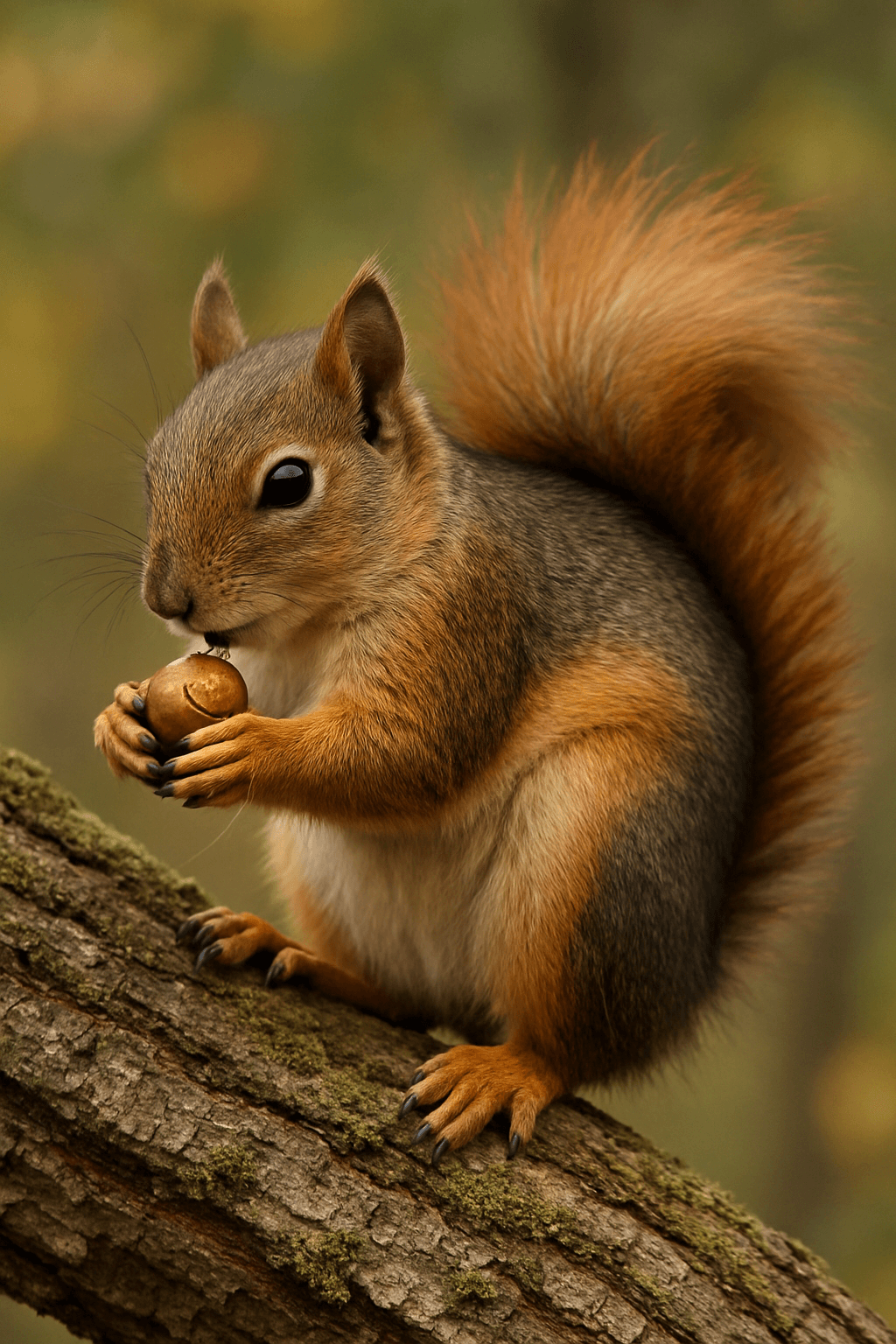


Anatolian Tree Squirrel
The Anatolian tree squirrel is a charming rodent native to Turkey’s forested and mountainous regions. Slightly larger than its close relative, the red squirrel, it is one of the most common squirrel species in Türkiye.
Physical Characteristics
The back color of the Anatolian tree squirrel varies with the seasons. In summer it ranges from light reddish-gray to pale dark gray, while in winter it shifts between pale dark gray and pale reddish-brown. Its feet and the upper side of its tail are russet brown; the underside of the tail resembles the color of its back. Its ears are pointed and sparsely furred. Unlike the red squirrel, it lacks tufts at the ear tips. A distinct gray-black stripe runs along its back. Its body length measures 30 to 45 cm and its weight ranges from 250 to 400 grams. Its tail is typically about half the length of its body.
Habitat
Anatolian tree squirrels live in forests, mountains, and even in parks and gardens. They build their nests in old woodpecker holes or tree cavities, lining them with moss, leaves, grass, and tree bark.
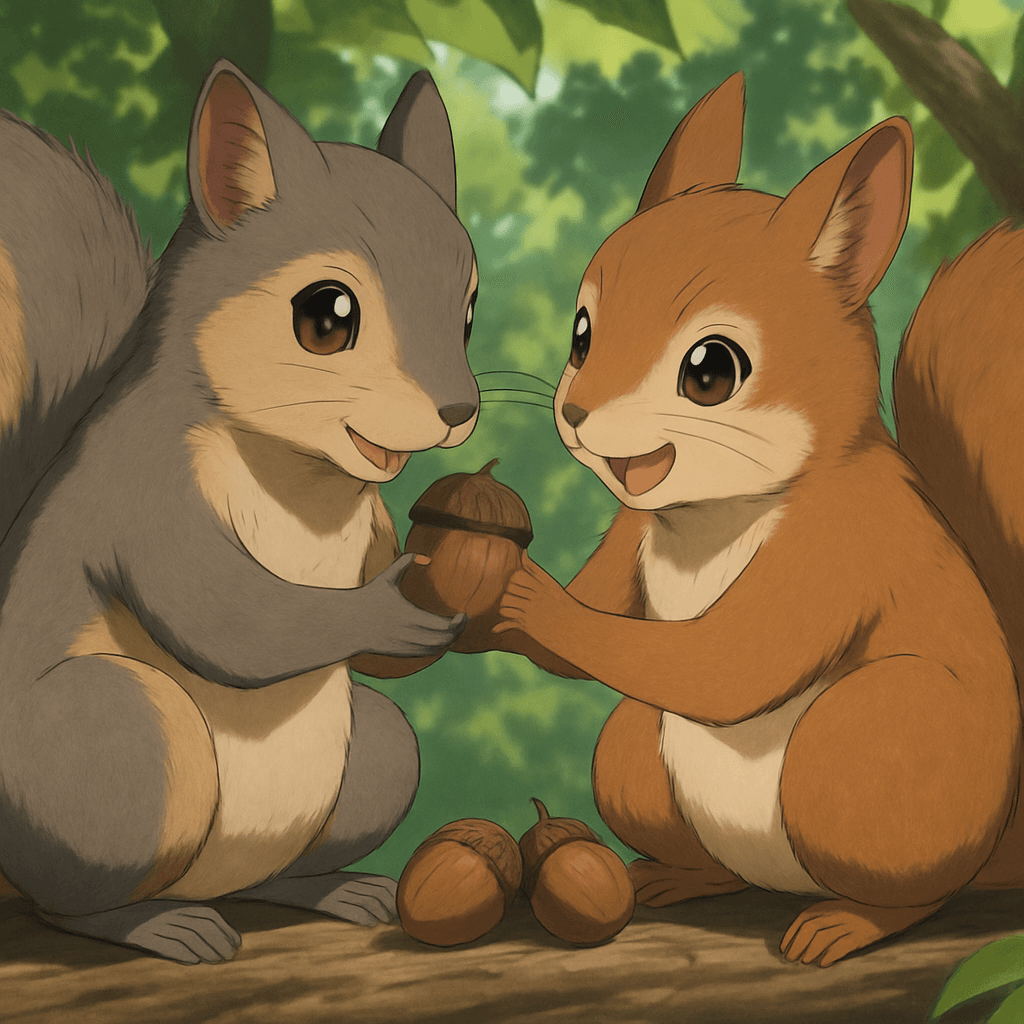
Anatolian Tree Squirrels Sharing Food (Generated by Artificial Intelligence.)
Diet
Their favorite foods are nuts with hard shells, including hazelnuts, walnuts, chestnuts, almonds, pistachios, tree seeds, fruits, buds of forest trees, and pine cones. During difficult times they also eat insects, bird eggs, flowers, and tree bark. They hold and gnaw their food using their front paws as if they were hands.
Behavior
Anatolian tree squirrels are excellent climbers. They grip branches with their claws and descend easily to the ground. They move by leaping from branch to branch. When they sense danger, they emit a high-pitched call and flick their tails as a warning. When frightened, they raise their tails over their backs and heads.
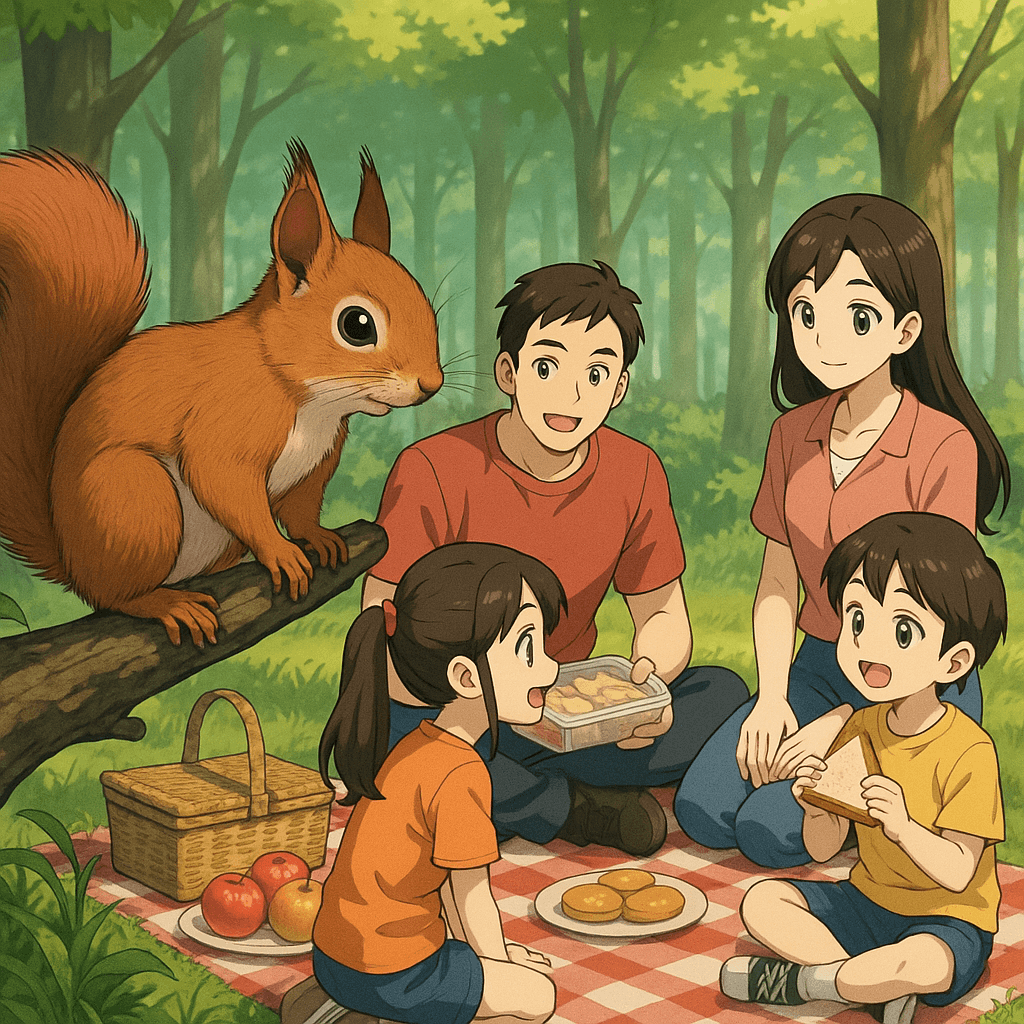
Anatolian Tree Squirrel Near a Family Having a Picnic in the Forest (Generated by Artificial Intelligence.)
Lifespan and Reproduction
Their average lifespan is 10 years. Females give birth two to three times per year, producing three to eight young each time. The young reach maturity within one year.
Conservation Status
According to the International Union for Conservation of Nature, it is listed as “Least Concern.” In Türkiye, however, it is protected by the Ministry of Agriculture and Forestry due to hunting for its fur.
🎨 Activity: “If I Were a Squirrel…”
Imagine being an Anatolian tree squirrel for a day. Write about the adventures you would have and draw a picture of them. Show them to your loved ones!