

Al-Aqsa Mosque
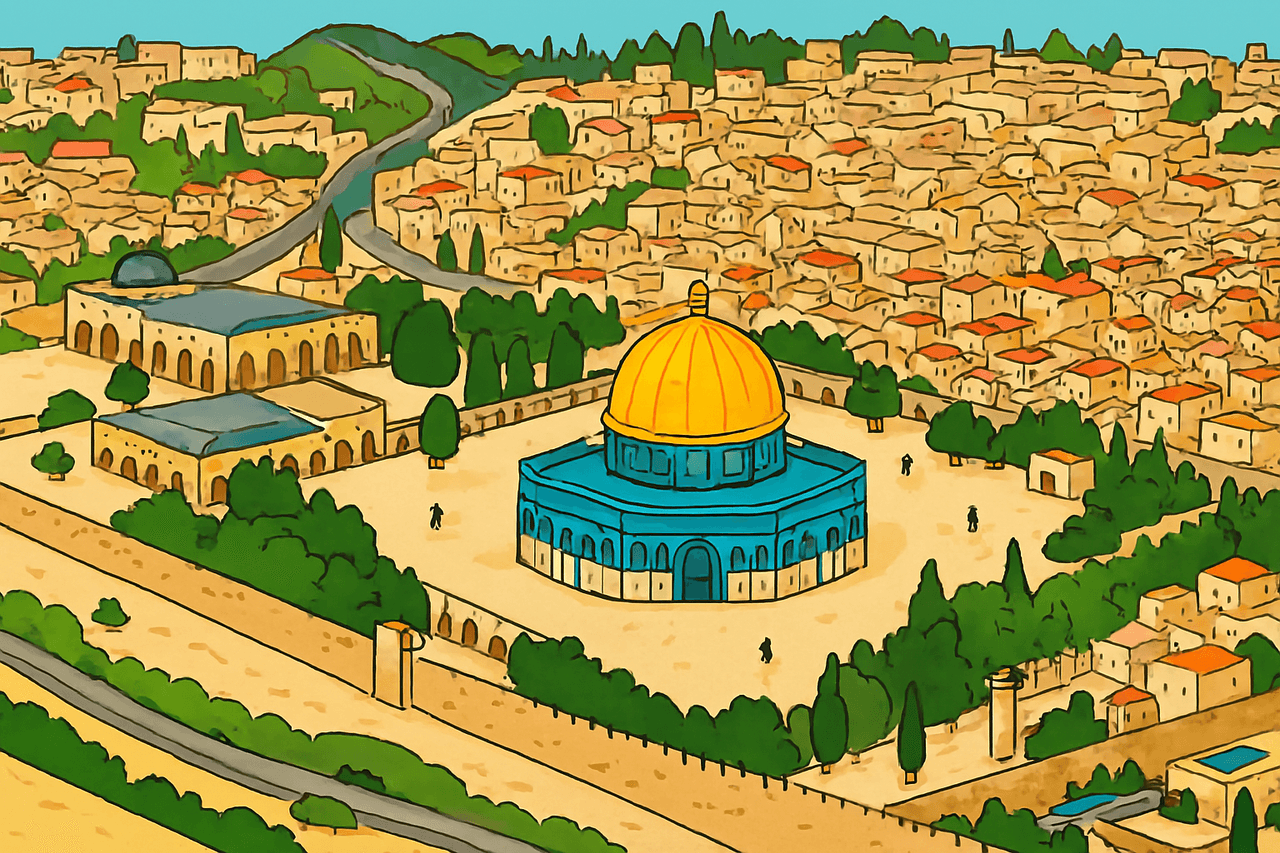
Masjid al-Aqsa is located in the city of Jerusalem and is a site of great significance for Muslims as well as other faiths. Let us explore Masjid al-Aqsa together!
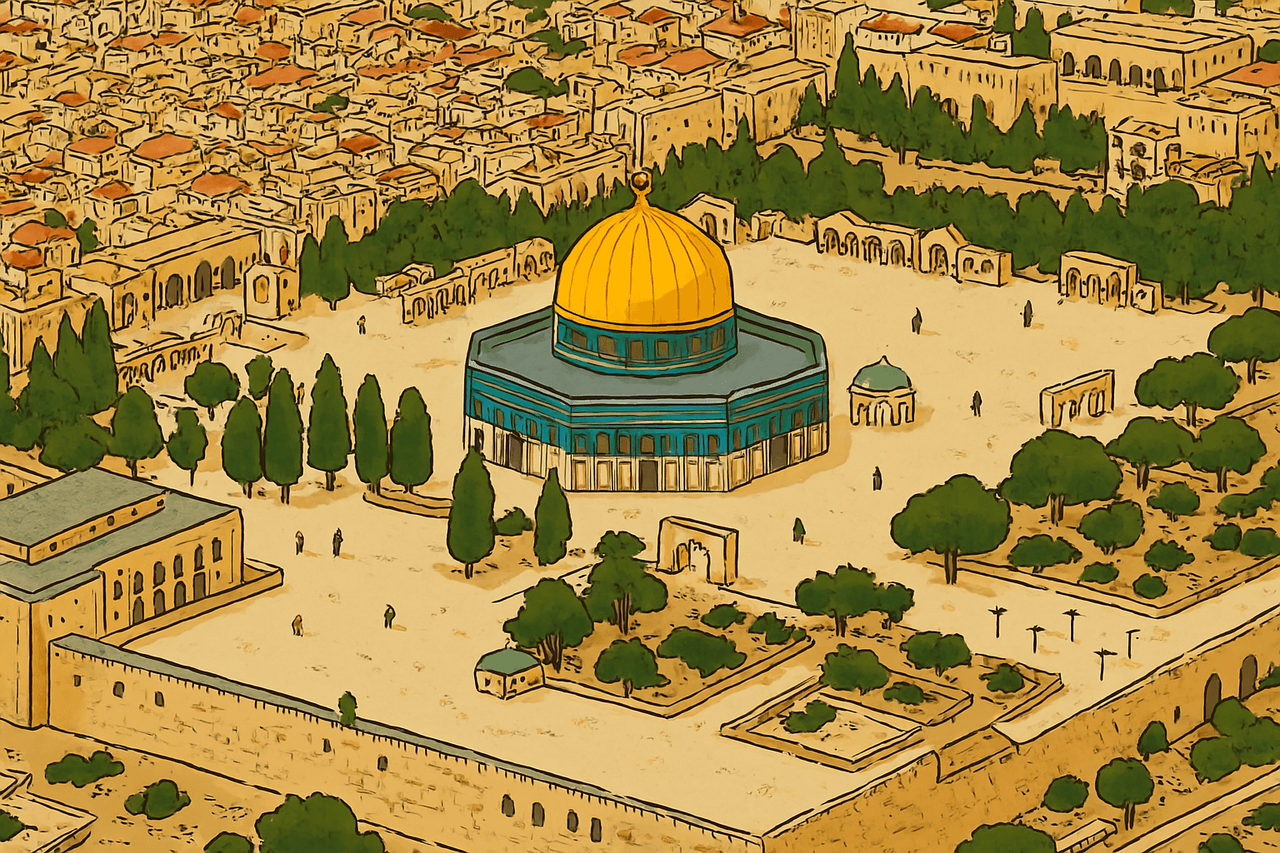
Masjid al-Aqsa (Generated by Artificial Intelligence)
What is Masjid al-Aqsa?
Masjid al-Aqsa means “the farthest mosque.” It received this name because of its distance from the Kaaba in Mecca. For Muslims, it is recognized as the second oldest place of worship after the Kaaba. It is also part of a sacred area known as the Haram al-Sharif, which is enclosed by high walls and contains other important structures, such as the Dome of the Rock.
The original structure was said to measure 27 meters in length, 9 meters in width, and 13.5 meters in height. It reportedly contained golden candelabras and ornate doors. However, this first building suffered damage over time due to wars and destruction. In particular, it was severely destroyed in 586 BCE by the Babylonian king.
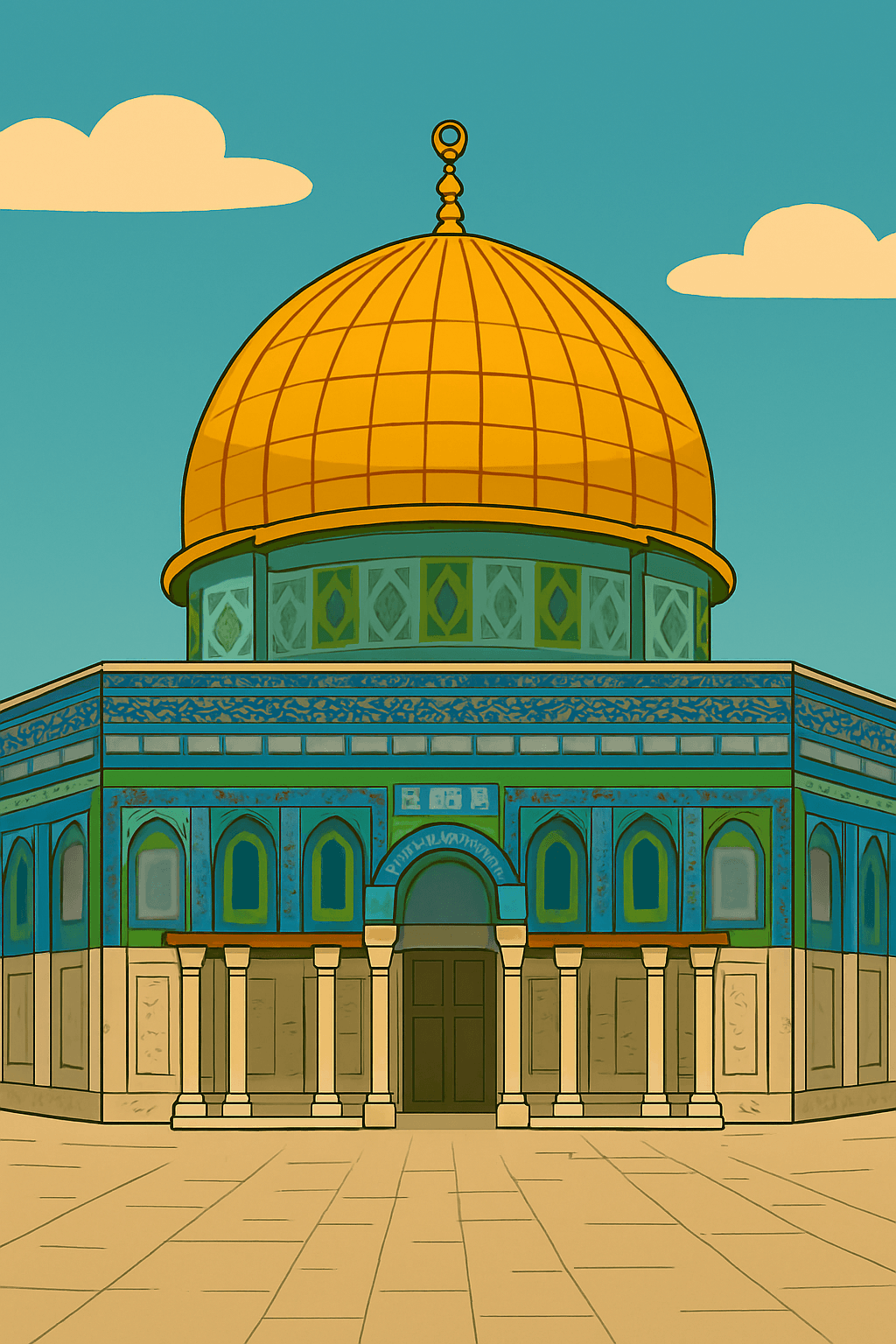
Dome of the Rock (Generated by Artificial Intelligence)
The Rebuilt Mosque
After its destruction, the mosque was rebuilt many years later. In 515 BCE, a man named Zerubbabel reconstructed it over a period of 25 years. Later, during Roman and other royal rule, the mosque was expanded and renovated. Unfortunately, it was destroyed again in 70 CE by the Romans.
Muslims and Masjid al-Aqsa
Masjid al-Aqsa holds deep significance for Muslims. The Quran recounts how the Prophet Muhammad was transported there during a single night and then ascended to the heavens (Surah Al-Isra). After the Hijra, Muslims faced Masjid al-Aqsa in prayer for a period of time. When Caliph Umar conquered Jerusalem, he cleansed the mosque, prayed there, and ordered the construction of a prayer hall. Later, the Umayyad Caliph Al-Walid I rebuilt Masjid al-Aqsa on a larger and more magnificent scale. This structure has been repaired several times due to earthquakes.
The Current State of Masjid al-Aqsa
The present Masjid al-Aqsa is a rectangular building divided into seven sections. It features pointed arches and elegant columns. The ceiling once contained ornate wooden panels, but today it is more modest. To the north of the mosque stands a beautiful marble fountain where worshippers perform ablutions. During the Ottoman and Mamluk periods, the mosque underwent numerous repairs. For instance, Sultan Suleiman the Magnificent and Sultan Abdulhamid II worked extensively to enhance its beauty.
Why is Masjid al-Aqsa Important?
Masjid al-Aqsa is not merely a building; it is also a place of worship and peace. Muslims believe that praying here brings great reward. The Prophet Muhammad stated that it is one of the three most sacred mosques to visit, after Masjid al-Haram in Mecca and Masjid al-Nabawi in Medina. In the past, a madrasa operated here, and people came to study religion.
Difficult Times for Masjid al-Aqsa
Unfortunately, throughout history, Masjid al-Aqsa has suffered damage on many occasions. During the Crusades, it was repurposed for various uses, and part of it even became a palace. In 1969, a fire broke out and destroyed its beautiful wooden minbar. Yet each time, Muslims have restored and preserved the mosque.