


World Kindness Day
World Kindness Day is an awareness day aimed at reminding people of the value of kindness performed without expecting reward, benefit, praise, or thanks. The focus of this day is to regard “kindness” not as a form of “transaction,” but as a value linked to conscience, compassion, responsibility, and human dignity.
📅 When?
Every year on January 24, World Kindness Day is recognized in various “special days” calendars.
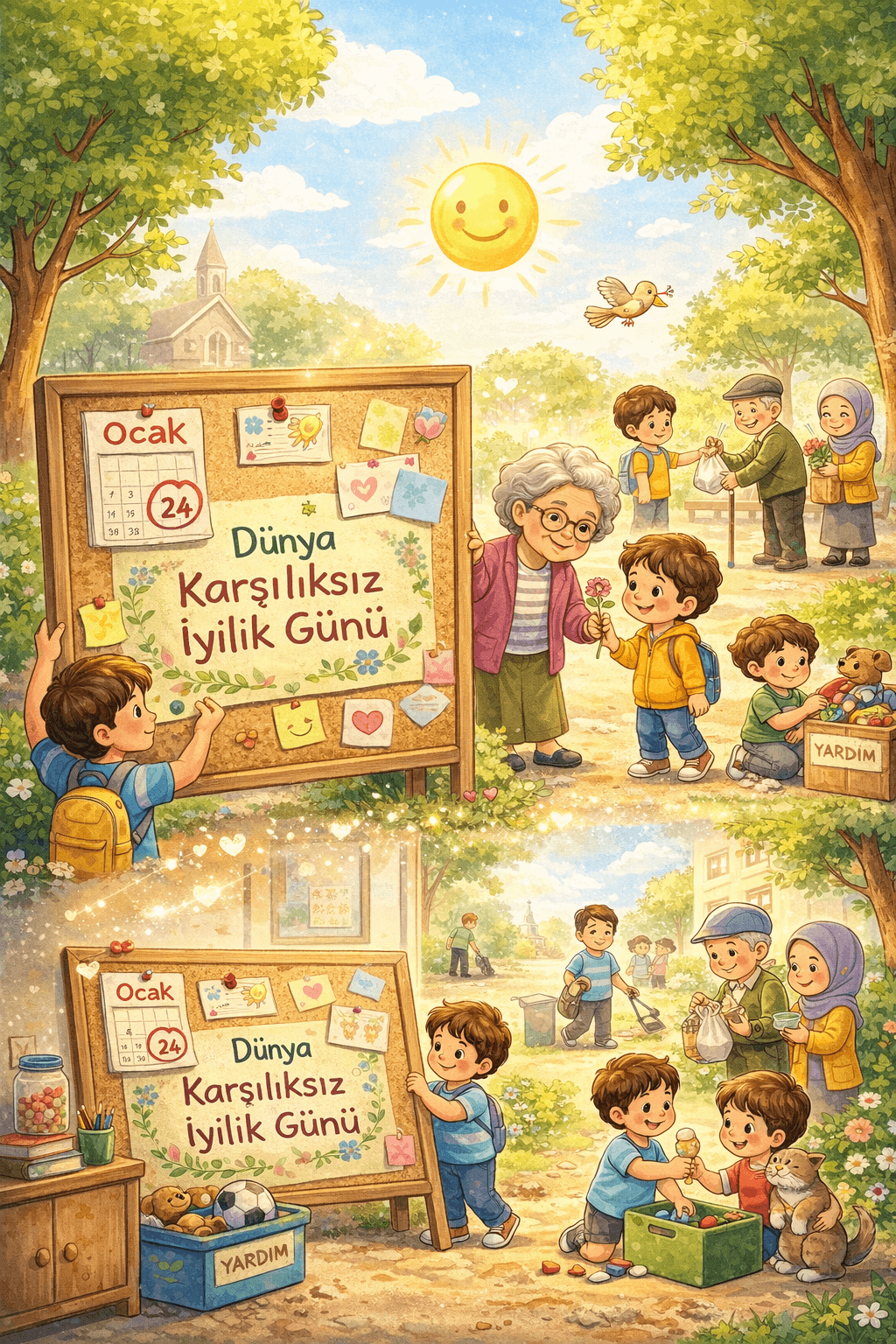
Generated by artificial intelligence.
Let us examine the concept of “unconditional”:
Unconditional kindness is a type of prosocial behavior that:
- Does not ask “What do I gain from this?”
- Is not motivated by the desire for visibility (applause or likes)
- Is not turned into a bargain or exchange
In academic terms, kindness is part of a broader field of “altruism” encompassing behaviors such as helping, sharing, cooperating, showing empathy, and volunteering. This field is closely linked to social-emotional skills (empathy, self-regulation, responsibility) in child development.
Why is it important from a psychological and social science perspective?
Unconditional kindness produces impact at both individual and societal levels:
1) Individual level (self and mental health)
- Performing acts of kindness supports a person’s sense of goodness, belonging, and meaning.
- Behaviors done “simply because they are right” strengthen a child’s intrinsic motivation: the child learns to perform kindness not for reward but because it is valuable.
2) Relational level (classroom climate and peer relationships)
- Unconditional kindness enhances an atmosphere of trust and respect in the classroom.
- It helps cultivate a protective classroom culture against peer bullying by promoting inclusion rather than exclusion.
3) Societal level (solidarity and social capital)
- In society, small acts of kindness create a “chain of kindness”: one act can trigger another (“kindness is contagious”). This concept is frequently used as a framework in values education.
🌿 Understanding kindness
In Turkish-Islamic culture, kindness is not merely “help”; it is regarded as an ethical stance. Kindness is understood together with human dignity, sense of responsibility, benefit and public interest, and improving social welfare.
How can children practice unconditional kindness?
For children, unconditional kindness is not about “big deeds”; it consists of daily, feasible, and safe actions:
- Sharing materials with a friend (pencil, eraser, book)
- Including a new student in a game
- Contributing to classroom order (throwing away trash, tidying up desks)
- Noticing a friend’s emotions and being there for them (asking “Are you okay?”)
- Helping family members at home (setting water on the table, picking up toys)
The common thread among these examples: intrinsic intention and responsibility, not visible reward.
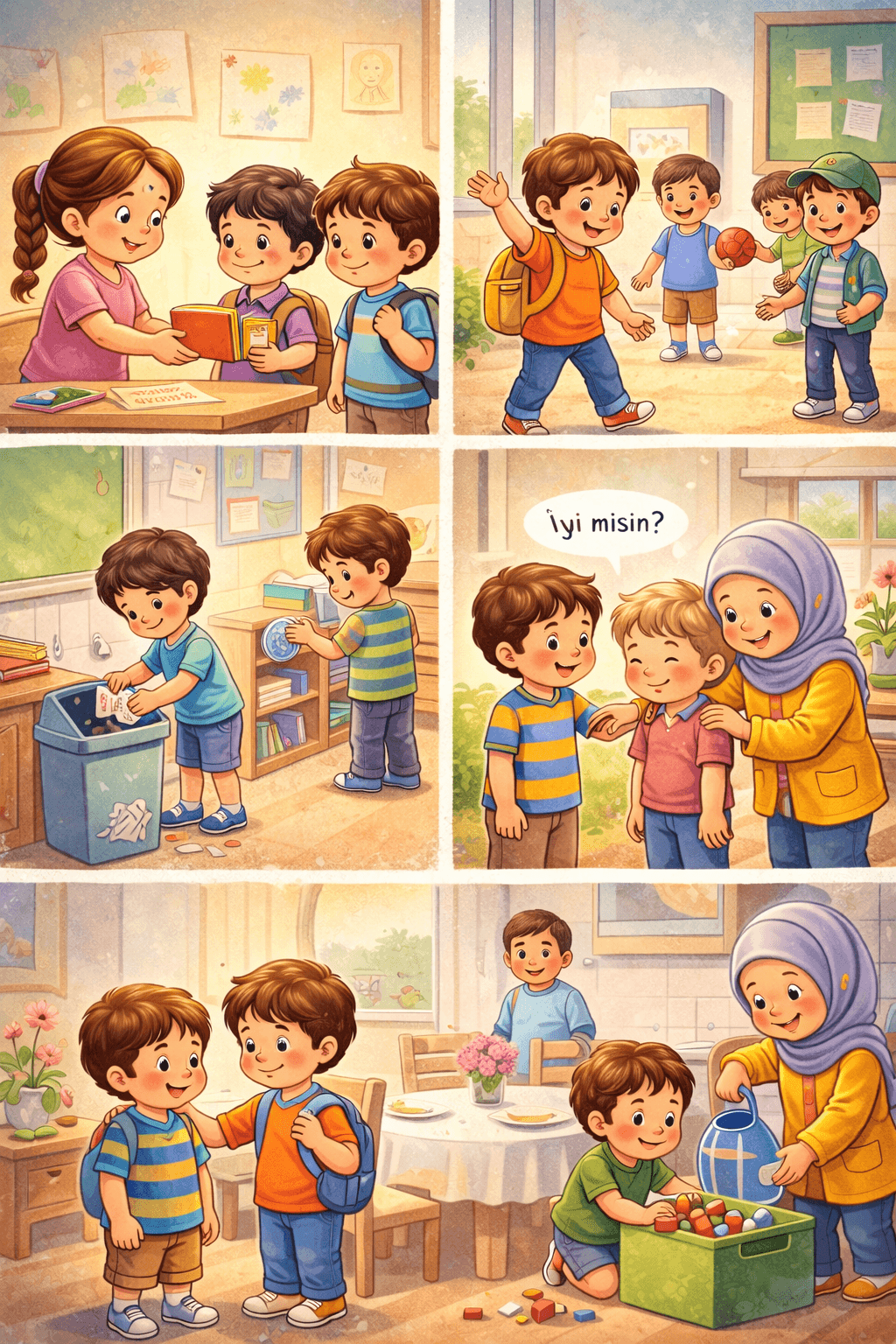
Generated by artificial intelligence.
Values Education Outcomes
Through this day, students are expected to achieve the following outcomes:
- Conceptual awareness: Differentiates between the concepts of kindness, altruism, empathy, and unconditionality.
- Moral reasoning: Discusses that “right behavior” is not done solely for reward; explores the dimensions of intention and responsibility.
- Social-emotional skills: Develops the ability to recognize emotions, identify others’ needs, and offer appropriate help.
- Classroom climate: Contributes to the classroom environment through behaviors of sharing, cooperation, and inclusion.
- Behavioral transformation: Transforms “kindness intention” into concrete actions by creating a small but sustainable kindness plan (e.g., “two acts of kindness per week”).
Discussing the Concept of Unconditional Kindness in the Classroom
A) Understanding and conceptualizing
- What does “unconditional” mean? Can you give an example?
- It is nice to receive thanks when we do something kind; but is it right to do kindness in order to receive thanks? Why?
B) Empathy and social awareness
- If a friend is sad, how should you approach them? Is “helping” always about giving something?
- When helping someone, how do we preserve their dignity? (For example: without mocking them or embarrassing them in front of others.)
C) Behavior and classroom culture
- If we wanted to create a “chain of kindness” in our classroom, what behaviors could we start with?
- If no one sees an act of kindness, is it still “kindness”? Why?
D) Evaluation and reflection
- If you performed an act of kindness today, what emotion might you notice in yourself by the end of the day?
- What does it mean for kindness to be “contagious”? Can you think of an example of this in the classroom?
Suggestions for safe and practical classroom activities for this day
- Secret Kindness Cards: Each student draws a peer by lot and performs a small act of kindness; at the end of the day, they write “What I did” without naming the recipient. (No reward; the goal is awareness.)
- Kindness Observation Board: A board titled “What acts of kindness did we see in class today?”; behaviors are described generally without names to avoid showiness.
- Empathy Role Cards: Use scenario cards such as “the isolated student,” “the student who forgot their belongings,” or “the sad student” to practice appropriate responses.