

What is Tarawih?
Tarawih is a special prayer performed during the month of Ramadan, after the Isha prayer. Its name derives from the Arabic word “tervîha,” meaning “to rest” or “to relax.” This name was given because, in earlier times, a brief rest was taken after every four units (rak’ahs). Today, in some places, these intervals are used for reciting salawat and dhikr. Individuals may perform it in congregation at the mosque or individually at home.
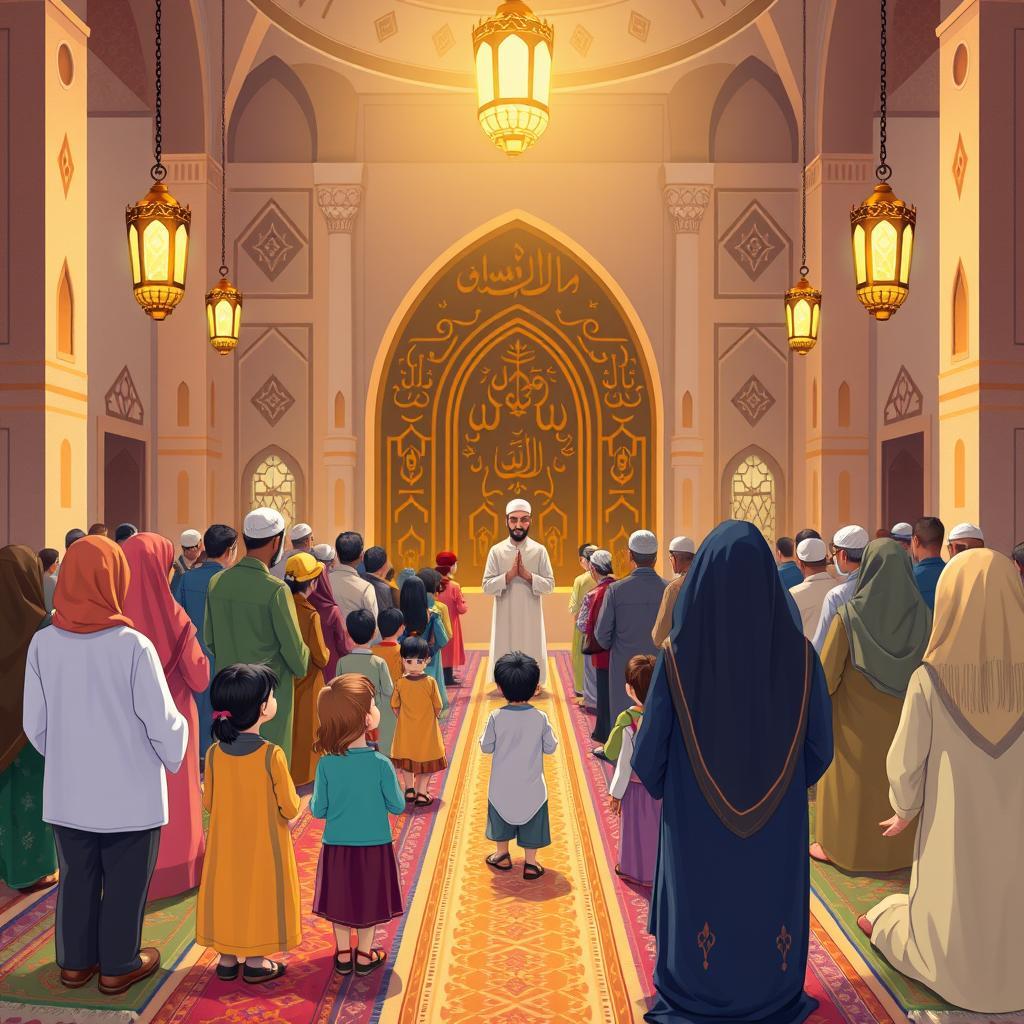
People entering the mosque for Tarawih prayer (generated by artificial intelligence.)
What does Tarawih mean?
In dictionaries, Tarawih means “rests.” This refers to the practice of taking a short break after every four rak’ahs during the prayer. Over time, it became common to recite dhikr and salawat during these breaks. According to the Hanafi school, these pauses are in harmony with the spirit of Tarawih. In Türkiye, it is common to recite salawat and ilahi hymns during these intervals.
When is it performed?
The time for Tarawih begins after the obligatory Isha prayer and extends until dawn. Both Tarawih and Witr are performed during the Isha prayer time and after the obligatory Isha prayer. In practice, Witr is performed after Tarawih. If Tarawih or Witr is performed before the obligatory Isha prayer, they must be repeated. If the time has passed, there is no need to make up Tarawih, but Witr must be made up.
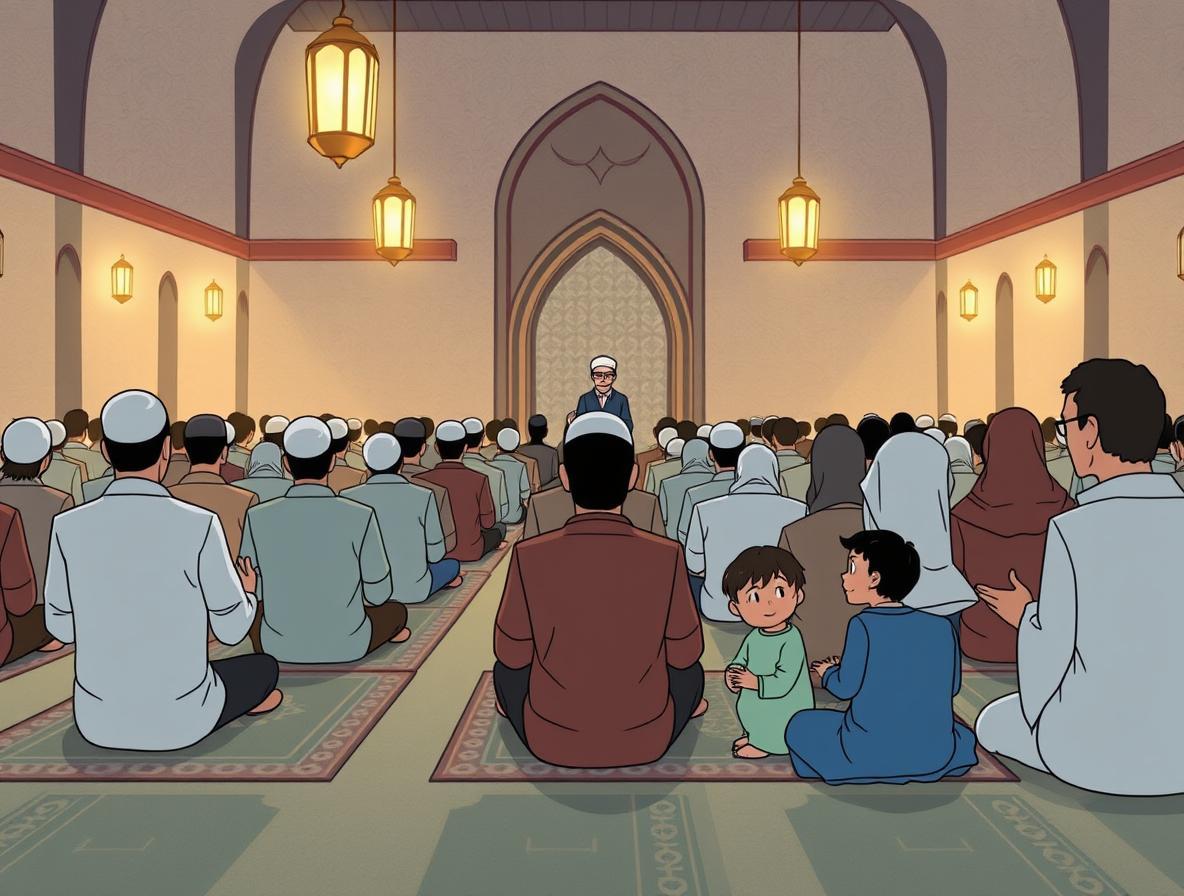
Children and elders standing in rows at the mosque during Tarawih, taking a short break after every four rak’ahs. (Generated by artificial intelligence.)
How many rak’ahs are performed?
There is no single definitive report regarding the number of rak’ahs performed by the Prophet Muhammad. Historically, different numbers such as 8, 20, and 36 have been practiced. Within Islamic communities, the tradition, especially from the time of Caliph Umar, has settled on performing Tarawih in congregation as 20 rak’ahs. Today, it is still performed as 20 rak’ahs in many places. Tarawih is a voluntary act of worship; performing 8, 10, 12, 14, 16, or 18 rak’ahs at home also fulfills the sunnah.
How is it performed?
As with other night prayers, it is considered virtuous to conclude every two rak’ahs with a salutation. No adhan or iqama is recited for Tarawih. It is important to observe the proper etiquette of prayer and avoid rushing through the movements. According to many scholars, performing Tarawih in congregation is sunnah and preferable, though it may also be performed at home.
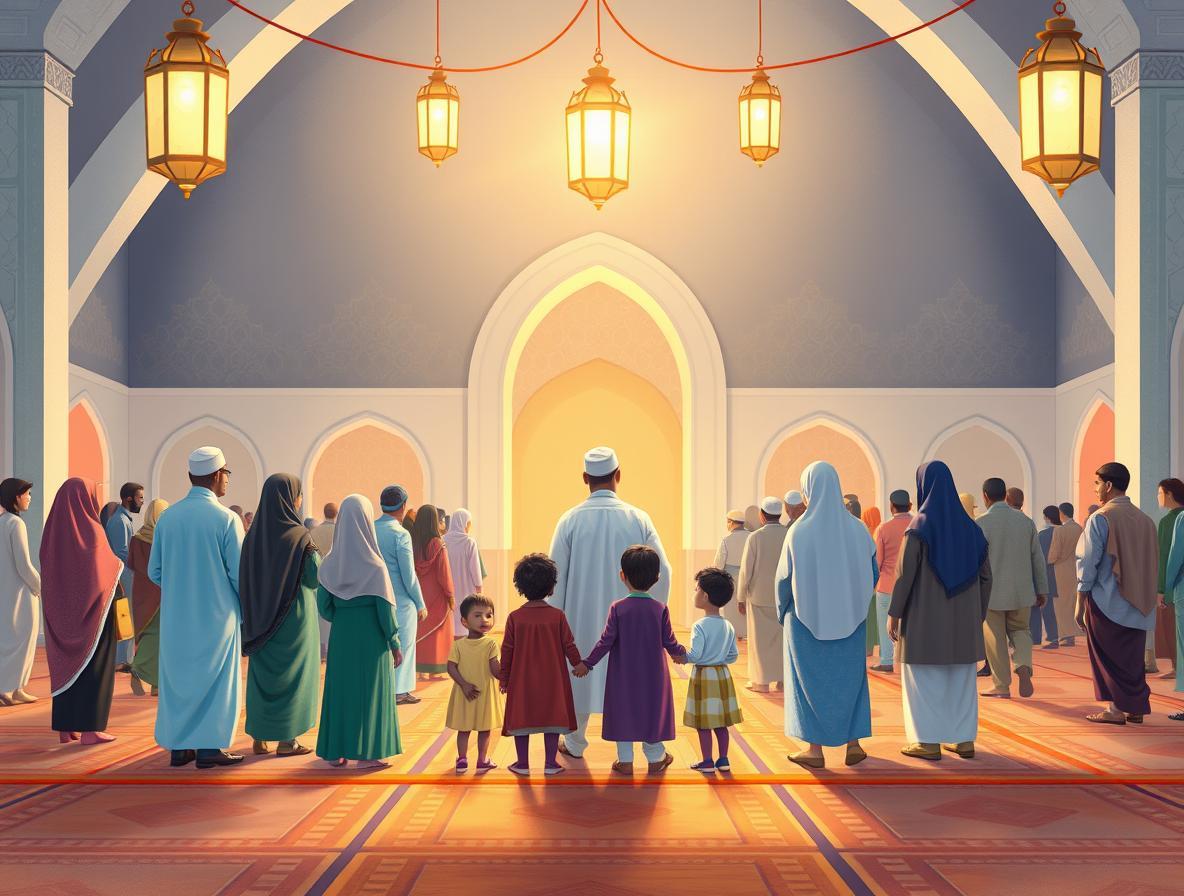
Before Tarawih prayer on a Ramadan night. (Generated by artificial intelligence.)