

What Is Density?
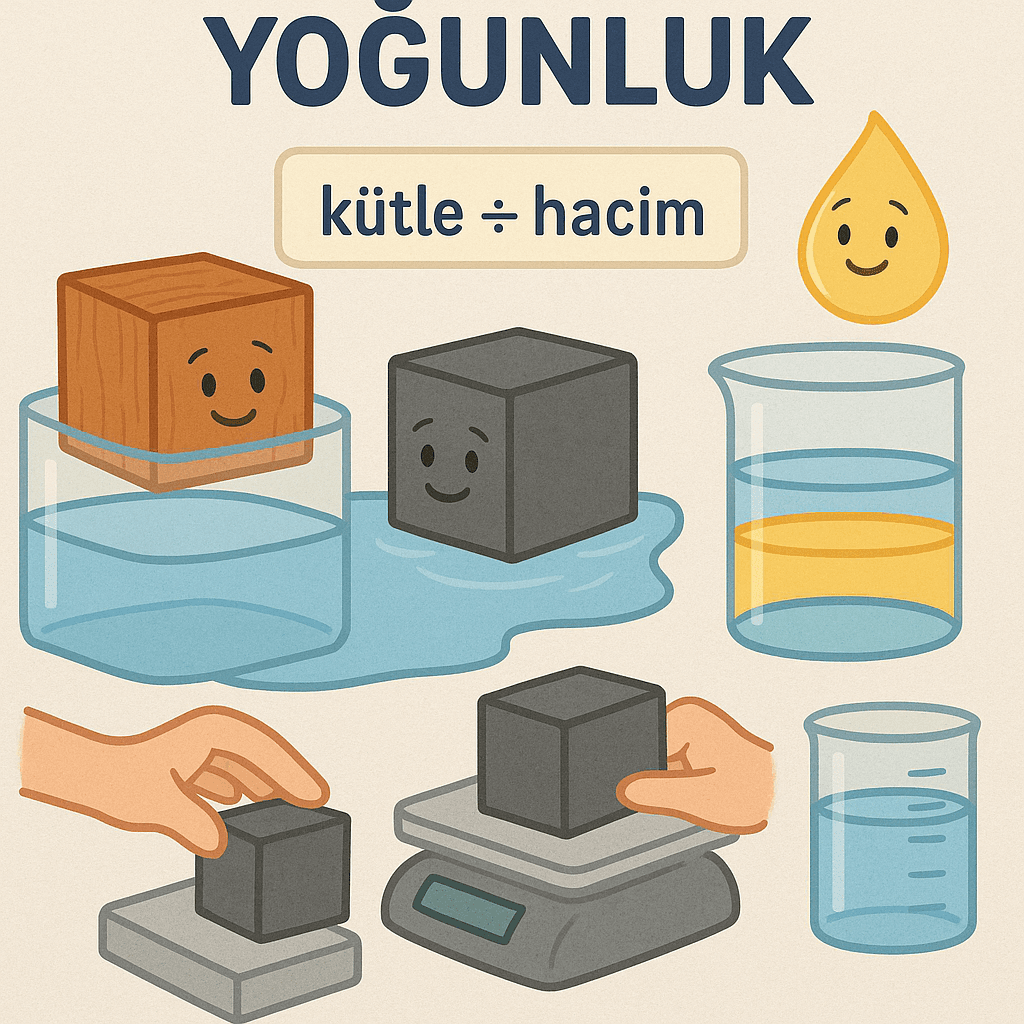
Density indicates how "compact" a substance is; that is, it describes the amount of matter contained within a given volume. In short, density is calculated using the formula: density = mass ÷ volume.
Density (Generated by Artificial Intelligence.)
A Property of Matter
Density is a distinguishing property of pure substances. For example, the density of water is always approximately 1 g/cm³. This value may vary slightly due to factors such as temperature, but it remains generally constant for pure water.
Density in Everyday Life
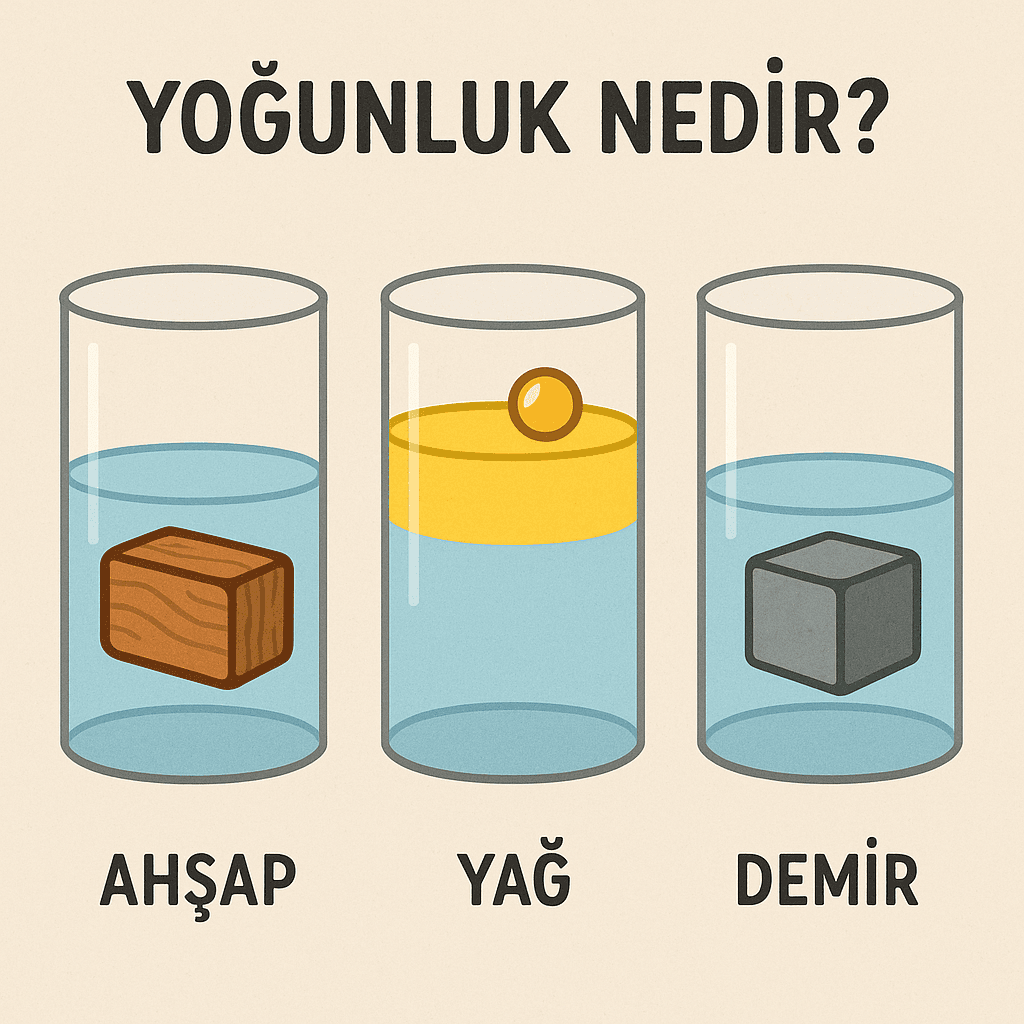
A piece of wood floats on water because its density is lower than that of water.
Heavy materials such as iron sink in water because their density is greater than that of water.
Oil remains on top of water because the density of oil is less than that of water.
How Is Density Measured?
We can determine the density of an object by measuring its mass and volume. Mass (m) is measured in kilograms (kg) or grams (g), and volume (V) is measured in litres (L) or cubic centimetres (cm³). Density is then calculated by dividing mass by volume: Density = Mass ÷ Volume.