

What Is an Earthquake Isolator?
Last Updated: 12/01/2025
Share
Seismic isolators are special components placed beneath buildings. These components prevent excessive swaying of the building during an earthquake, thereby protecting both the structure and its occupants from damage.
How Do They Work?
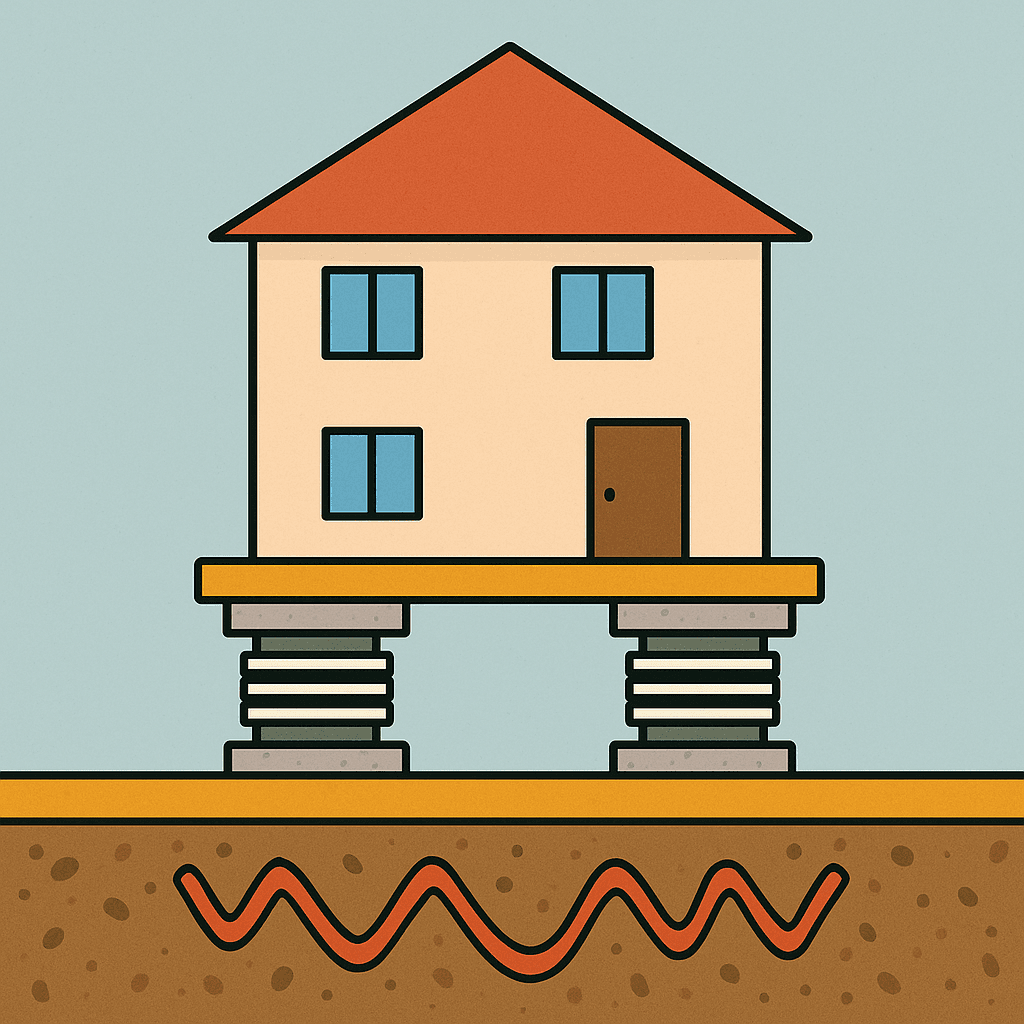
Seismic isolators slightly separate the building from the ground. When earthquake waves arrive, these components slow down the movement, allowing the building to shift in a gentle manner.
Components of Seismic Isolators
- Rubber layers: Soften movement through their flexible structure.
- Steel plates: Increase durability.
- Lead core: Absorbs energy and reduces shaking.
Types of Seismic Isolators
- Rubber isolators: Provide smooth movement and have a long lifespan.
- Lead-core isolators: Absorb energy and reduce swaying.
- Pendulum-type isolators: Slow down shaking by sliding along a curved surface.

Building with Seismic Isolators (Generated by Artificial Intelligence)
Where Are They Used?
They are commonly used in hospitals, schools, and public buildings. These systems are also retrofitted into newly constructed buildings and some older structures.
Why Are They Important?
Seismic isolators help prevent building collapse and ensure that people can live safely in earthquake-prone areas.