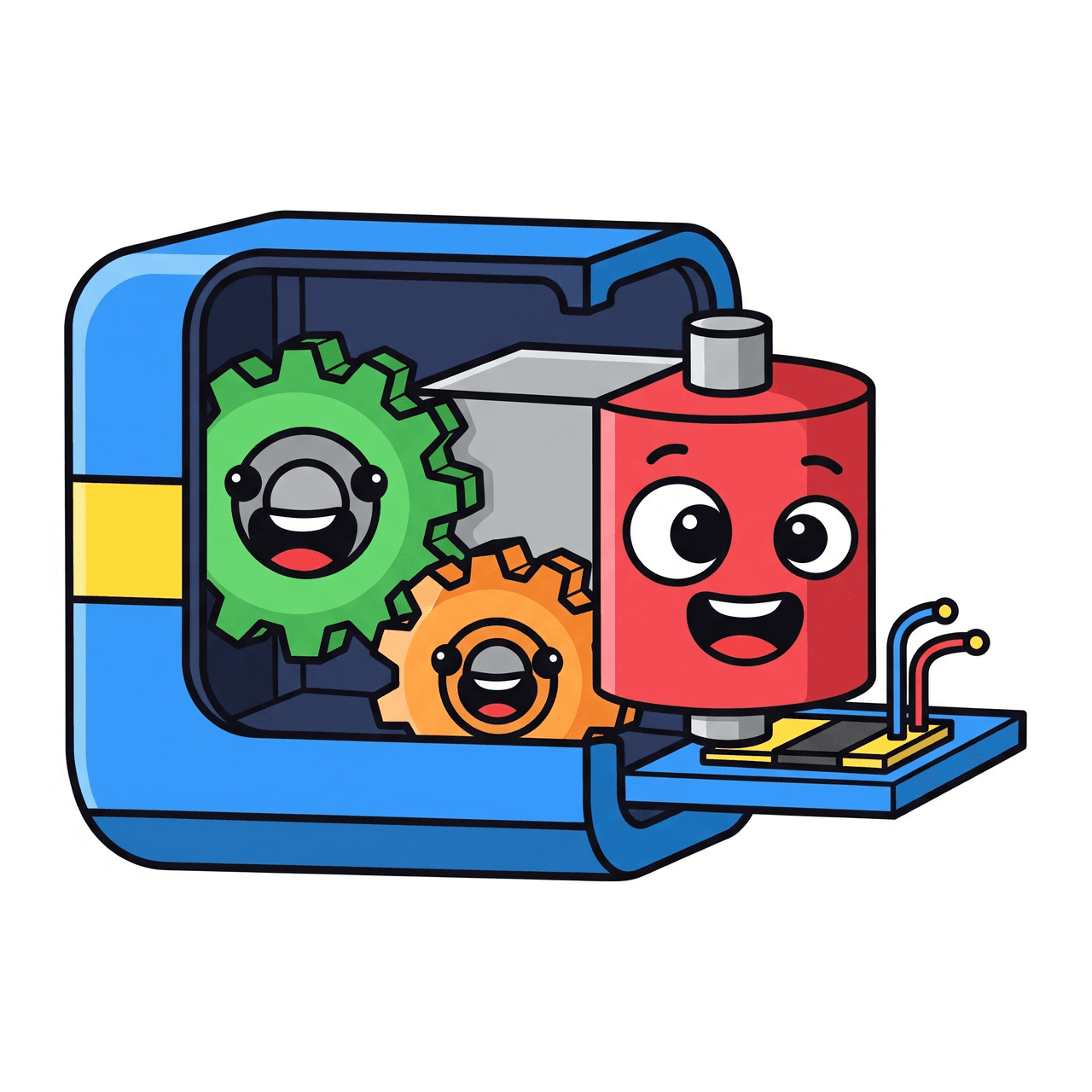


What is a Servo Motor?
A servo motor is a specialized electric motor designed to move at a specific angle, position, or speed. It is commonly used in robotic systems, automation applications, and mechatronic projects that require precise motion control. Servo motors can operate on either DC (direct current) or AC (alternating current); however, DC servo motors are widely preferred in small and precise applications.

(Generated by Artificial Intelligence.)
Structure of a Servo Motor
A servo motor essentially consists of three main components: the motor itself, a feedback mechanism (typically a potentiometer or encoder), and a control circuit. The feedback mechanism continuously monitors the motor’s position, allowing its movement to be adjusted to achieve the desired position. This ensures accurate and precise movement to the target location without error.
Control System: PID Controller
PID (Proportional-Integral-Derivative) controllers are commonly used in servo motors. This controller continuously evaluates how close the motor is to its target and the extent of any deviation. PID controllers enable the motor to move quickly and stably. Through the P, I, and D components, sudden deviations are corrected and system stability is maintained. This allows servo motors to operate efficiently in position and speed control applications.
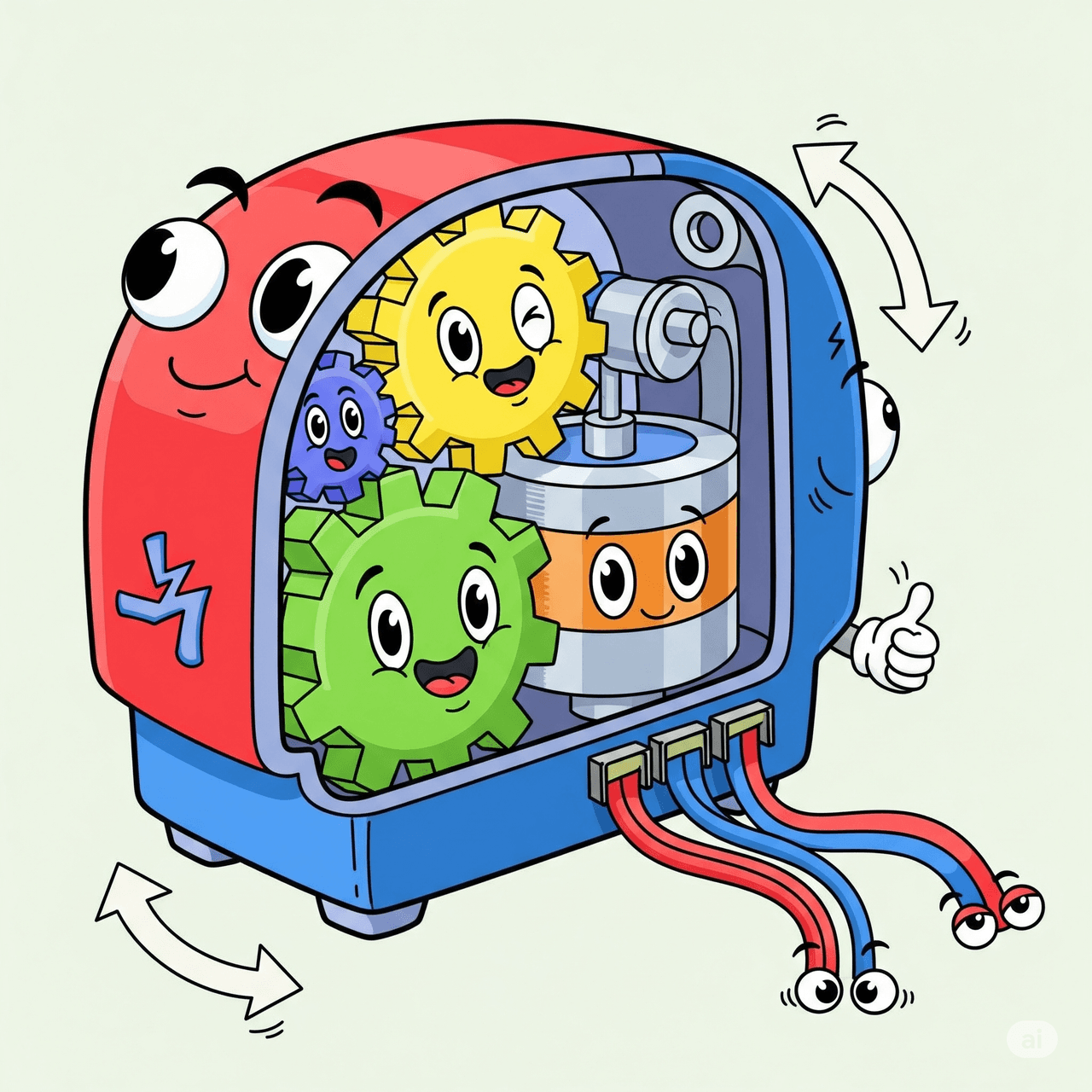
(Generated by Artificial Intelligence.)
Applications
Servo motors are frequently used in robotic arms, remote-controlled (RC) vehicles, CNC machines, camera pan systems, and automatic door systems. In multi-axis systems such as robotic manipulators, a servo motor is installed on each axis. These motors enable each arm of the robot to move with the required precision. Such systems typically have four or more axes, each requiring precise control.
Advantages
Servo motors offer advantages such as high precision, fast response time, and low energy consumption. Thanks to their feedback mechanism, real-time position control is achievable. Additionally, their compact design allows them to be effectively used in limited spaces. Due to these features, they are preferred in industrial applications and educational robotics projects.