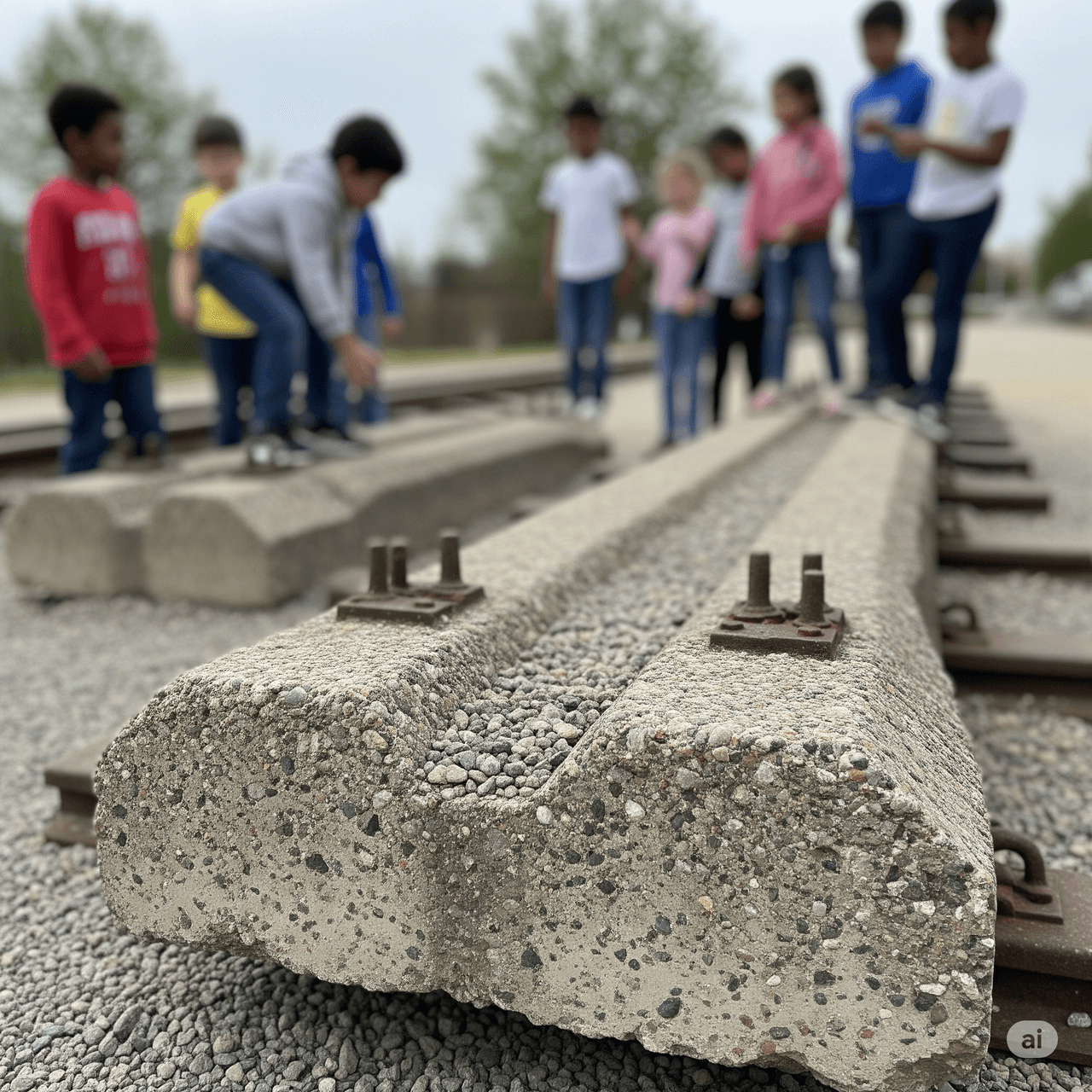


What Is a Concrete Traverse?
Concrete sleepers are specialized stone blocks used to secure railway tracks and provide support on a stable foundation. Placed between the rails, these sleepers maintain rail height and prevent rail displacement during train passage. They are manufactured from durable concrete material and designed to last for many years.

(Generated by Artificial Intelligence.)
Why Are Concrete Sleepers Used?
Concrete sleepers are significantly stronger and more durable than wooden sleepers. They greatly reduce the need for railway system revisions, maintenance frequency, and associated costs. Additionally, they can safely support heavy loads and high-speed train passages. These characteristics provide a crucial advantage for railway operators such as TCDD, ensuring the safe and efficient operation of railway lines.

(Generated by Artificial Intelligence.)
How Are They Manufactured and Installed?
Concrete sleepers are produced by pouring concrete into molds. After curing, the sleepers are installed along the railway track. The rails are fixed onto the sleepers to ensure track stability. Regular inspection and maintenance ensure the long-term durability and safety of the sleepers.
The History and Development of Concrete Sleepers
Historically, wooden sleepers were commonly used in railways. However, over time it became evident that this material deteriorated quickly and posed a fire risk. As a result, scientists and engineers sought a more durable and safer alternative. Concrete sleepers were eventually developed. In Türkiye, institutions such as TCDD transitioned to concrete sleepers, modernizing and strengthening their railway networks. This shift contributed to faster, safer, and quieter train operations.
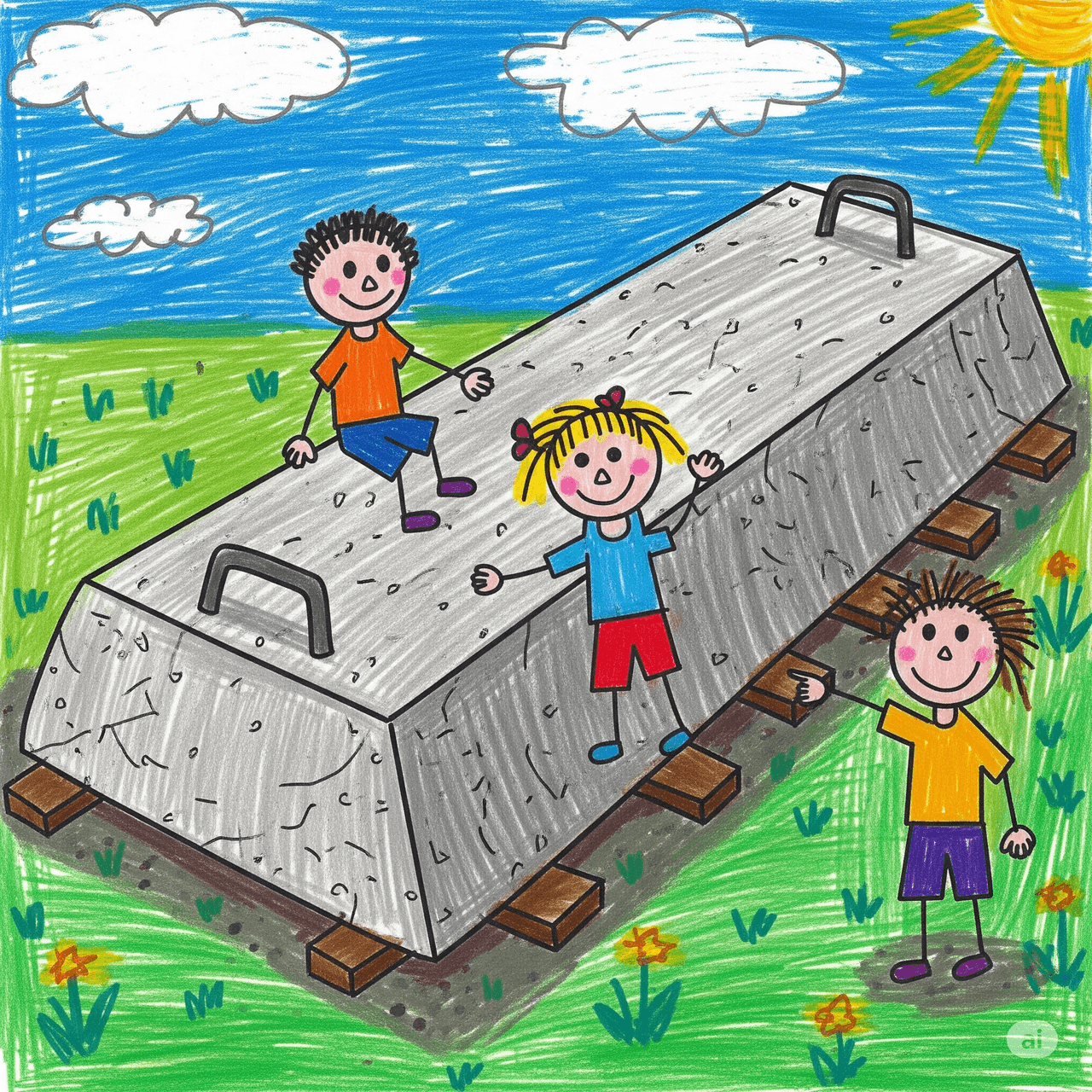
(Generated by Artificial Intelligence.)