KURE Kids Header Line
badge icon

This content was originally written in Turkish for children and is automatically translated into English using artificial intelligence.

article-image

Snowstorm Bird

Last Updated: 12/01/2025

The snow petrel (Pagodroma nivea) is a member of the family Procellariidae, commonly known as petrels or shearwaters. It is a hardy and agile bird species that inhabits Antarctica and its surrounding islands.

One of its most distinctive features, setting it apart from other storm petrels, is its entirely white plumage. Thanks to its broad and powerful wings, it can easily fly long distances and perform agile maneuvers while foraging over open oceans.
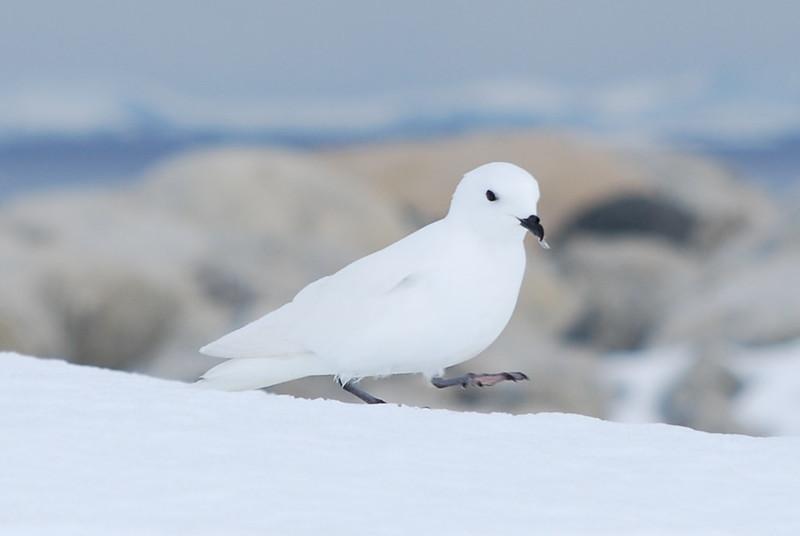
Snow Petrel (Flickr)

What Are Its Colors?

The plumage of snow petrels is typically entirely white, providing effective camouflage against the snow-covered Antarctic environment. The upper surface of the wings is usually gray; the intensity of these gray tones may vary between individuals and according to their geographic location.

The area around the eyes and the legs are black, and the bill is dark in color. Juvenile birds may have plumage that is slightly more grayish-white compared to adults.

How Large Do They Grow?

The body length of snow petrels typically ranges from 35 to 40 cm. Their wingspan measures approximately 76 to 90 cm, and their weight varies between 200 and 250 grams.

How Long Do They Live?

The average lifespan of snow petrels in the wild is about 10 to 15 years. However, under favorable conditions and in areas with low predation pressure, some individuals may live up to 20 years. Harsh weather conditions, difficulties in finding food, and natural predators are the main factors affecting their lifespan.
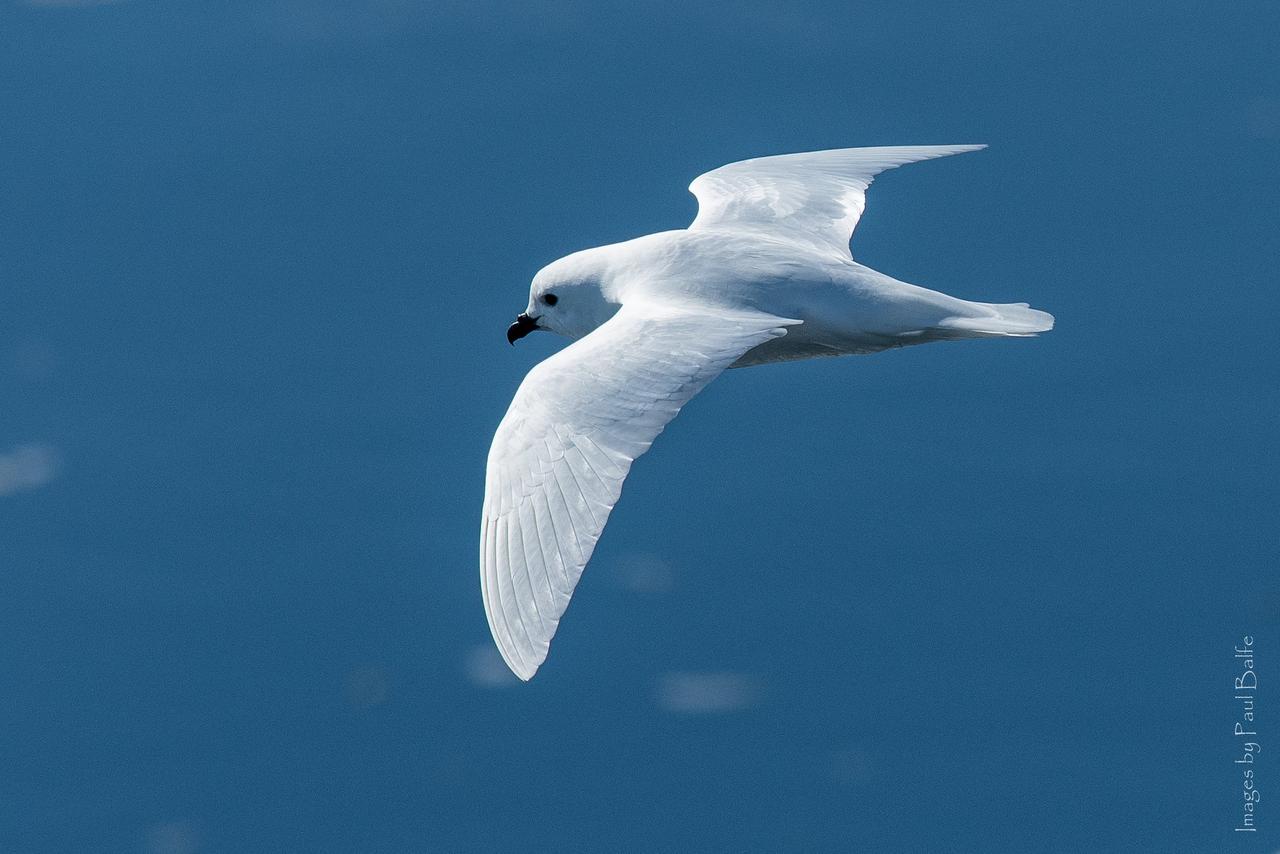
Snow Petrel (Flickr)

What Do They Eat?

Snow petrels primarily feed on marine organisms in the wild. Their diet includes fish, squid, and small crustaceans. While foraging over open oceans, they dive to the water’s surface or catch prey by fluttering just above the waves.

Where Do They Live?

Snow petrels typically inhabit Antarctica and its surrounding islands. They nest in colonies near coastlines and areas close to open seas. They travel long distances over open oceans to forage and can also be observed in the southern waters of Australia, South America, and New Zealand.

Conservation Status

The snow petrel is classified as “Least Concern” by the International Union for Conservation of Nature (IUCN). This status indicates that the species’ population in the wild is generally healthy and not currently facing any significant threats.

Don't Forget to Look at These!
Science and Technology
cat img
History and Culture
cat img
Art and Literature
cat img
image
Most Read
Thomas Edison
arrow
image
Last Added
Pardus
arrow
ilham-notu-bg
INSPIRATION NOTE FOR CURIOUS KIDS!

If you were a snow petrel, which spot would you choose as your “secret hunting ground” alongside your colony on the windy islands of Antarctica? Imagine gliding above the ocean with your wide wings and spotting fish with your sharp eyes! Perhaps the fish or squid you catch will ensure your survival and become an important link in the ocean’s life cycle.

KURE Kids Kure Card Pin Icon
KURE Kids Kure Card Book Icon
1000015794.jpg

Snowstorm Bird

Scientific Name(s)

Pagadroma nivea

Height(s)(Text)

Approximately 35–40 cm

Weight(s)(Text)

200–250 g

Conservation Status(es)

Least Concern

Lifespan

Approximately 10–15 years, some individuals can live up to 20 years

Wingspan

Approximately 76–90 cm

Diet(s)

Fish

squid and small crustaceans

Habitat

Antarctica and surrounding islands

open oceans and coastal areas

Who Wrote?
Kids Writing
AuthorBuse Nur ŞENDecember 1, 2025
bottom-bg-effect-bottom
bottom-bg-effect-top

The snow petrel is a agile seabird recognized by its entirely white plumage and broad wings, living in colonies on Antarctica and surrounding islands. It feeds on fish, squid, and small crustaceans, is capable of flying long distances, and hunts over open seas. The species has a generally healthy population and is classified by the International Union for Conservation of Nature (IUCN) as “Least Concern”.

Bibliographies


Ferretti, V., G. E. Soave, R. Casaux, and N. R. Coria. "Diet of the Snow Petrel Pagodroma nivea at Laurie Island, Antarctica, during the 1997/98 Breeding Season." *Marine Ornithology* 29, no. 2 (2001): 87–92. Accessed August 21, 2025. https://digitalcommons.usf.edu/marine_ornithology/vol29/iss2/2

Flickr. "Snow Petrel JPG." Accessed August 21, 2025. https://www.flickr.com/photos/40325561@N04/15287752999/

Flickr. "Snow Petrel JPG." Accessed August 21, 2025. https://www.flickr.com/photos/paul_e_balfe/32050984205/

New Zealand Birds Online. "Snow Petrel." nzbirdsonline.org.nz. Accessed August 21, 2025. https://www.nzbirdsonline.org.nz/species/snow-petrel

Viola, B., B. Wienecke, C.-P. Green, S. Corney, B. Raymond, C. Southwell, M. D. Sumner, P. Virtue, S. Wotherspoon, and L. Emmerson. "Marine Distribution and Habitat Use by Snow Petrels (Pagodroma nivea) in East Antarctica throughout the Non-Breeding Period." *Frontiers in Marine Science* 10 (2023): 1278229. Accessed August 21, 2025. https://doi.org/10.3389/fmars.2023.1278229

ilham-notu-bg
ilham-notu-bg
ilham-notu-bg
HEYY!
Did You Know?
These?
Lamb
Lamb
Ask to Küre